
MEDICINE CABINET GUIDES
Standard Medicine Cabinet Sizes
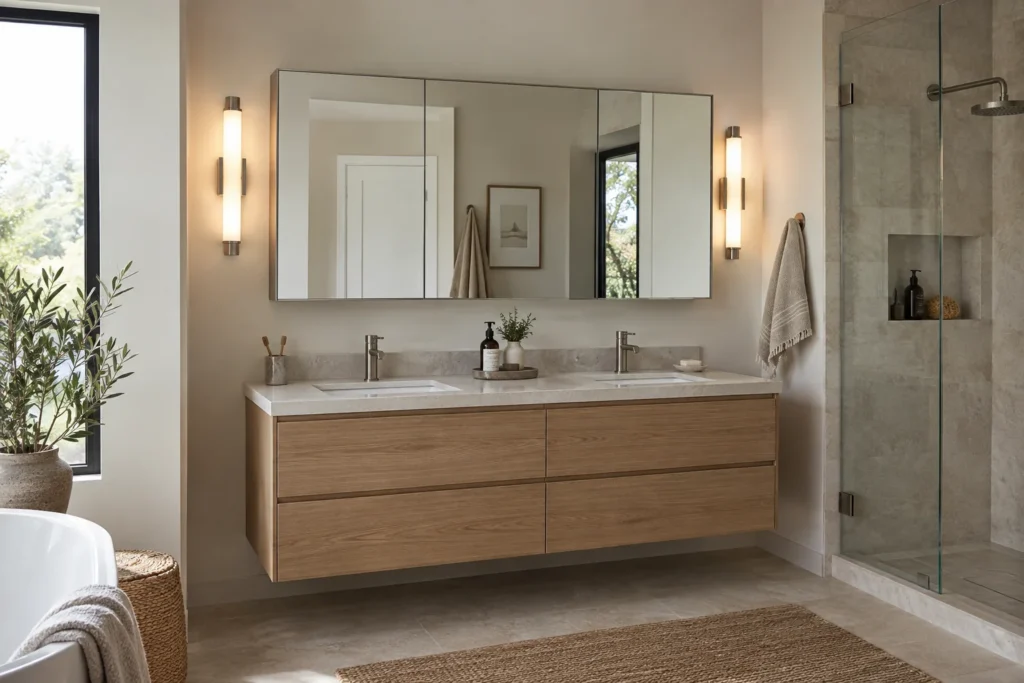
Overall dimensions, vanity fit and rough-opening checks. Know what to measure before choosing your cabinet.

FEATURED READING
MEDICINE CABINET GUIDES
Overall dimensions, vanity fit and rough-opening checks. Know what to measure before choosing your cabinet.
KNOWLEDGE, MADE PRACTICAL
MIRROR SIZING & PLACEMENT
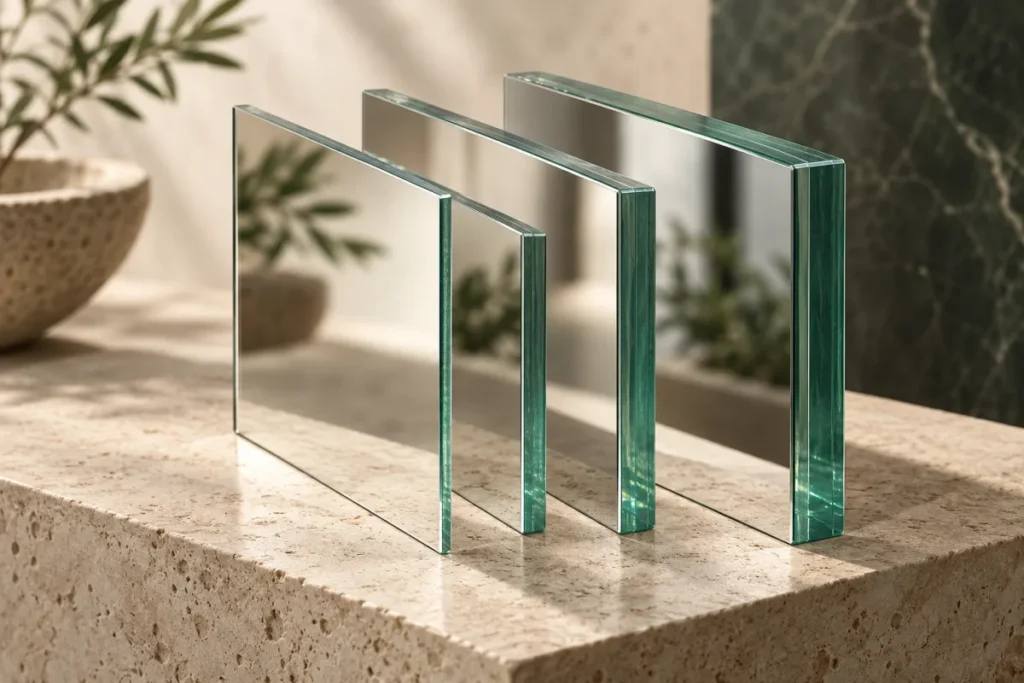
Common mirror glass thicknesses are 3mm, 4mm, 5mm and 6mm. For bathroom mirrors, start by comparing 4mm and 5mm. Smaller, well-supported panels may use 3mm; larger wall panels and selected frameless designs may warrant 6mm. There is no single standard thickness for every mirror. Choose against the panel dimensions, support, mounting system and complete product weight.

MIRROR SIZING & PLACEMENT
Some feng shui traditions discourage mirrors facing the bed; that is a cultural view, not proof of harm. In practice, check whether the mirror reflects unwanted light or makes you uncomfortable. If it does not, you can leave it in place. If it does, try a small adjustment that keeps the room useful for sleeping and getting dressed.

MIRROR SIZING & PLACEMENT
Quick answer: For a bedroom or guest room, compare full-length mirrors about 20–24 in wide × 60–66 in high (51–61 × 152–168 cm). Dressing areas can use a wider 24–36 × 65–72 in planning range. There is no universal outside size; the visible glass, installed height and mounting method determine the head-to-toe view.
MIRROR SIZING & PLACEMENT
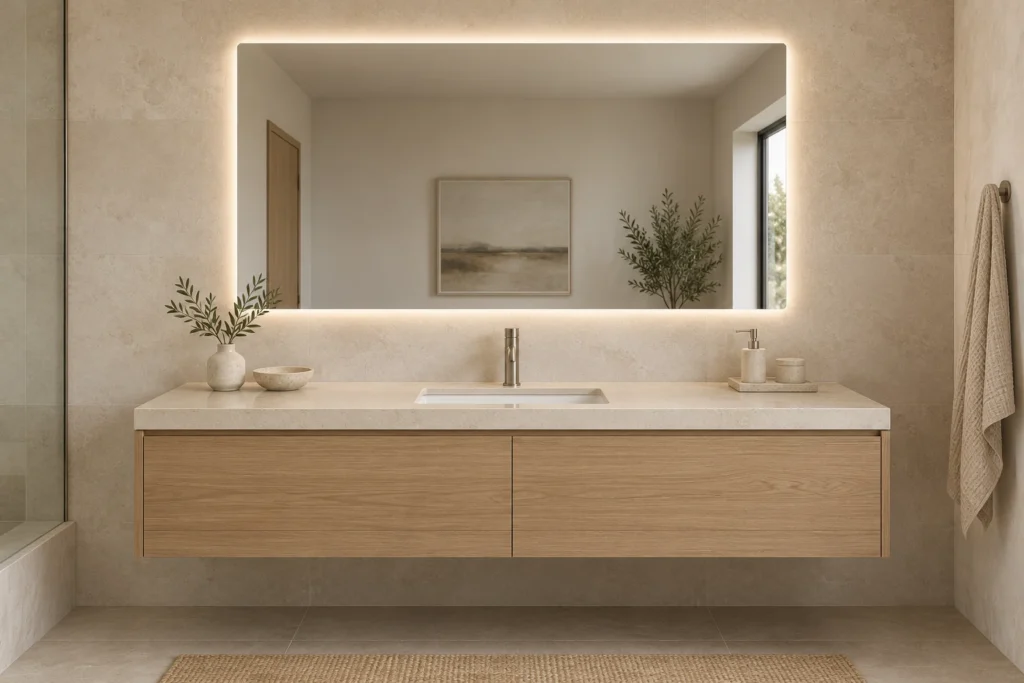
For a 60-inch single-sink vanity, 48 to 56 inches wide is a useful mirror range to explore. With a centered sink and no side sconces, start with 52–54 inches for a balanced look. With side sconces, size the mirror from the clear wall width and complete fixtures, not vanity width alone; a 60-inch wall may need a narrower mirror, such as the 44-inch worked example below.
MIRROR SIZING & PLACEMENT
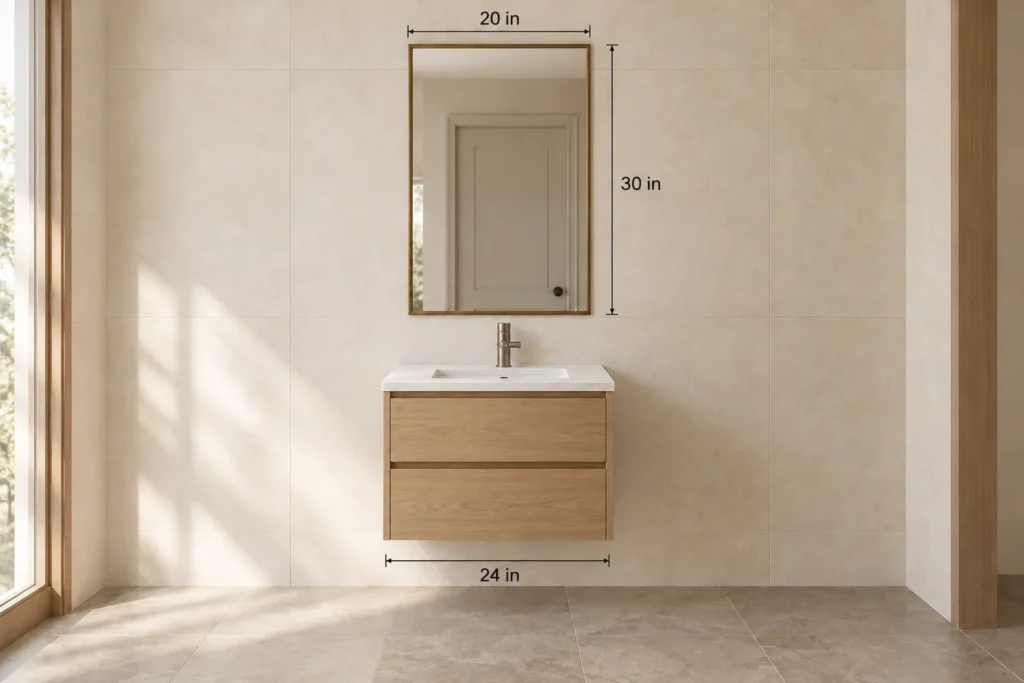
For a 24-inch bathroom vanity, an 18- to 22-inch-wide mirror usually gives the best balance. A 20 × 30-inch mirror is a dependable starting point for a centered single sink, leaving about 2 inches of vanity width visible on each side. Before ordering, check the frame, faucet, backsplash, lighting, wall edges and mounting space—the vanity width alone cannot confirm the final fit.
MIRROR SIZING & PLACEMENT
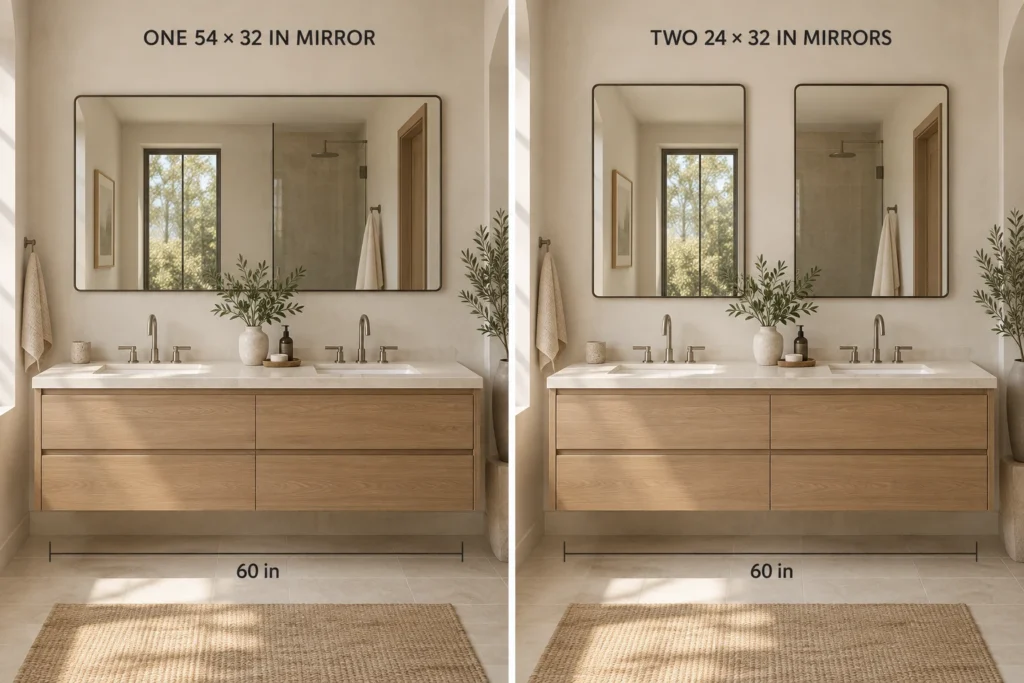
For a 60-inch double vanity, compare one mirror 50–56 inches wide with two mirrors 20–26 inches wide each. Start by outlining one 54 × 32-inch mirror or two 24 × 32-inch mirrors. These are size combinations to test, not universal specifications. The right choice depends on your actual sink centers, usable wall height, lighting and complete mirror dimensions—including the frame.
MIRROR SIZING & PLACEMENT
Choose a mirror for a 30-inch vanity by comparing widths, shapes, lighting positions and available wall space.
MIRROR SIZING & PLACEMENT
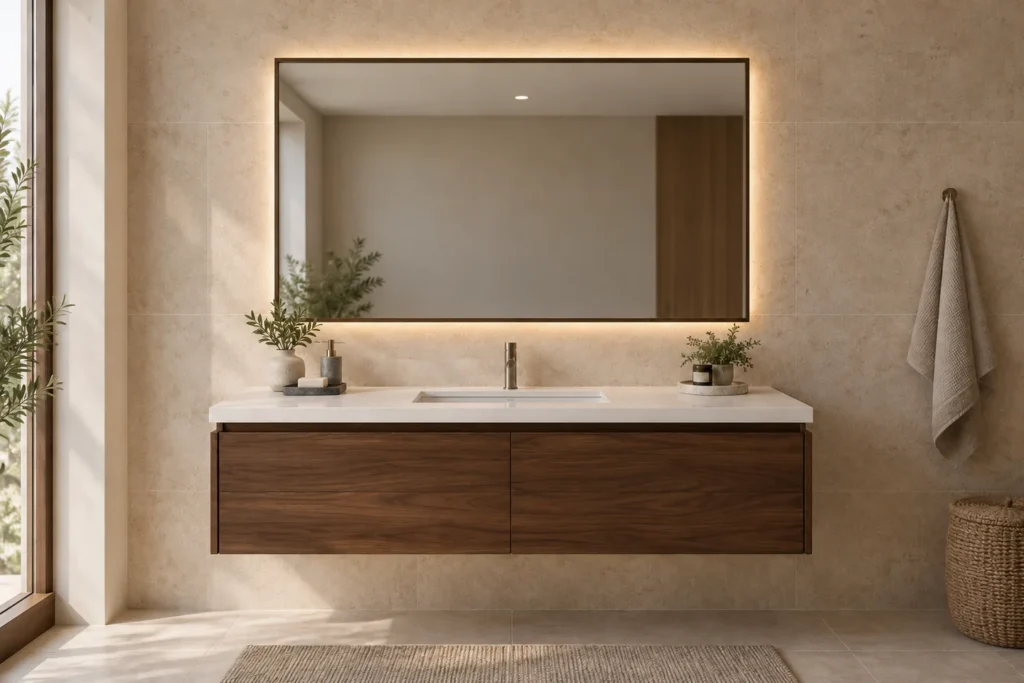
For most 48-inch single-sink vanities, start with a 40- or 42-inch-wide mirror. A centered 40-inch mirror leaves 4 inches on each side, while a 42-inch mirror leaves 3 inches. Choose 36–38 inches when side sconces limit the width, or consider 42–44 inches for a fuller look on an open wall. For round mirrors, start with a diameter of 34–38 inches.
MIRROR SIZING & PLACEMENT
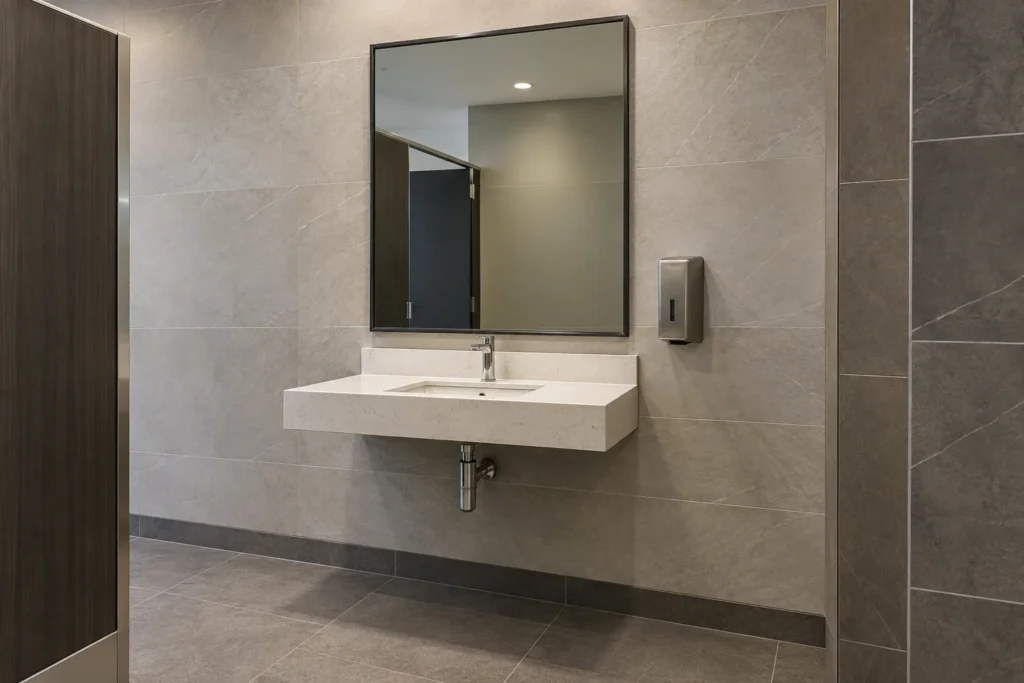
ADA mirror height depends on where the mirror is installed and where its usable reflecting surface begins. Under Section 603.3 of the 2010 ADA Standards, the bottom of the reflecting surface is limited to 40 inches above the finished floor over a lavatory or countertop, or 35 inches elsewhere. The often-quoted 74-inch top edge is advisory guidance. Here is how to apply, document, and verify those dimensions.
You’re up to date. More practical guides to come.

Open WeChat and scan this QR code to contact our team.