
Select an existing direction
Begin with an available shape or construction direction, then confirm size mix, frame finish, mirror and packaging.
Explore model directions →Custom wood framed mirrors developed for retail collections, hospitality projects and private-label programs. Specify the frame construction, profile, finish, mirror glass, mounting and export packaging.
Choosing the correct route helps define what must be quoted, sampled and approved. It also prevents a simple finish change from being treated like a completely new engineered product.
Begin with an available shape or construction direction, then confirm size mix, frame finish, mirror and packaging.
Explore model directions →Adjust dimensions, profile, finish, mirror glass, lighting, mounting or packaging while retaining a proven design foundation.
Send modification requirements →Start from a drawing, finish board or design reference. Engineering review identifies tooling, construction and approval requirements.
Review engineering inputs →Use this page for real wood and wood-appearance framed mirror programs. MDF, PS and rattan frames should remain separate when the substrate or procurement intent differs.
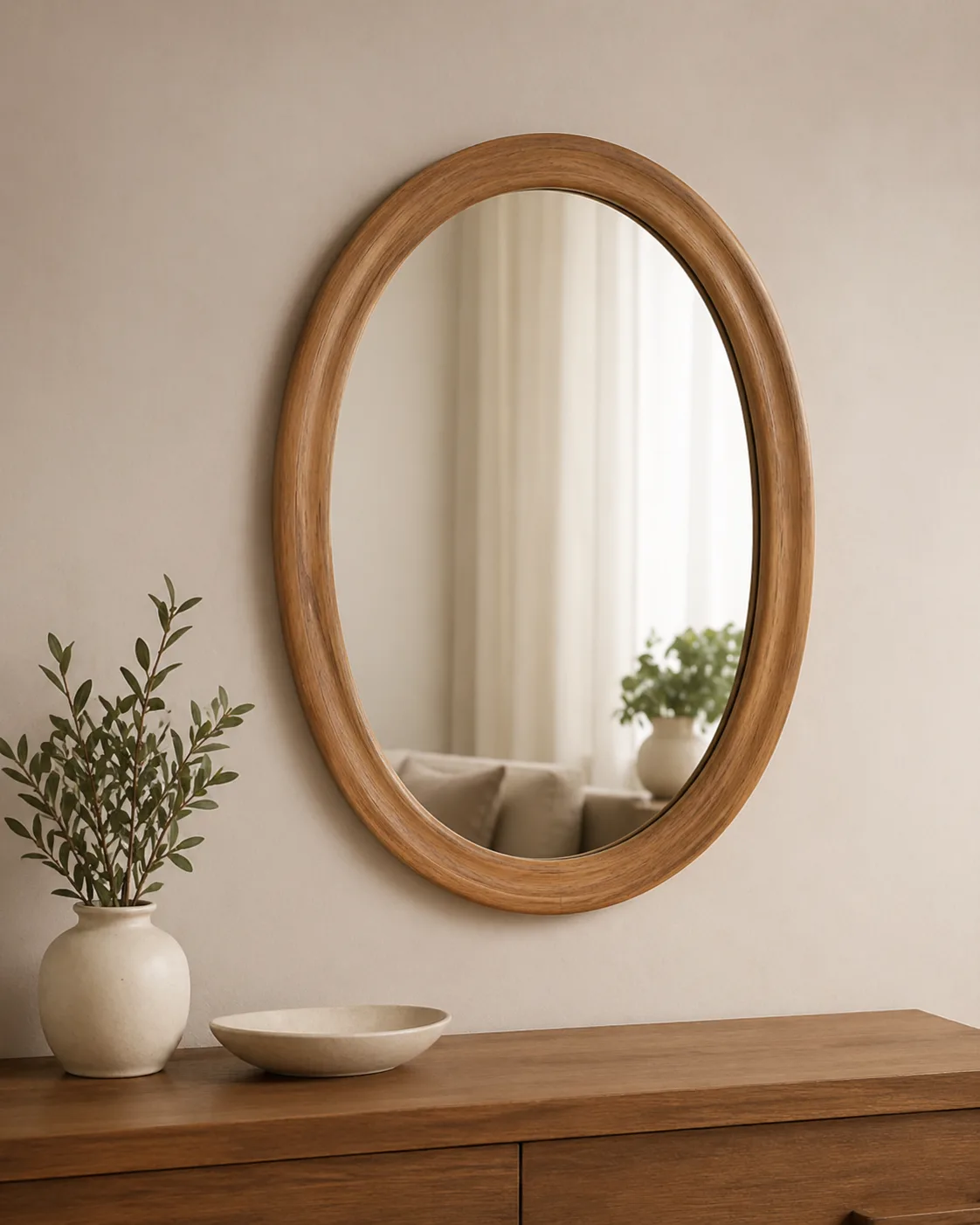
Warm, visible grain for residential, hospitality and lifestyle retail collections.
RECTANGULAR · ROUND · CUSTOM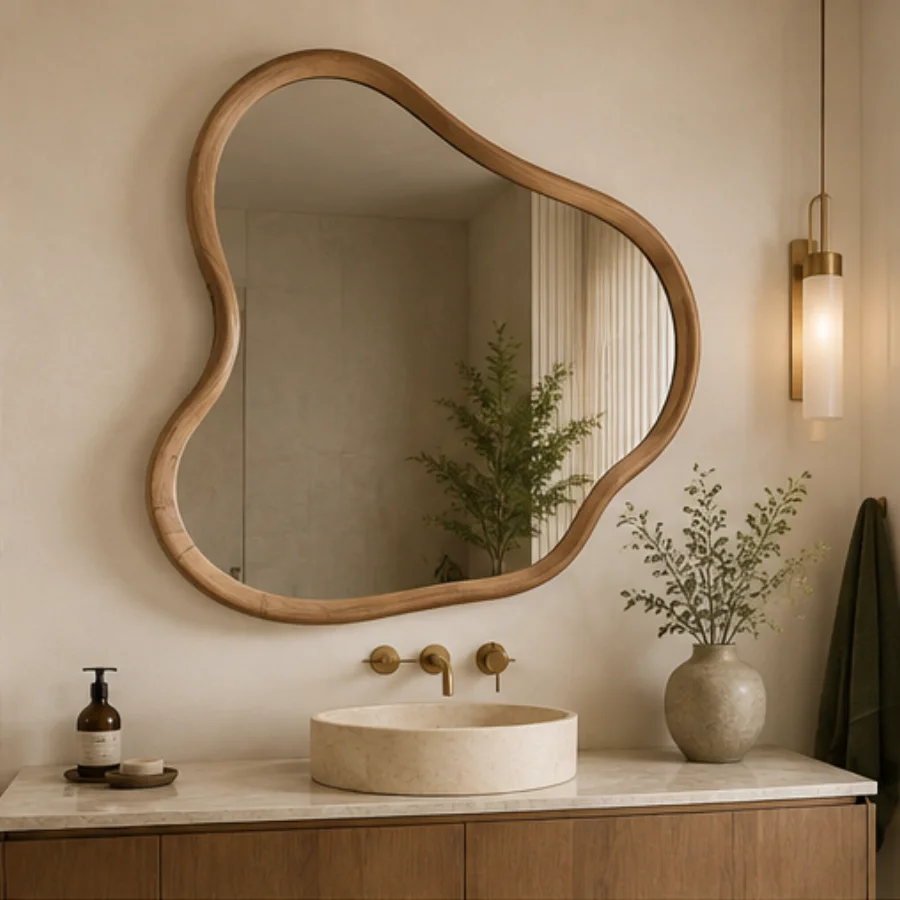
Shape-led designs for boutique interiors, dressing zones and decorative programs.
ASYMMETRICAL · OVAL · ARCH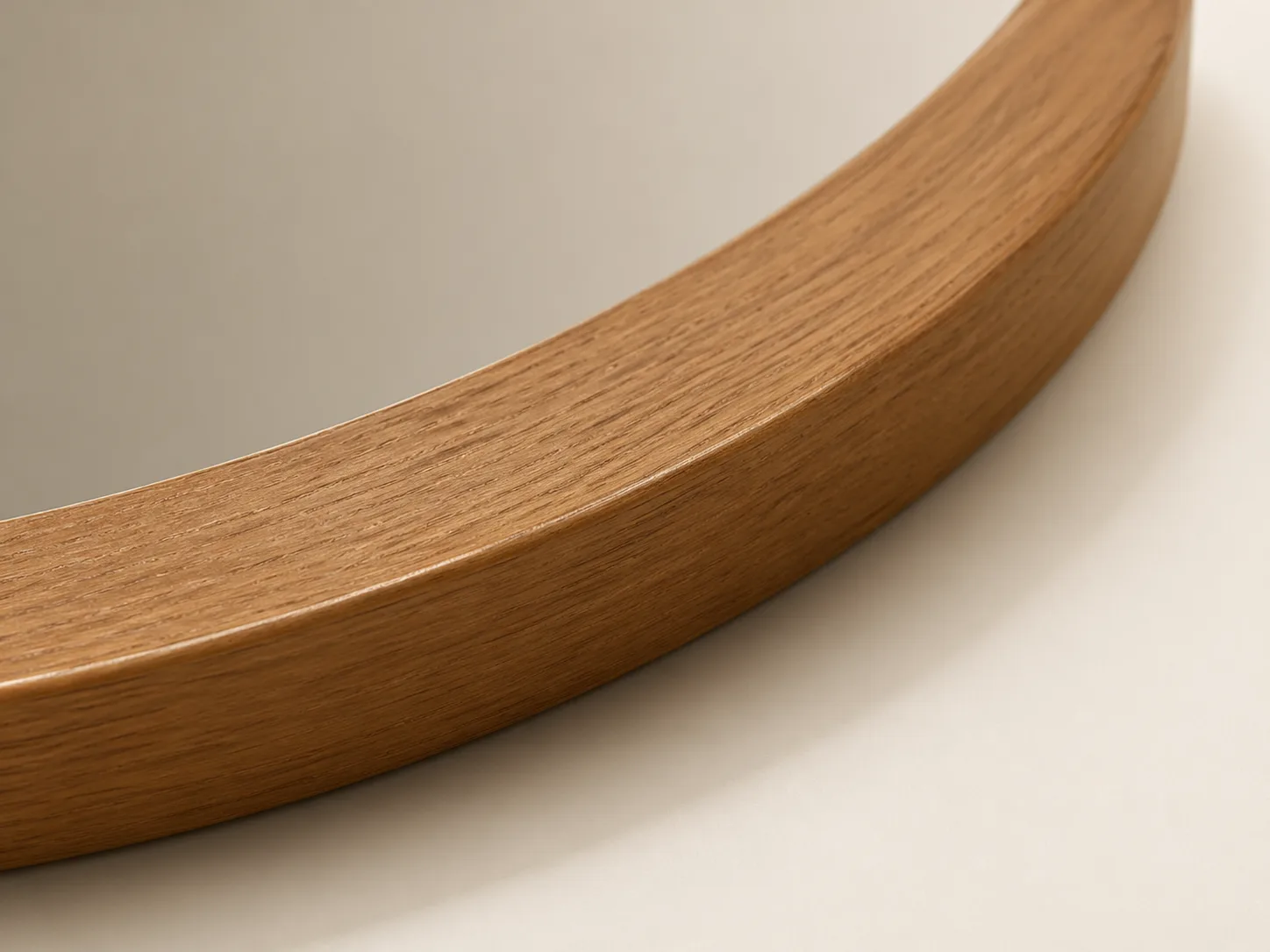
Coordinate grain tone, sheen and profile with furniture or interior finish boards.
SAMPLE MATCHING REQUIREDVisuals on this local concept page include generated/reference imagery. Before publication, replace claims and collection images with verified OJMirror samples, material records and project photography.
These cards organize available product directions; they are not published stock SKUs. Dimensions, construction, finish, lighting and commercial terms must be confirmed for each requested model.
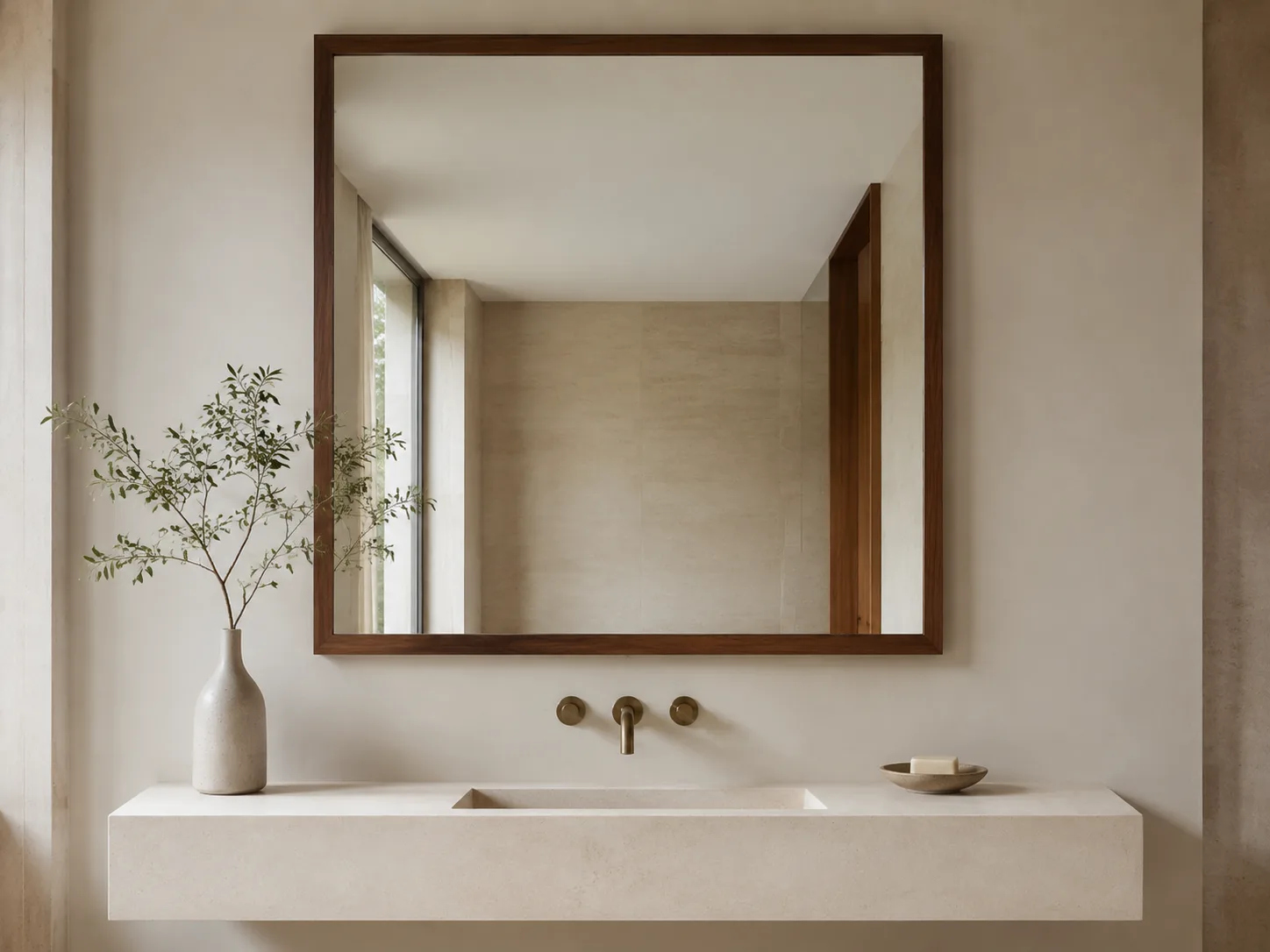
Core format for bathroom vanities, guestrooms and furniture collections.
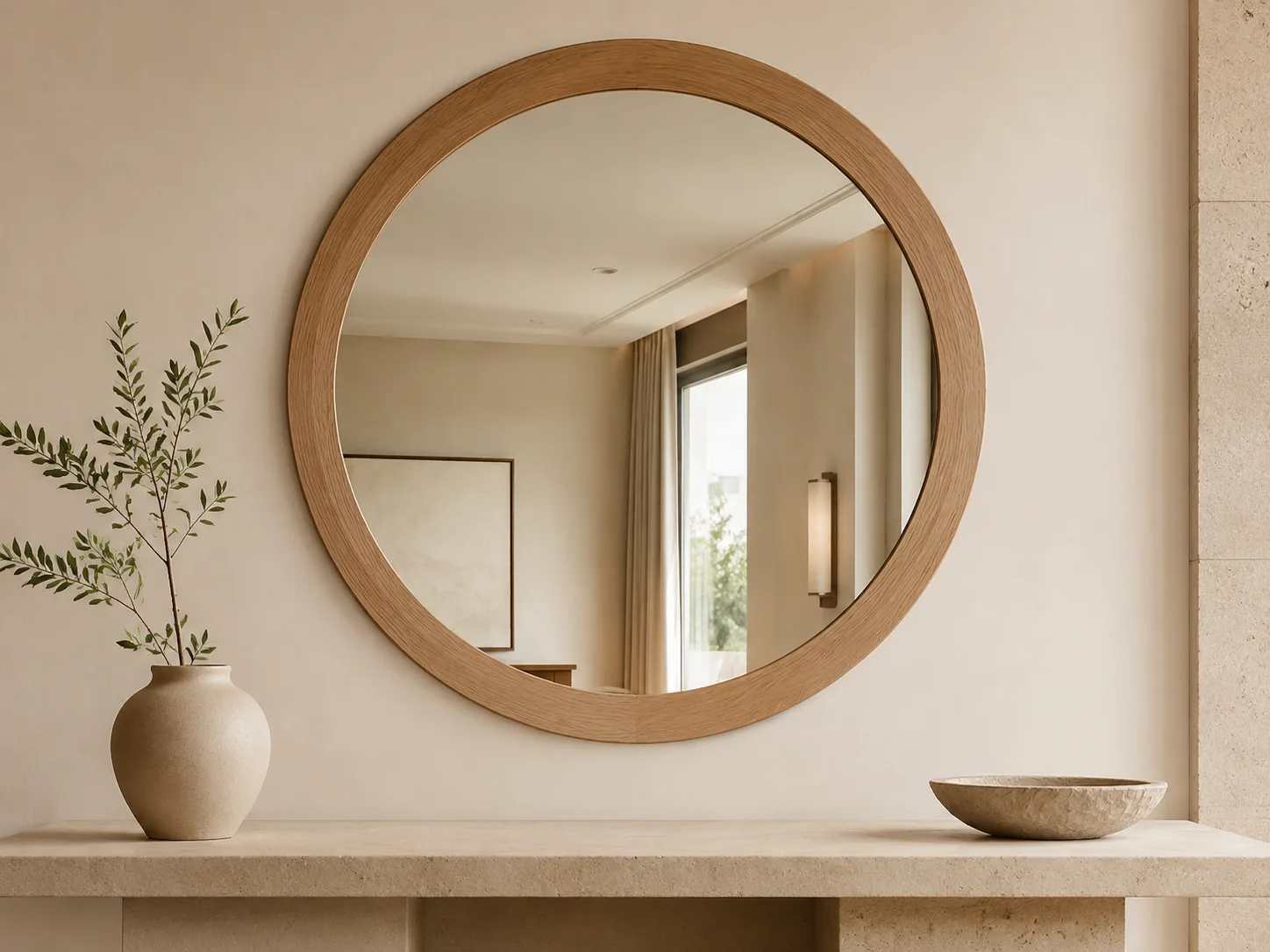
Decorative format for vanities, bedrooms and lifestyle retail.
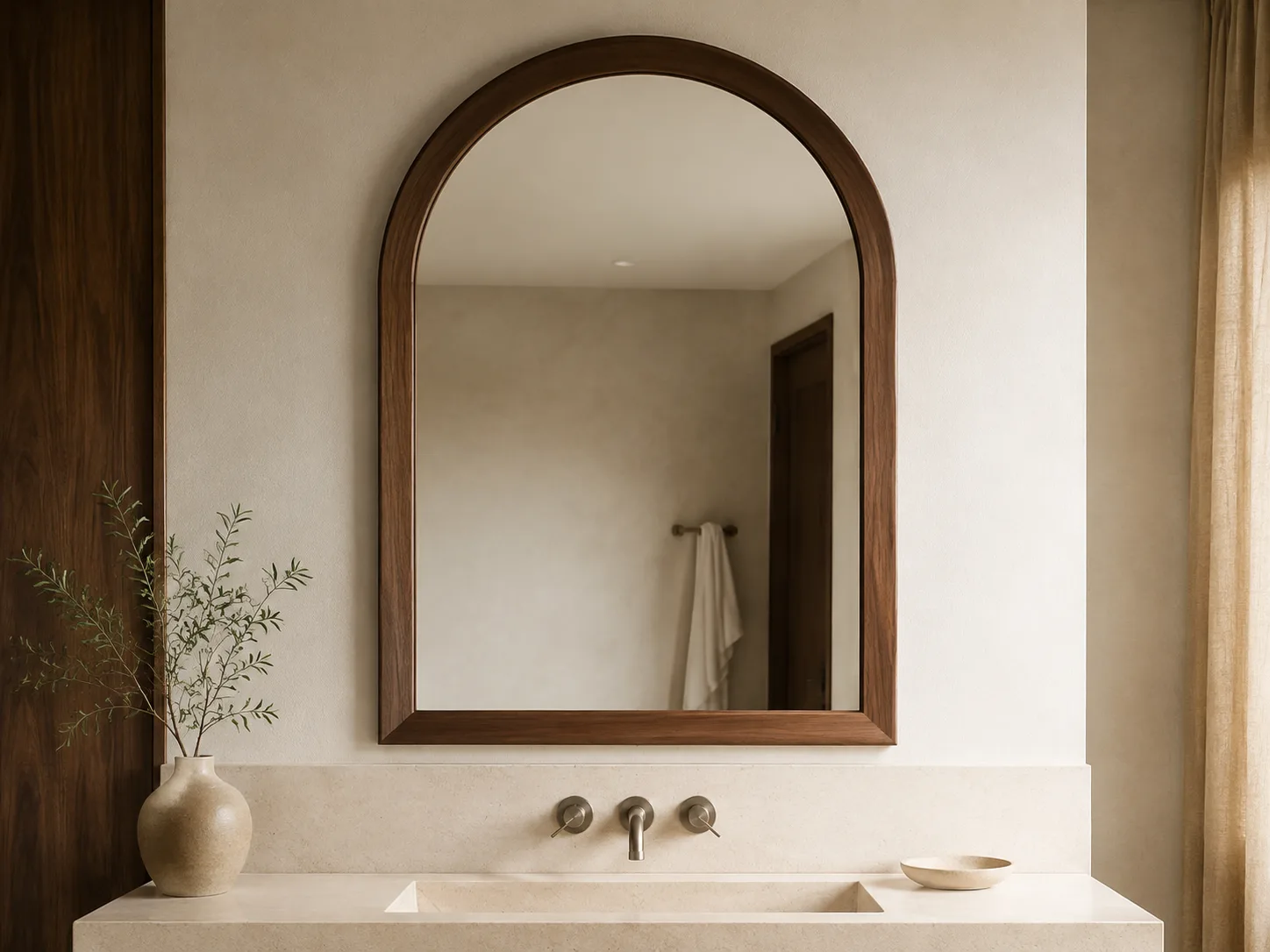
Shape-led statement piece for hospitality and design collections.
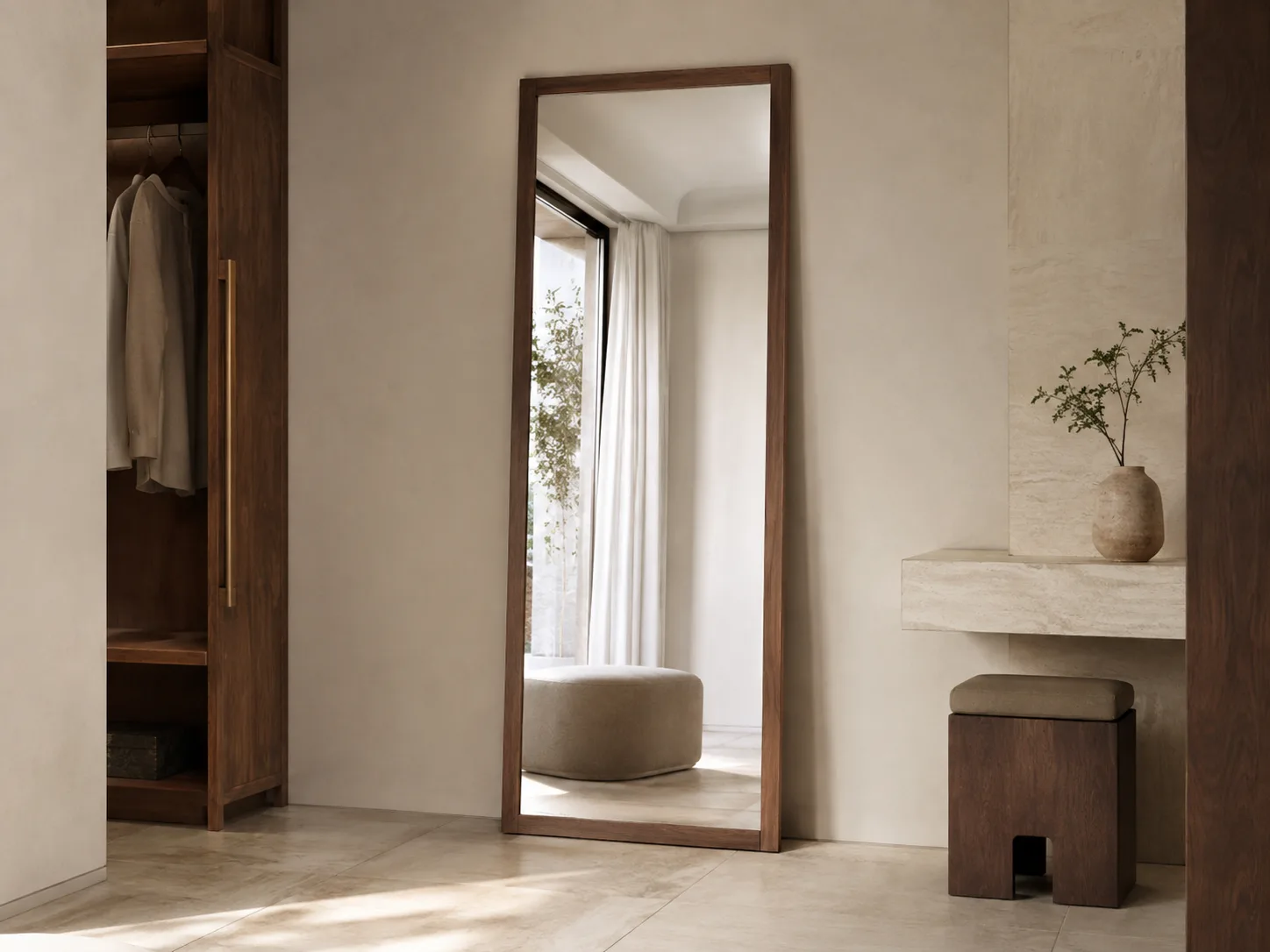
Large-format wall-mounted or leaning direction for guestrooms and retail.
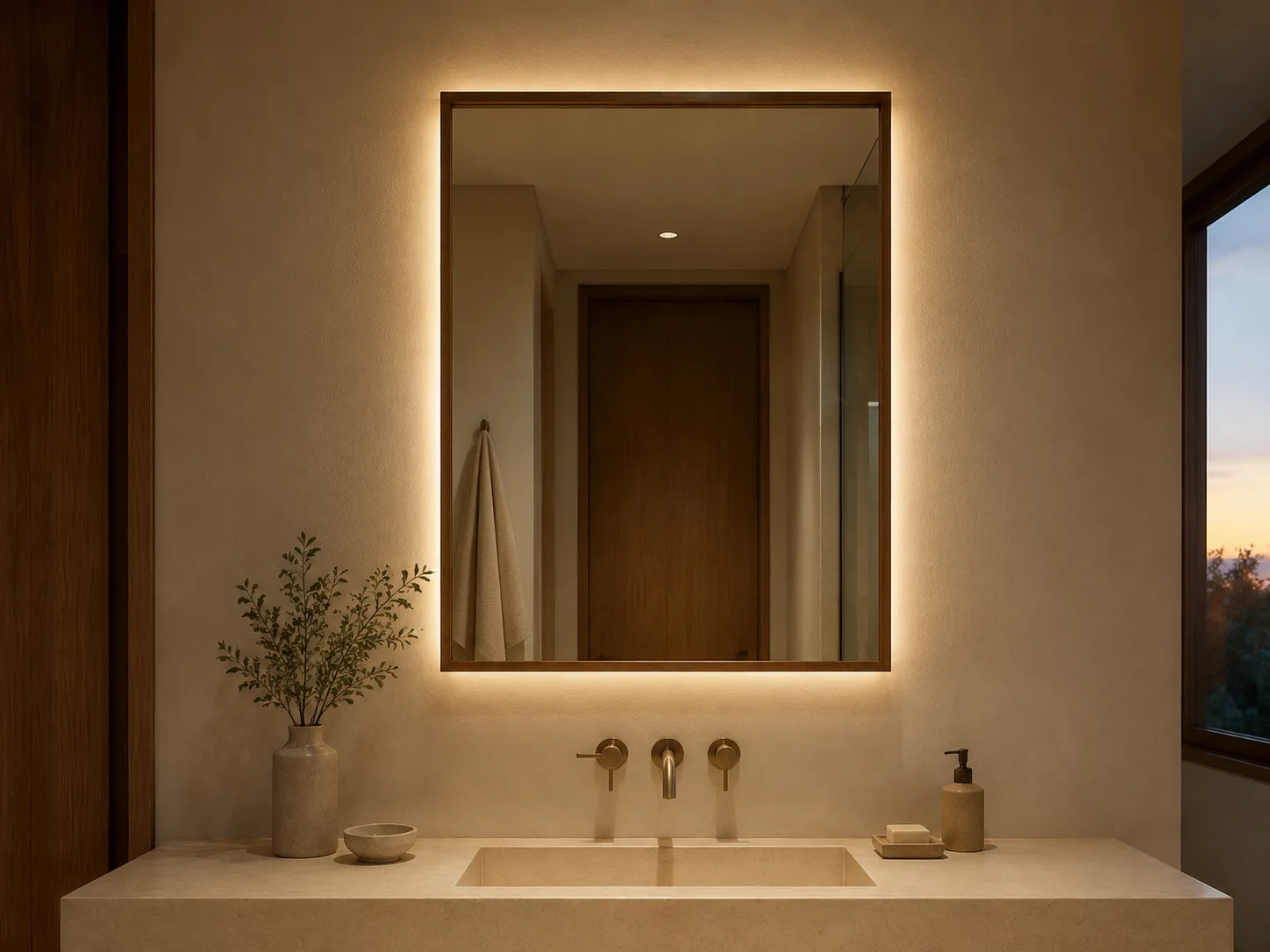
Ambient wall glow while retaining a visible wood-frame border.
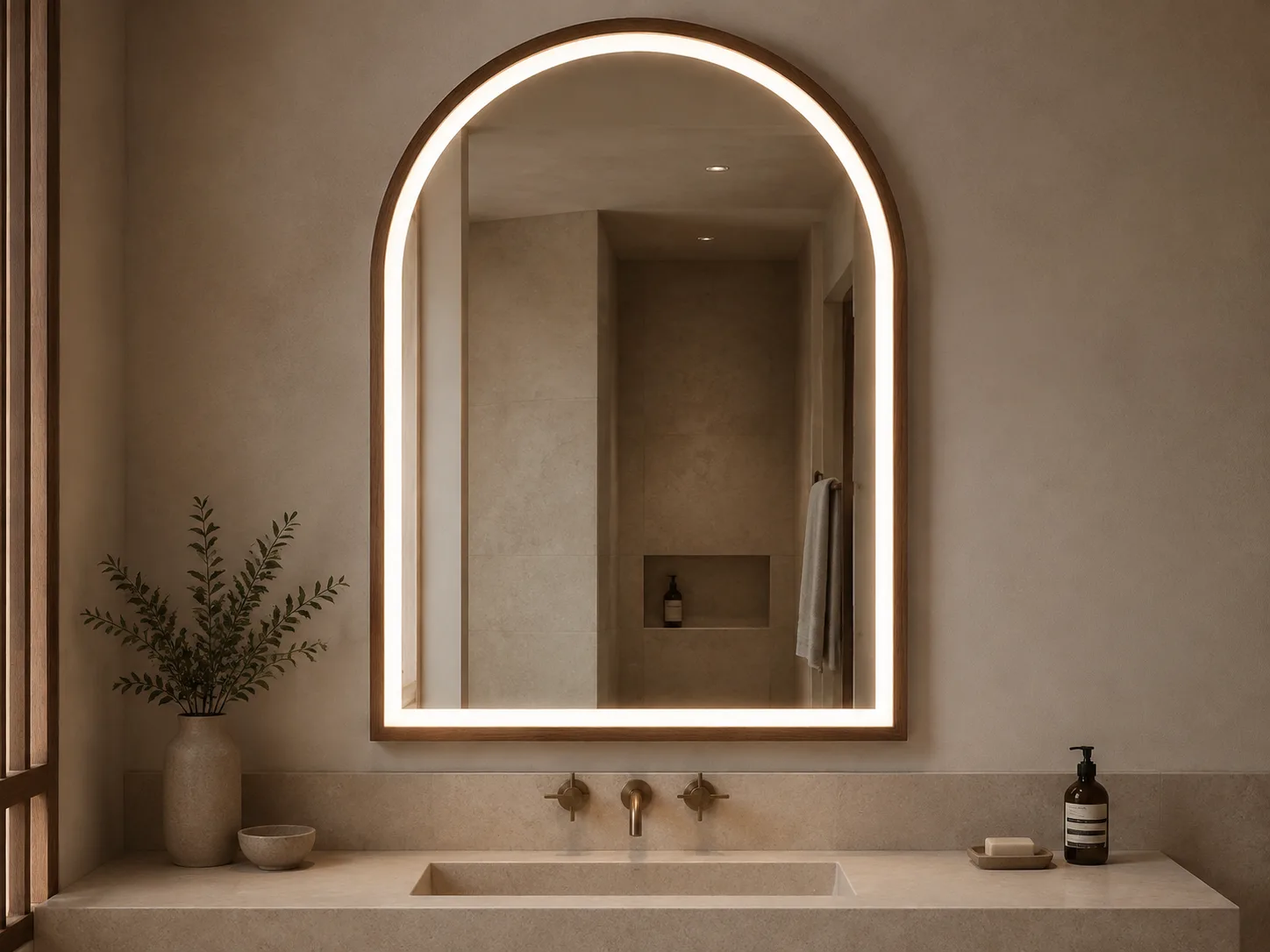
Task-lighting direction for premium vanity and hospitality applications.
Send the model mix, quantities, finish standard, destination and required delivery date.
Lighting can be developed as a distinct option within the wood framed collection. The frame remains the visual material story while the mirror, light path, electrical system and service access are engineered as one assembly.
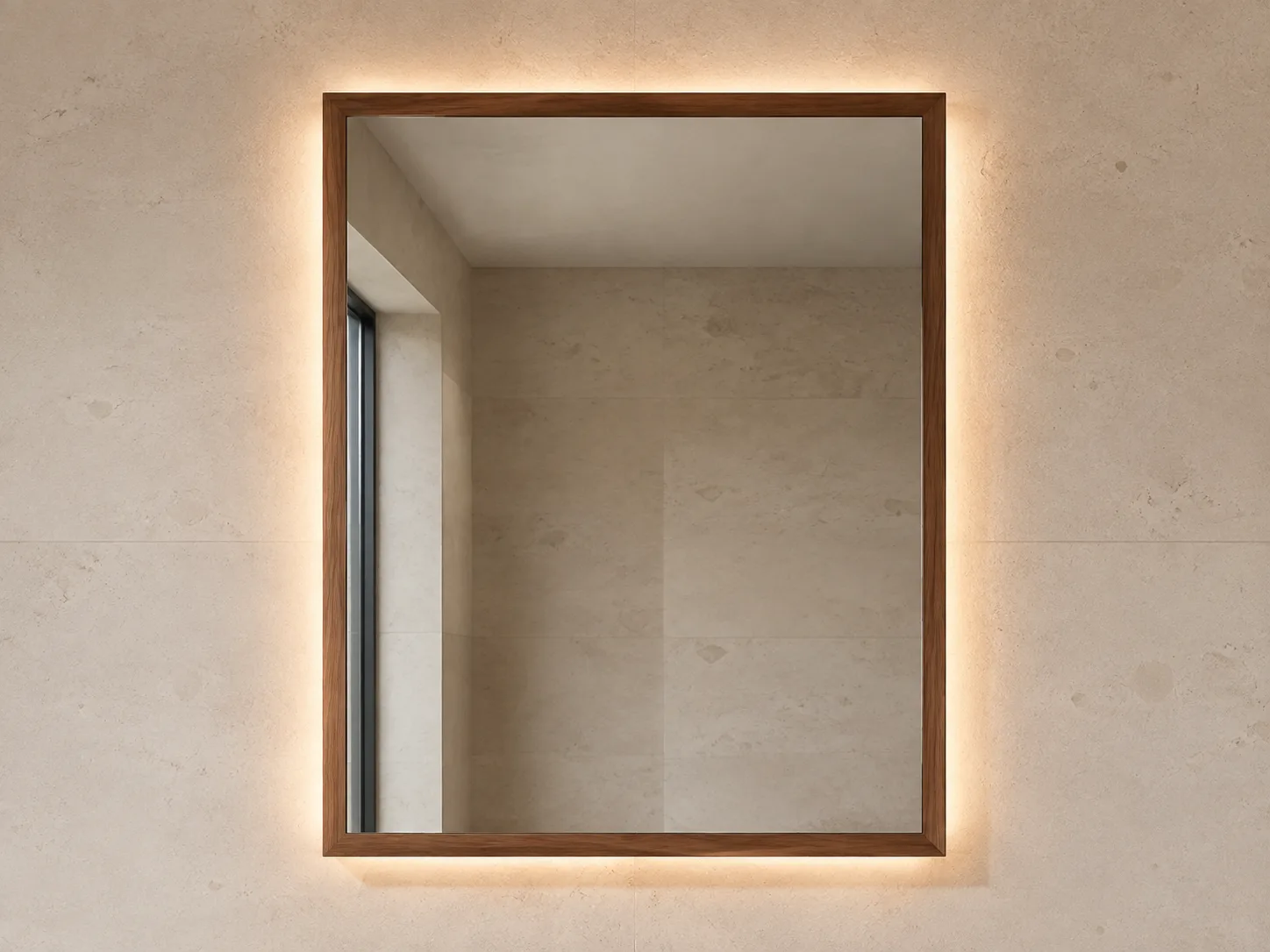
Visual focus: the mirror face stays unlit while a concealed rear source creates a soft perimeter halo on the wall. Concept visual—not a finished product claim.
A concealed rear light creates a wall glow while keeping the mirror face visually clean.
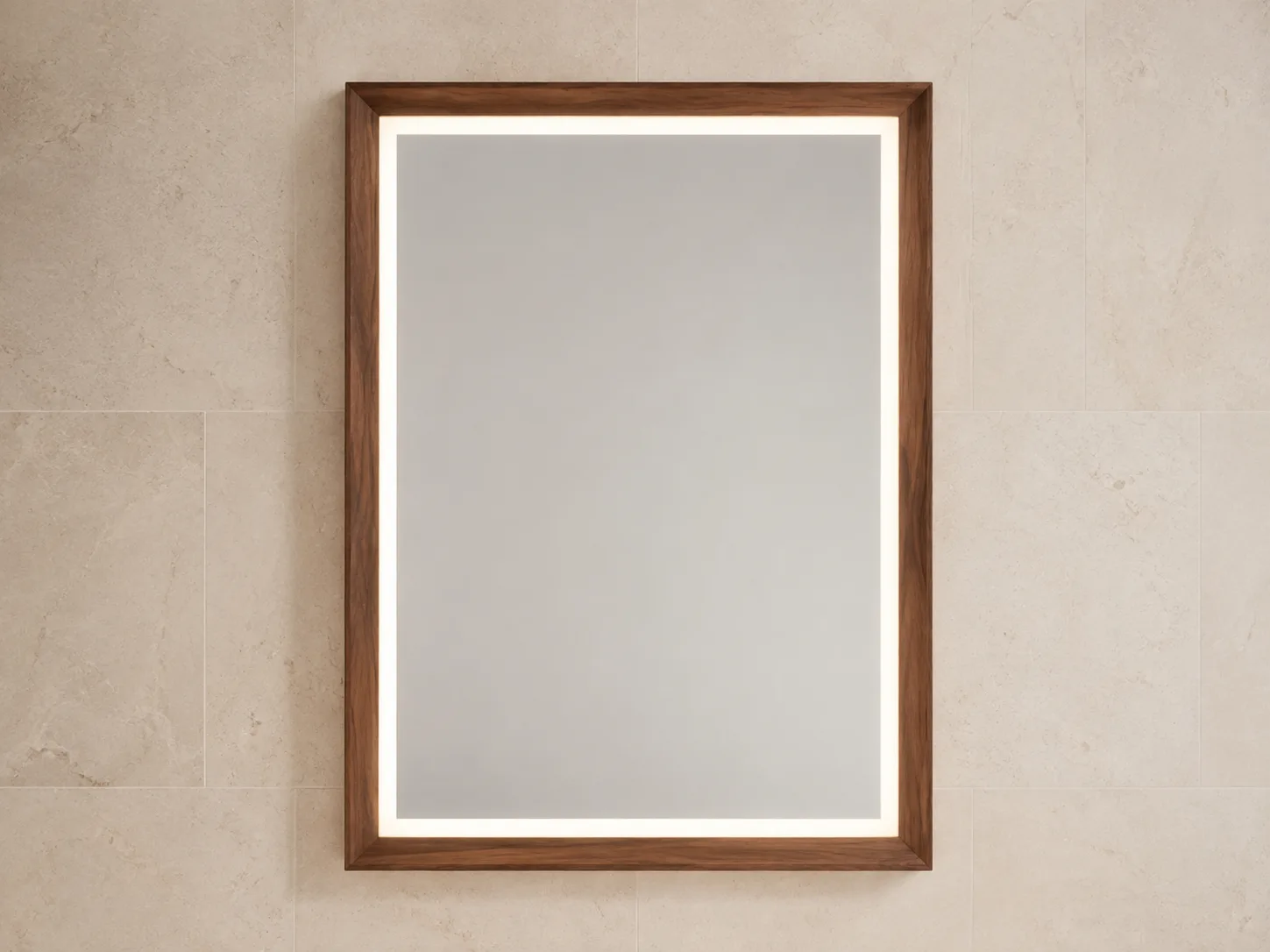
Visual focus: the illuminated band sits inside the wood frame to provide face lighting; the wall behind remains free of a rear halo. Concept visual.
An illuminated mirror zone supports task lighting while the wood profile frames the product.
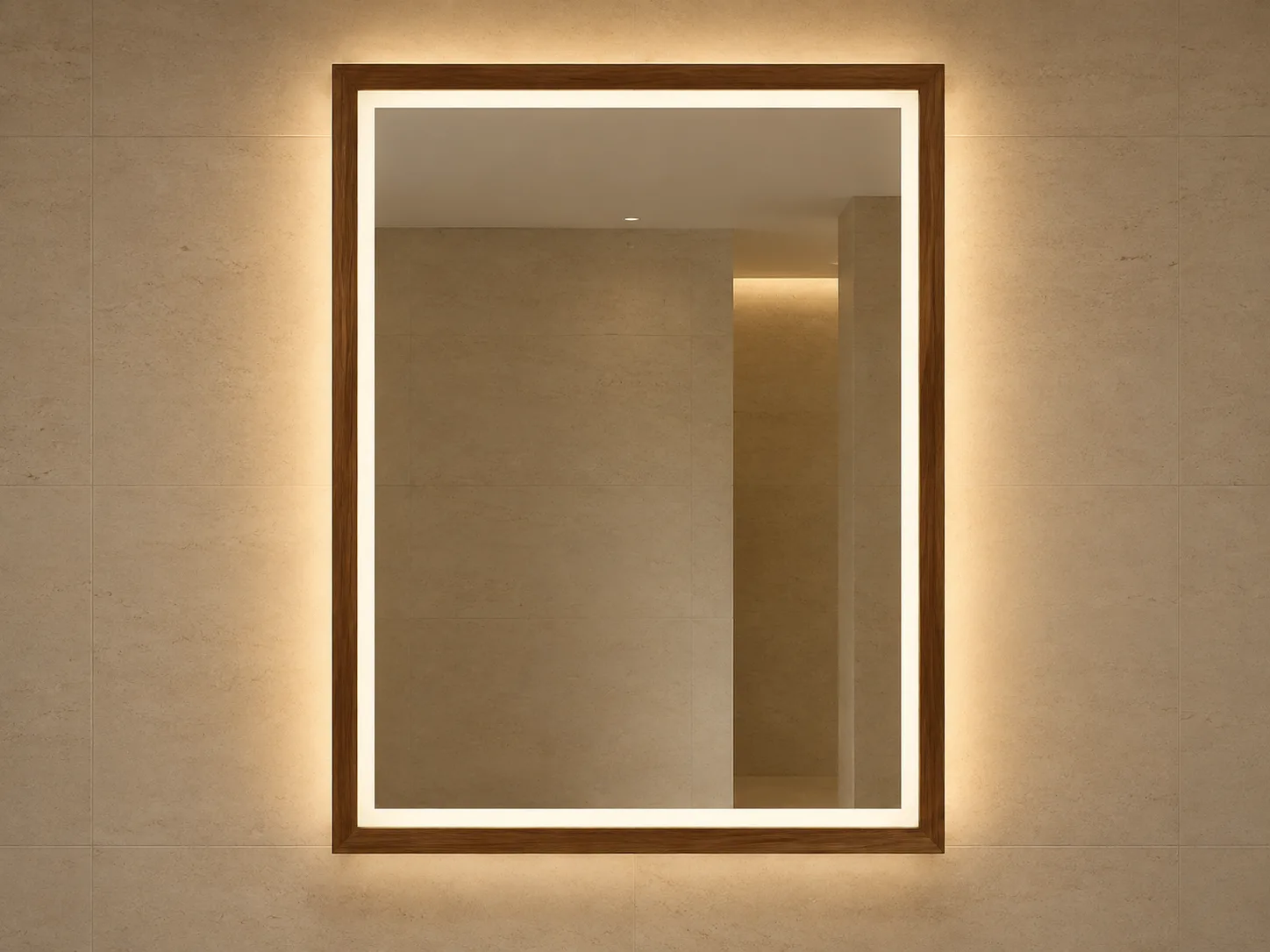
Visual focus: a front task-light band and separate rear ambient halo are visible together. Controls and electrical capacity require engineering confirmation.
Combined lighting can serve premium hospitality or vanity programs when output and controls are specified.
A lighted wood mirror requires a defined wiring route, driver location, heat-management approach, mounting clearance and maintenance access. Exact construction must be verified from an approved drawing and sample.
Electrical specifications vary by destination market and product configuration. These fields should be confirmed before pricing, certification review or sample production.
For opaque painted finishes, the RFQ can reference a RAL Classic number. For transparent or semi-transparent wood stains, the RAL/Pantone reference is only a color direction; the final standard must be an approved physical sample on the selected wood or veneer.
On-screen swatches are approximate simulations only. Confirm production color against an official physical RAL color sample under agreed lighting and sheen conditions.
Wood-stain rule: record the substrate/species, stain formula, topcoat, sheen and signed physical control sample. A color-card number alone does not control natural grain or absorption variation.
Market terminology can cover very different products. Every quotation should identify the frame material and surface construction so project teams can compare like with like.
Commercial development should lock the visible design together with the hidden construction. The specification below shows what must be confirmed before a sample or purchase order can become production-ready.
Tolerance values, maximum sizes, mirror thicknesses, electrical ratings and mounting loads are deliberately not published here until verified against OJMirror's actual production records.
A single color name such as “walnut” is not an approval standard. Wood tone changes with species, veneer, grain, sanding, stain, topcoat, lighting and batch variation.
Identify whether the control is a physical sample, approved product, finish board, color code or visual direction.
Separate initial development samples, revised samples, signed control samples and production retention samples.
Agree viewing distance, lighting, angle and which surfaces are considered appearance faces.
Define acceptable grain, tone, knot, patching and sheen variation for natural or veneered material.
At minimum: frame material identity, profile, color direction, sheen, visible grain standard, corner appearance, mirror glass, backing and mounting. The signed sample should be tied to a drawing revision and purchase-order specification.
Wood framed bathroom mirrors must be reviewed as an installed product. Coating alone does not determine suitability; room ventilation, splash exposure, wall condition, edge sealing, backing and maintenance all affect performance.
Define ordinary residential humidity, high-use hotel bathroom conditions or direct splash risk.
Confirm wall flatness, mounting clearance, airflow and whether the rear face contacts a damp surface.
Natural or engineered wood construction can respond differently to environmental change; construction must match the use case.
Clarify hardware supply, installer verification, wall anchors and site-specific load responsibility.
No universal “waterproof wood mirror” claim is made. Any humidity, corrosion or coating performance statement requires a defined test method and verified product result.
These inputs let engineering and sales identify open questions early, reduce sample revisions and make the quotation comparable.
Every program is quoted against confirmed specifications. Lighted models add electrical review and function testing to the normal frame, mirror and finish approval route. Lead time, MOQ and testing scope remain order-specific.
Quality should be tied to approved drawings and samples. The checkpoints below describe the required control logic; frequency, acceptance criteria and records remain order-specific.
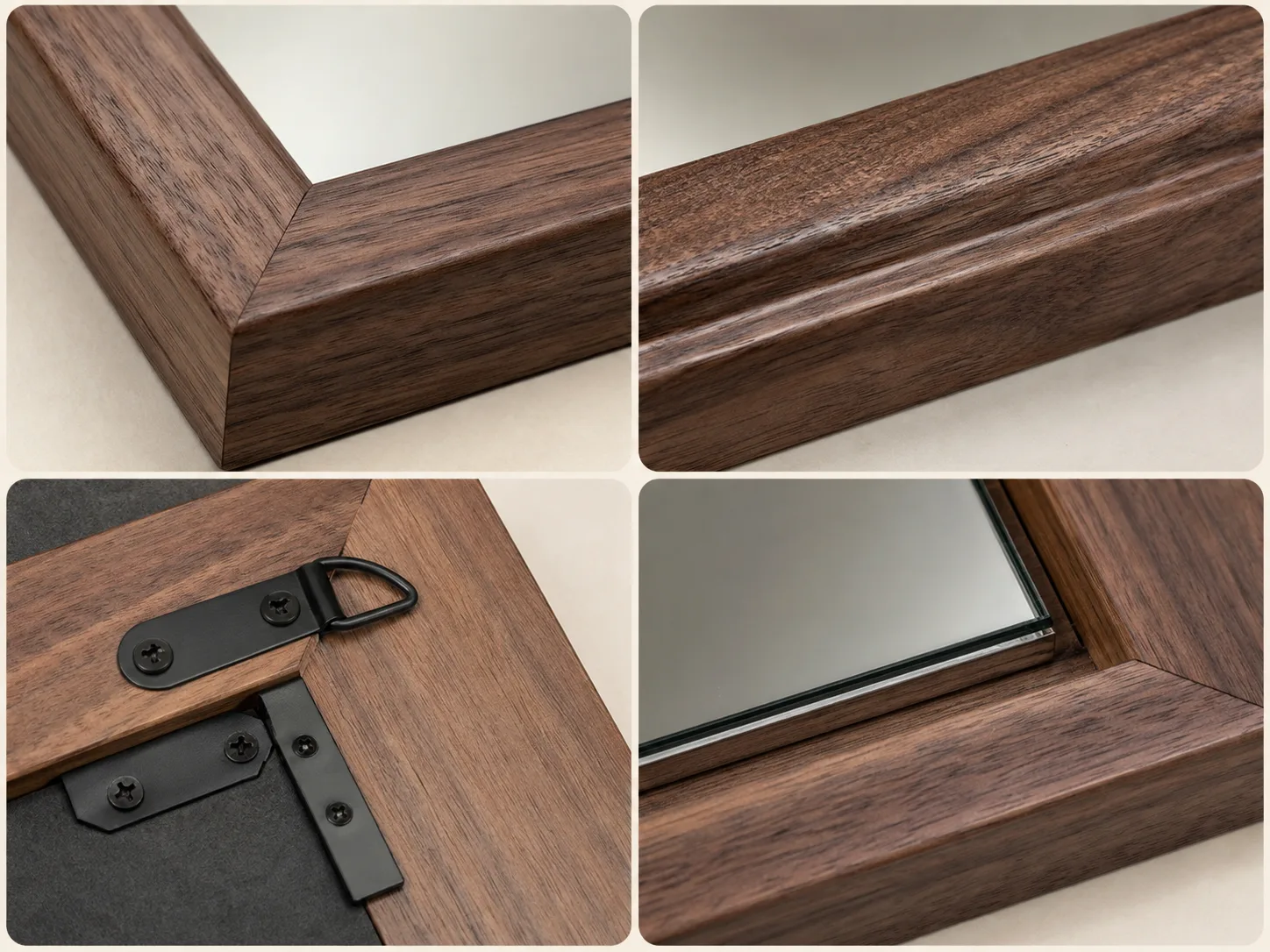
Review joint alignment, visible surfaces, dimensions and the signed finish reference.
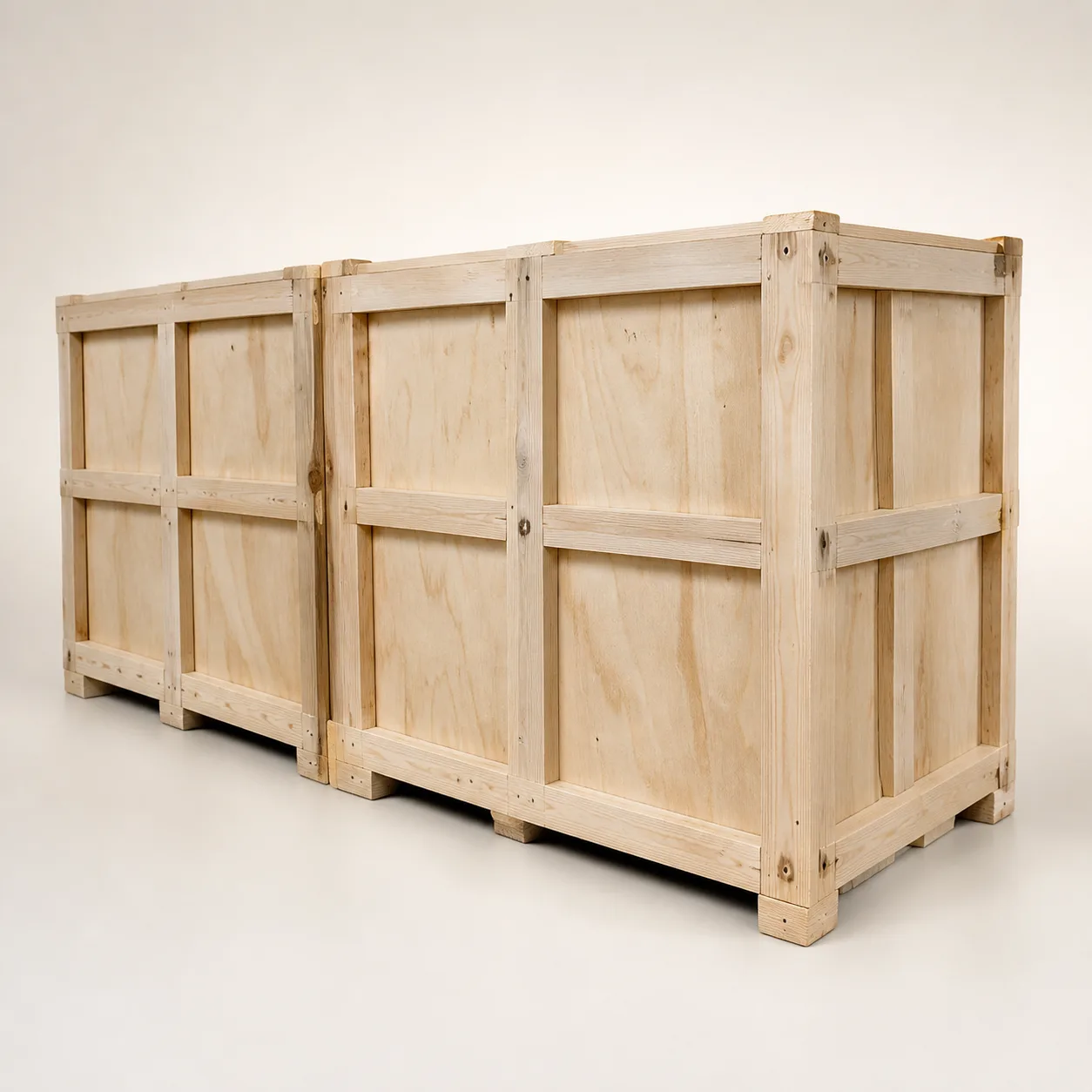
Carton, corner protection, palletization or wooden-crate reinforcement according to shipment route and order scope.
One packing statement cannot cover every channel. Retail cartons, parcel delivery, palletized project supply and export crates face different handling risks and labeling requirements.
Presentation, barcode, manual, shelf or warehouse handling and master-carton planning.
Confirm:sales unit, label set, carton artworkRepeated drops, multiple orientations, carrier handling and single-unit replacement cost.
Confirm:test protocol and acceptance criteriaRoom or floor identification, staged delivery, installer access and consolidated protection.
Confirm:marking plan and unload sequenceLarge, fragile or route-sensitive loads may require additional structural protection.
Confirm:crate scope, pallet route and destination rulesPackaging descriptions are options, not verified guarantees. Any drop-test, vibration-test or damage-rate claim requires actual records for the selected product and packing configuration.
A specification-ready project needs a controlled document chain, not only a product photo and quotation.
The final construction must be confirmed per selected model. “Wood framed” can describe different substrates and veneers in the market, so the quotation should state the exact material rather than rely on the category name.
Color and finish matching can be evaluated from a physical control sample or defined reference. Natural grain variation and acceptable tolerance should be agreed during sampling.
Identify the sample, revision date, frame material, finish layers, viewing conditions and acceptable natural variation. Keep an approved control and, where required, a production retention sample.
Suitability depends on frame construction, coating, backing, ventilation and installation conditions. The intended environment must be reviewed; this page does not make a blanket moisture-resistance claim.
Only when the rear construction and hardware are designed and verified for both orientations. Orientation should be shown on the approved drawing and installation instructions.
Provide the room schedule, dimensions, quantity by type, finish reference, wall conditions, mounting responsibility, destination, delivery sequence and required project documentation.
Both depend on size mix, frame profile, finish, packaging and production route. Send the quantity schedule and required delivery window for confirmation.
Private-label cartons, labels and project packing can be discussed. Final artwork, compliance marks, quantity and packing tests must be confirmed before production.
The agreed plan may cover dimensions, corner alignment, finish appearance, mirror condition, backing, hardware, labels, accessories and packing. Inspection frequency and acceptance criteria should be written into the order specification.
Include dimensions, destination market, material and finish expectations, reference images and target delivery date.

Open WeChat and scan this QR code to contact our team.