
Non-Lighted Cabinet
A clean mirrored door and storage-focused construction for projects that provide separate vanity lighting.
CONFIGURATION DIRECTION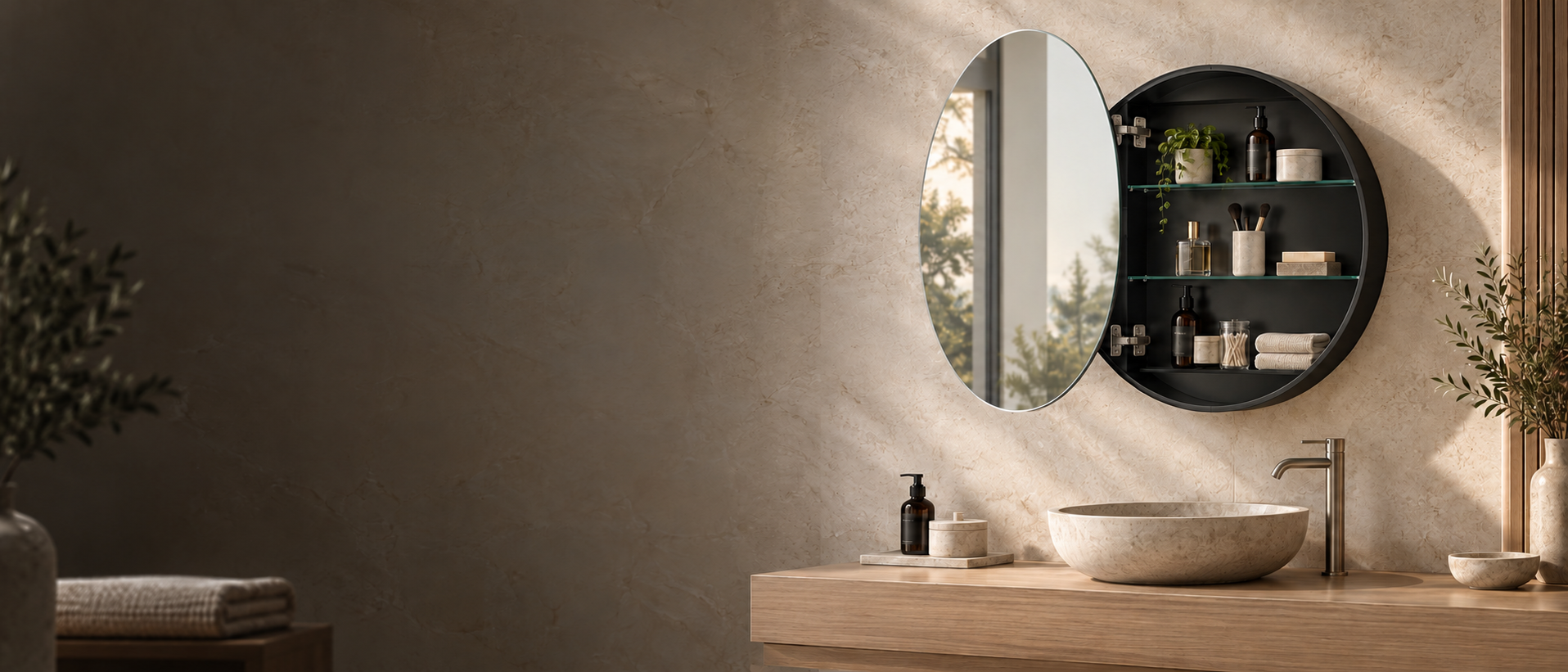
Configure circular mirrored storage cabinets around diameter, usable storage, cabinet depth, door swing, wall condition and electrical requirements.
A round medicine cabinet must coordinate the circular door with a practical cabinet body, hinges, shelves and wall installation. Those constraints make its engineering route different from a decorative round wall mirror.
A clean mirrored door and storage-focused construction for projects that provide separate vanity lighting.
CONFIGURATION DIRECTIONFront or perimeter lighting can be evaluated with CCT, dimming, wiring and certification requirements.
MODEL REVIEW REQUIREDMetal finish, door clearance, body exposure and side-panel treatment are coordinated as one visible assembly.
FINISH SAMPLE REQUIREDStart with the construction inputs that change fit, storage and installation. Final availability and performance must be confirmed for the selected model.
“24-inch round” alone is not enough for production. The mirror door, cabinet body and wall opening need separate, coordinated dimensions.
| Review item | Project input | Engineering check | Status |
|---|---|---|---|
| Outside diameter | Overall visible door / frame size | Glass, edge, frame and door clearance | Confirm by drawing |
| Cabinet-body size | Required storage and wall relationship | Body diameter, depth and usable interior | Confirm by model |
| Rough opening | Wall cavity and framing condition | Opening size, depth, fixing and obstructions | Installer review |
| Door swing | Left/right preference and nearby clearances | Hinge position, opening angle and shelf access | Confirm before sample |
| Electrical route | Voltage, wiring, functions and listing | Driver, controls, cable exit and component scope | Model-specific verification |
| Packing | Quantity and shipment method | Full-edge protection, carton and pallet route | Confirm before production |
Choose a practical round cabinet diameter to start your brief, then confirm the cabinet body, depth, wall opening and storage layout for the selected model.
The quotation drawing should show the circular face, usable interior and wall depth rather than relying on a front-view rendering alone.
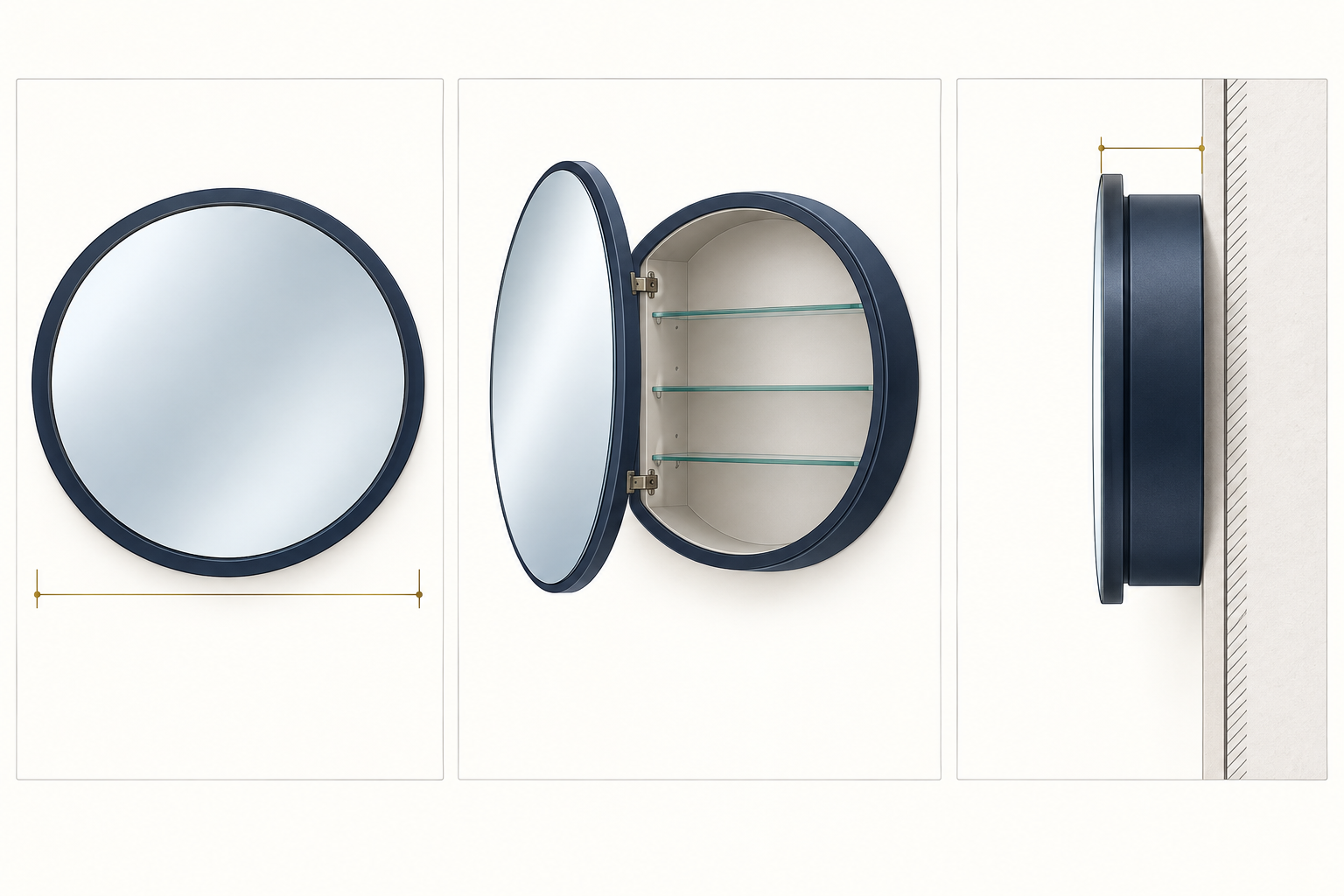
Each decision moves into a drawing, sample and approved batch specification.
Diameter, depth, quantity, market and application.
Door, body, wall opening, wiring and hardware.
Appearance, fit, functions and finish.
Build against the approved configuration.
Check defined points and shipment protection.
Both routes can be reviewed, but the cabinet body, wall cavity, framing, electrical route and side finish must be confirmed for the selected construction.
Send the outside diameter, cabinet-body diameter and depth, rough-opening dimensions if recessed, door swing, quantity and destination market.
These functions can be evaluated by model. Voltage, wiring, controls, component positions and certification requirements must be confirmed before quotation.
Door handing, hinge clearance, shelf count and shelf spacing can be reviewed against the cabinet diameter and internal hardware layout.
Provide wall construction, stud or cavity information, vanity and faucet positions, nearby lights or side walls, power location and the responsible installer’s requirements.
A reference image or drawing, outside diameter, cabinet depth, quantity and destination are enough to begin.
We will identify the missing structural, electrical and packaging decisions before preparing a model-based quotation.

Open WeChat and scan this QR code to contact our team.