
OJMirror / Decorative mirror glass
Antique Mirror Glass Sheets, Tiles & Custom-Cut Panels
Choose a finish, confirm the supply format, and send the sizes that need to be made. The current range covers 5 mm antique mirror glass in 1220 × 2440 mm sheets, custom-cut panels, tiles and coordinated wall-panel sets. Compare eight real finish samples below, then request a physical sample or quotation for your hotel, restaurant, retail or furniture project. Fabrication and construction are confirmed against the drawing and intended use.
5 mm glass · 1220 × 2440 mm standard sheets · 8 real finish samples
Explore the eight finishes · Request samples · Send drawings or BOQ
Explore 8 Antique Mirror Glass Finishes
The eight photographs below show actual OJMirror 5 mm finish samples. Select an AMG code for the initial inquiry, then approve the physical sample and acceptable variation. Names such as foxed mirror glass, aged mirror glass and distressed mirror glass describe appearance, not the age of the material or a guaranteed production process.
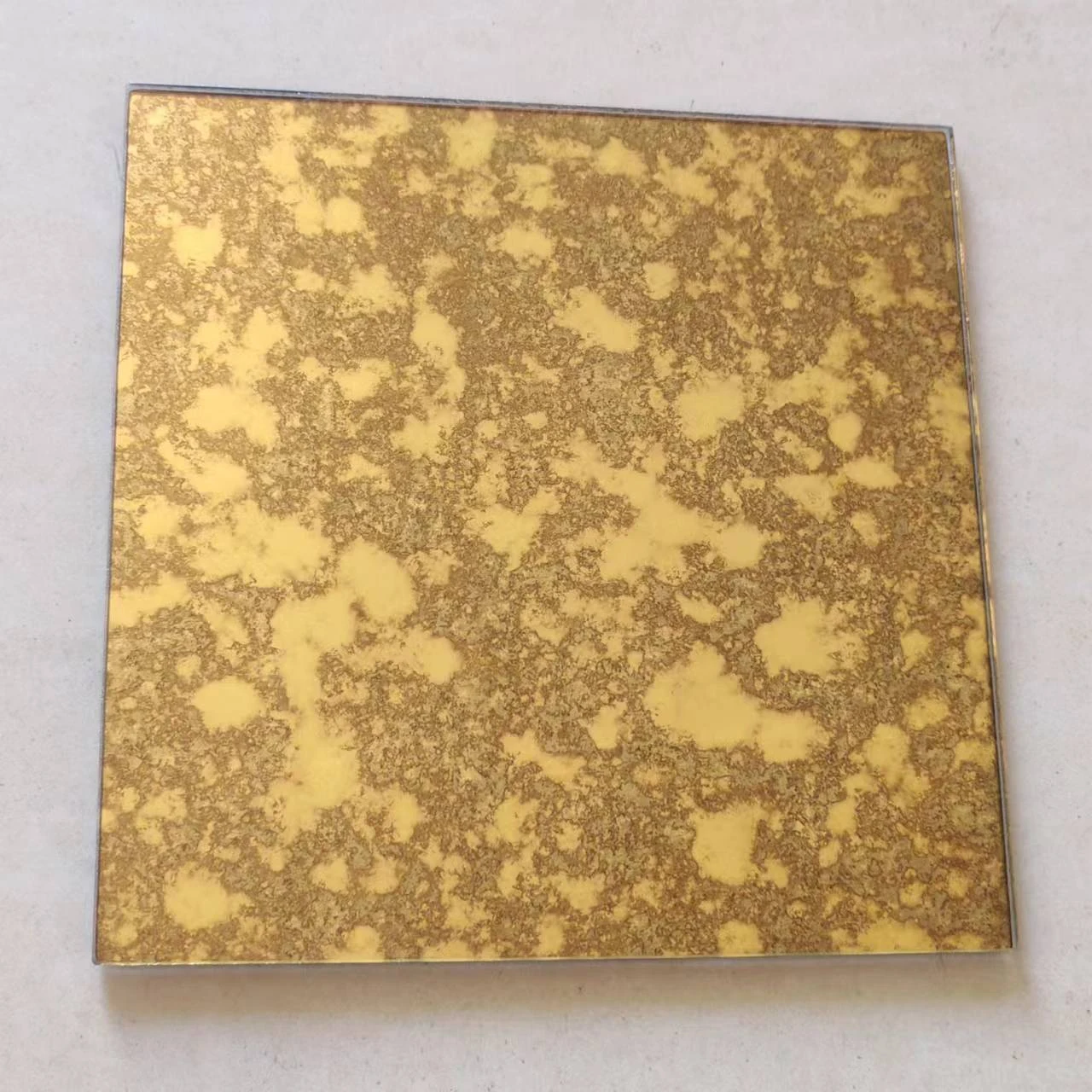
Antique Gold Mottle
Actual OJMirror 5 mm finish sample
Gold tone · Irregular brown-gold mottling
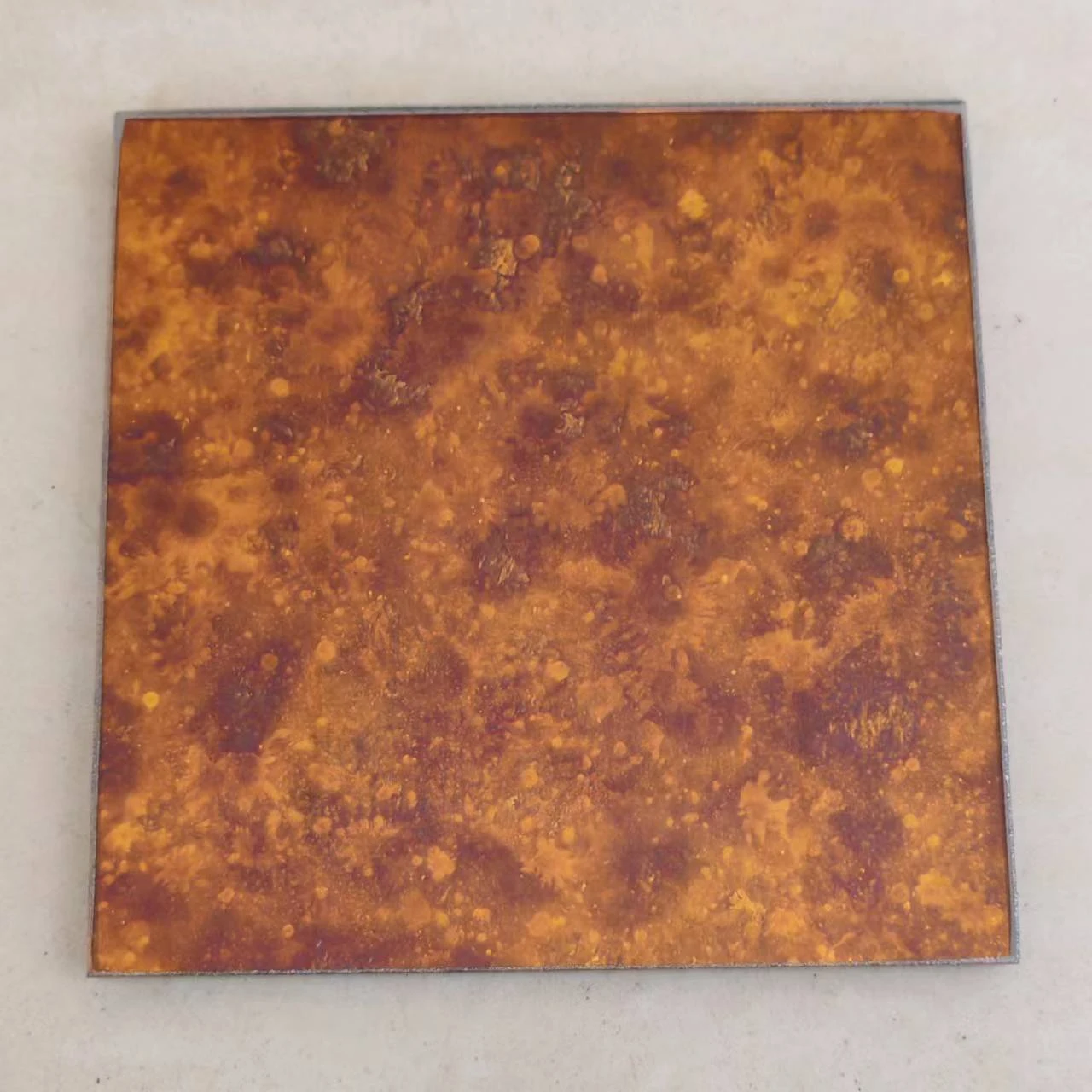
Aged Bronze Mottle
Actual OJMirror 5 mm finish sample
Bronze tone · Dense rust-brown mottling
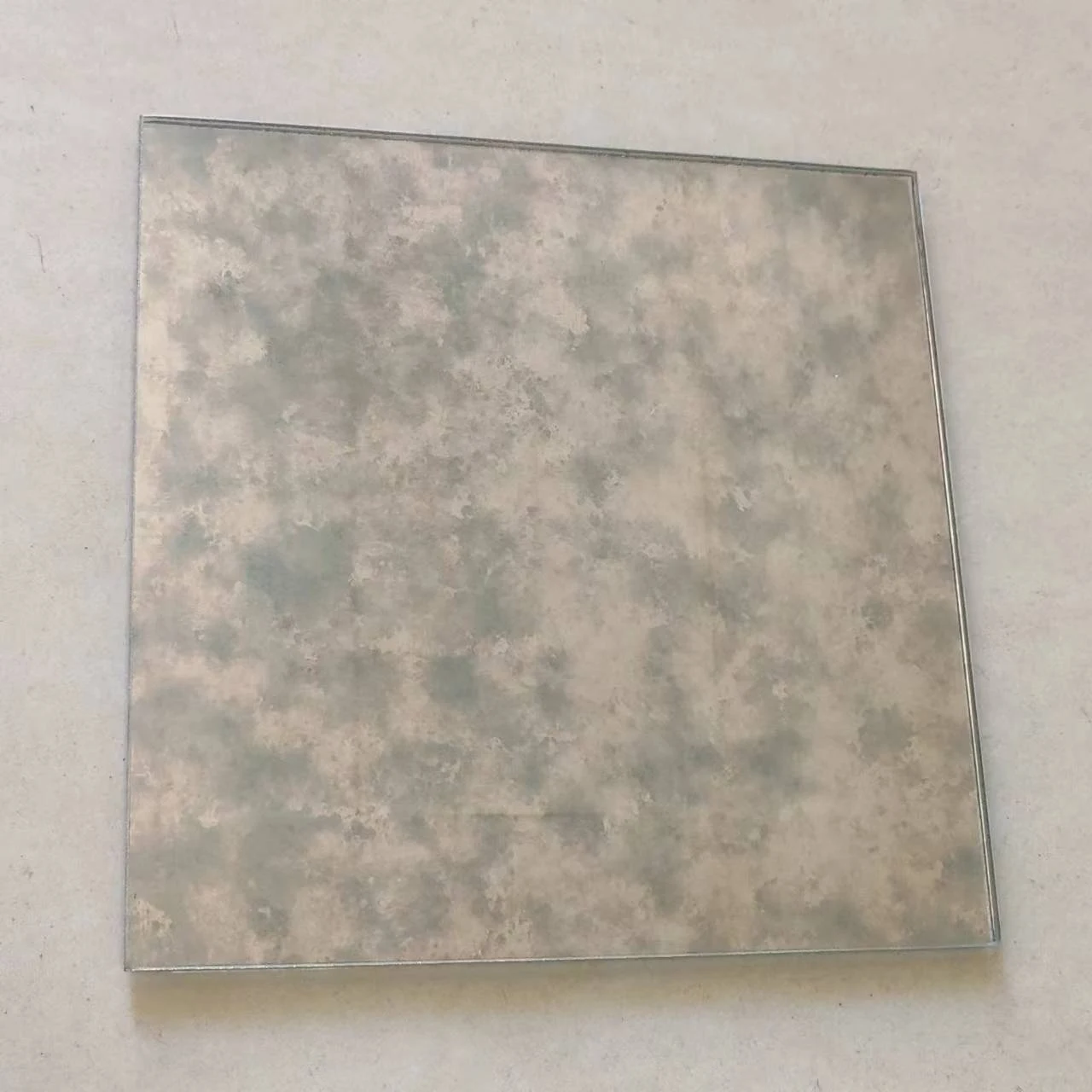
Mist Grey Cloud
Actual OJMirror 5 mm finish sample
Grey-silver tone · Soft, broad clouding
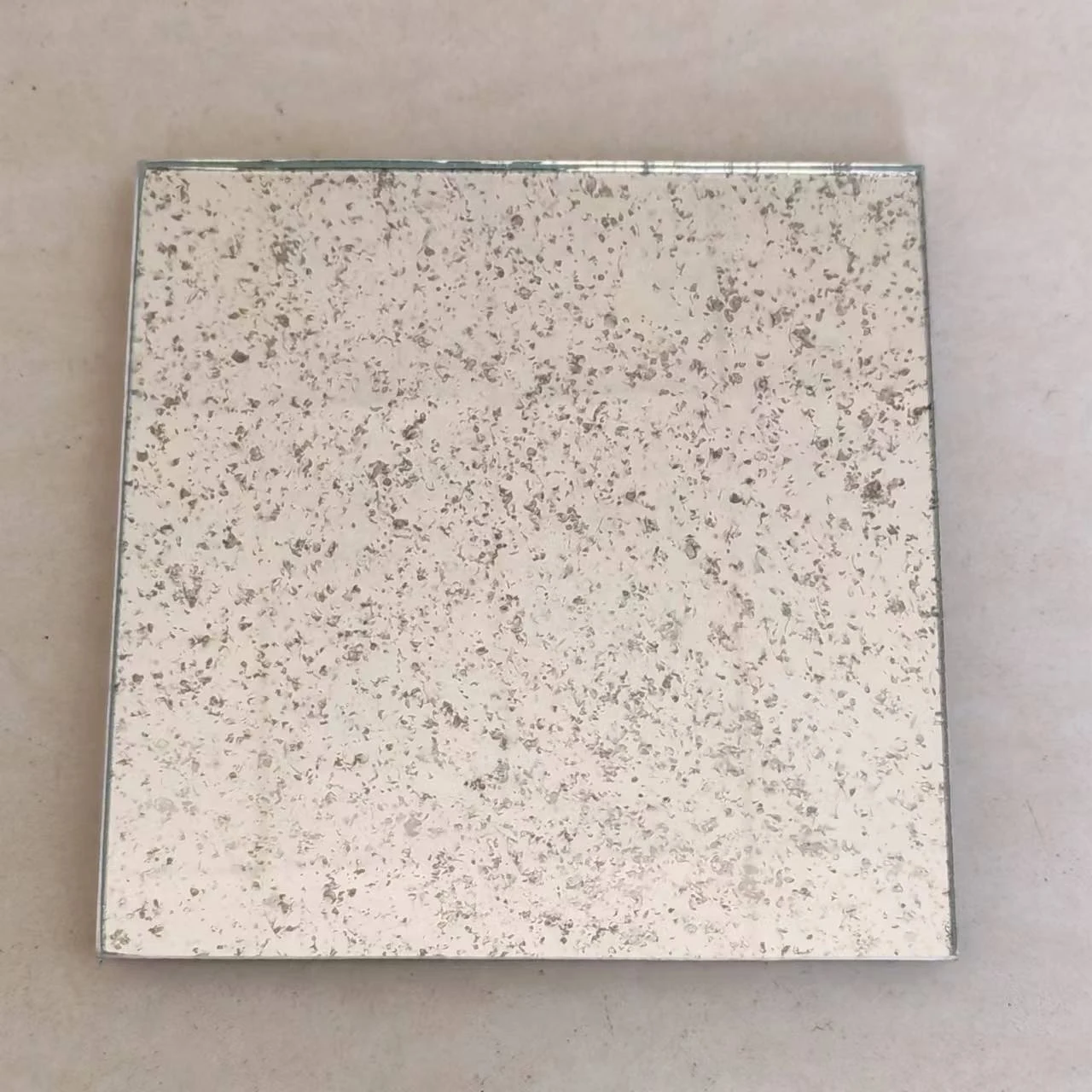
Light Silver Speckle
Actual OJMirror 5 mm finish sample
Light silver tone · Scattered dark speckles
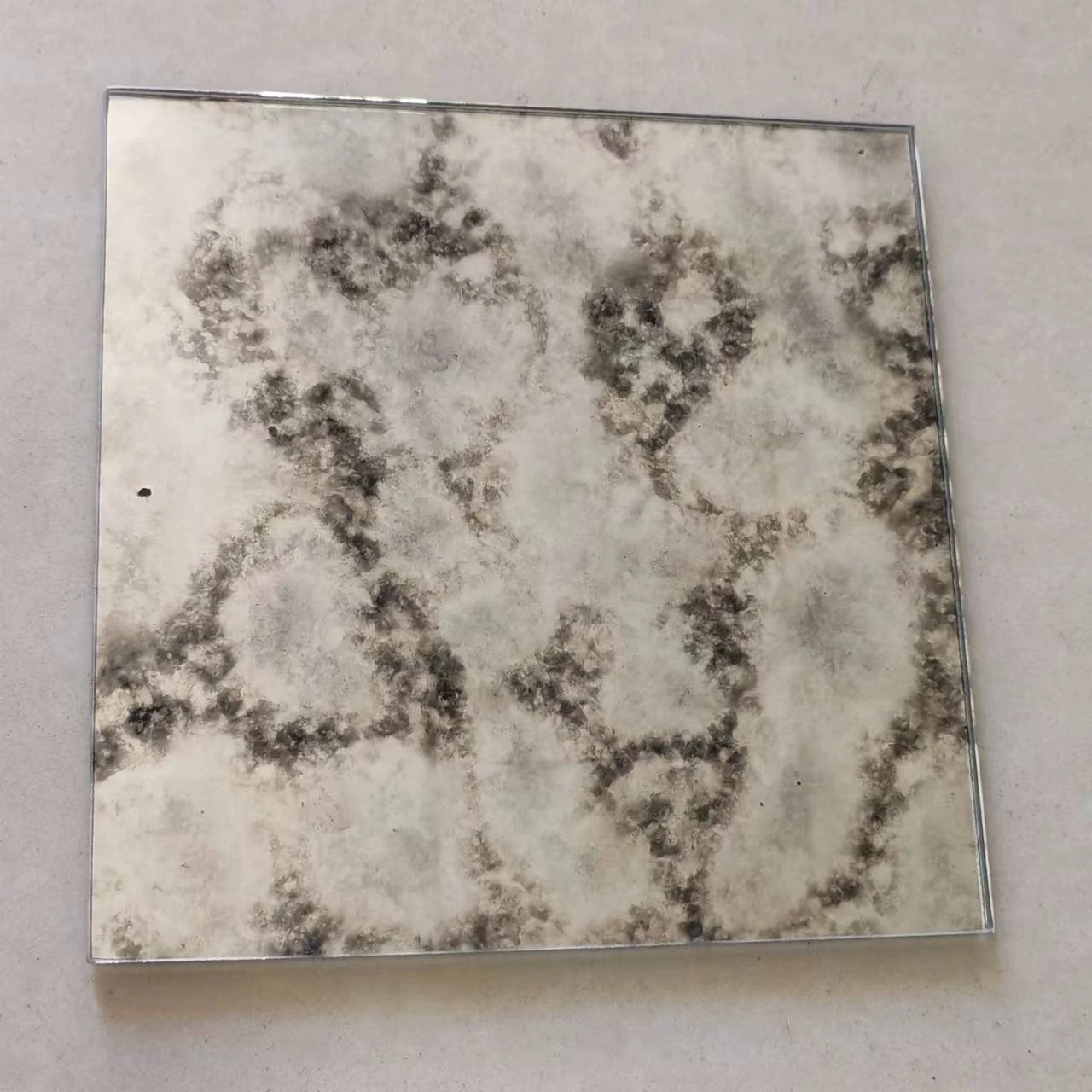
Veined Silver
Actual OJMirror 5 mm finish sample
Silver / dark grey · Branching, directional veining
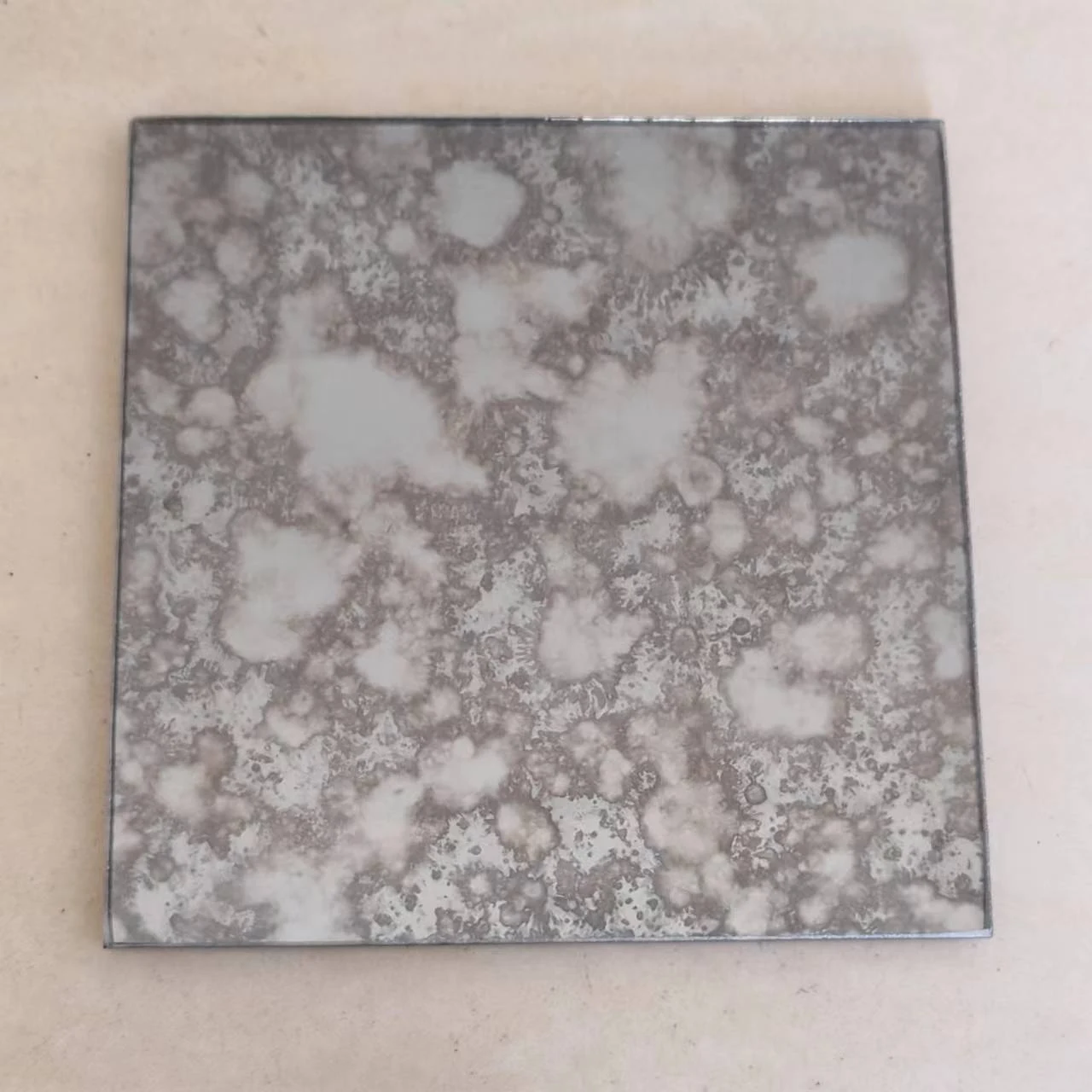
Clouded Silver
Actual OJMirror 5 mm finish sample
Grey-silver tone · Cloud-like patches and mottling
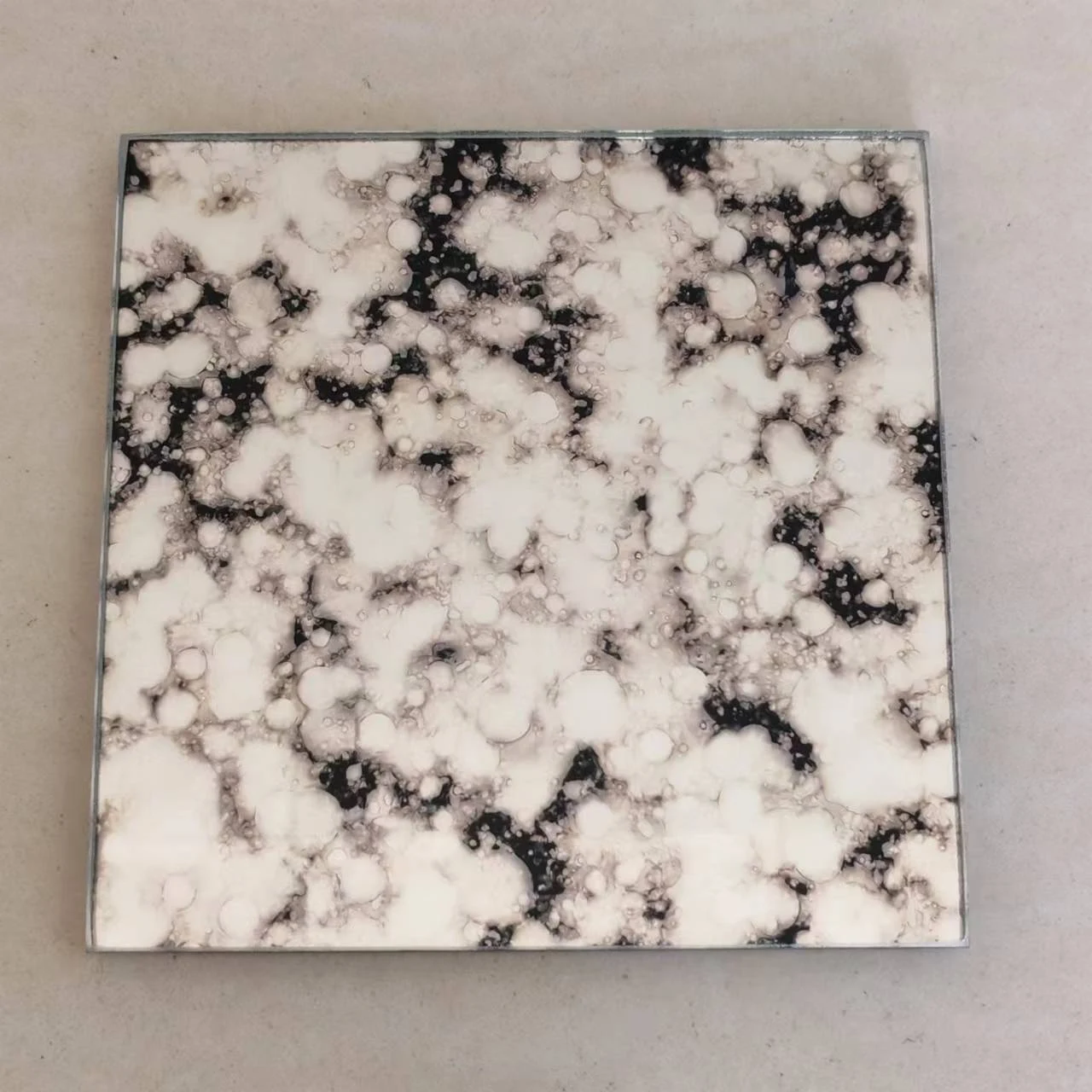
Black Silver Distress
Actual OJMirror 5 mm finish sample
Silver / black · Strong light-dark contrast
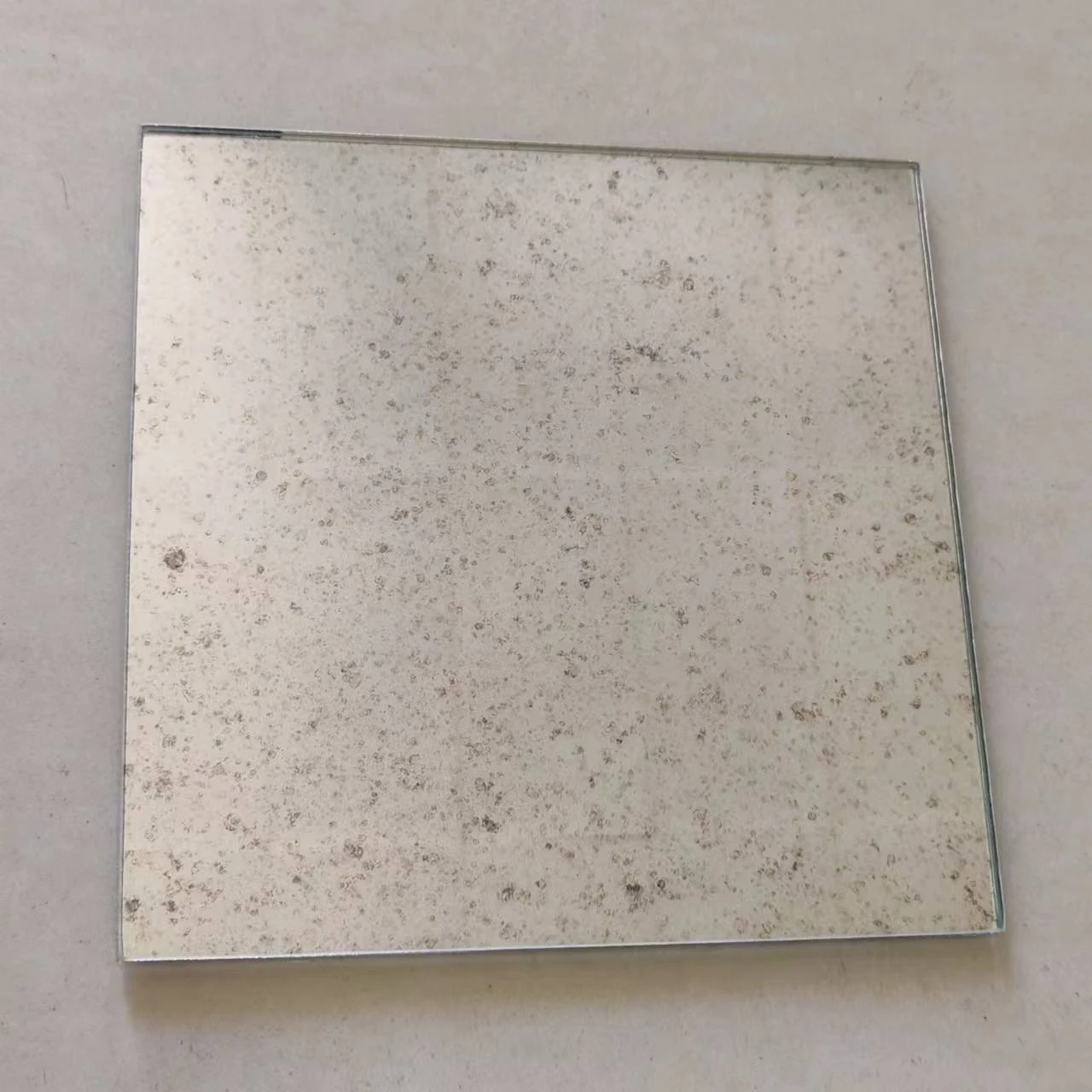
Fine Silver Speckle
Actual OJMirror 5 mm finish sample
Pale silver tone · Fine, dispersed speckling
Choose one or more finishes to request samples.
Approve the appearance range, not only one thumbnail
View the physical sample beside the intended finishes and lighting. Agree on acceptable color, pattern density, reflection and variation between pieces. Where panels are adjacent, record orientation and sequencing requirements. These photographs are existing sample records, not newly color-calibrated studio photographs; they should not be used as a batch acceptance standard.
Compare Antique Mirror Glass Colors & Patterns
Use these visual observations to shortlist samples, not as measured color, reflectance or distressing grades. The photographs were not taken under one calibrated lighting setup. Suggested design directions describe appearance only; they do not establish application suitability.
| Finish | Visible tone in sample photograph | Visible pattern | Design direction to explore |
|---|---|---|---|
| AMG-01 | Gold tone | Irregular brown-gold mottling | Warm joinery and metal palettes |
| AMG-02 | Bronze tone | Dense rust-brown mottling | Dark timber and warm interiors |
| AMG-03 | Grey-silver tone | Soft, broad clouding | Quieter wall and cabinet compositions |
| AMG-04 | Light silver tone | Scattered dark speckles | Small repeated modules and borders |
| AMG-05 | Silver / dark grey | Branching, directional veining | Walls where panel orientation matters |
| AMG-06 | Grey-silver tone | Cloud-like patches and mottling | Feature panels with tonal variation |
| AMG-07 | Silver / black | Strong light-dark contrast | Statement walls and display accents |
| AMG-08 | Pale silver tone | Fine, dispersed speckling | Subtle furniture and wall accents |
How to Choose the Right Finish
Start with color, then compare pattern scale and reflection on a physical sample. Gold and bronze directions can relate to warm timber or metal; silver and grey directions can be compared with cooler materials. View the sample beside the intended finishes under the proposed lighting, from both close range and the usual viewing distance.
| General design direction | What to look for | Sample check |
|---|---|---|
| Light distressing | More visually open mirror areas | Does the reflected room remain clear enough for the design? |
| Medium distressing | A balance between pattern and open areas | Does the pattern compete with nearby finishes? |
| Heavy distressing | A stronger decorative pattern | Does the wall read as intended from across the room? |
These are general selection terms, not assigned grades for AMG-01–08. Reflection clarity cannot be ranked reliably from these photographs. Request shortlisted samples and agree on an acceptable appearance range; for a wall, review adjacent pieces and orientation as well as one small sample.
Antique Mirror Glass Specifications
| Specification | Current supply information |
|---|---|
| Product | Newly manufactured decorative antique-effect mirror glass |
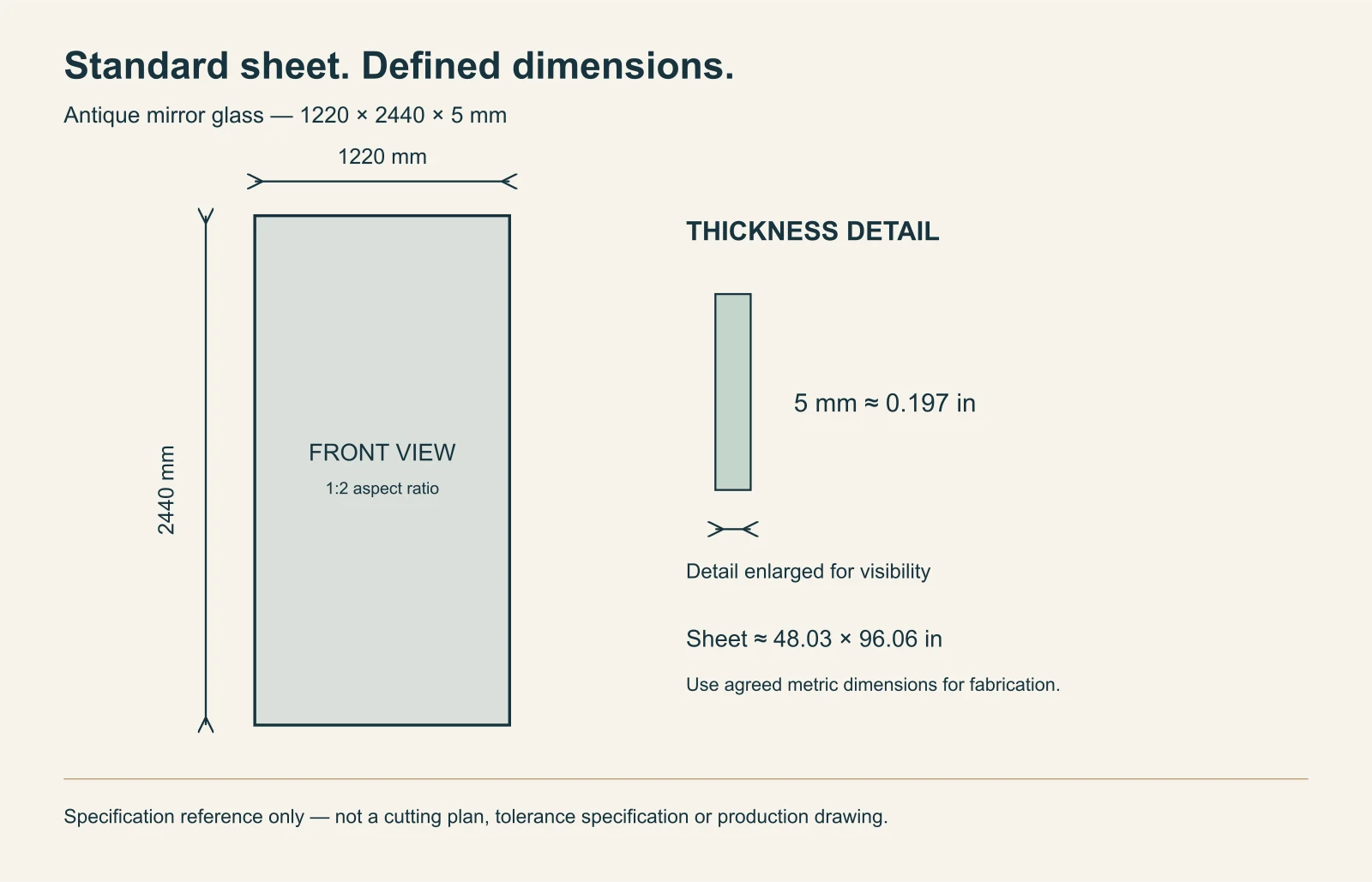
| Standard thickness | 5 mm (approximately 0.197 in; not an exact 3/16 in equivalent) |
| Standard sheet | 1220 × 2440 mm (approximately 48.03 × 96.06 in) |
| Finish references | AMG-01 through AMG-08; physical approval sample controls |
| Supply formats | Full sheets, mirror tiles, cut-to-size panels and coordinated wall-panel sets |
| Furniture inserts | Sized against the receiving-component drawing |
| Shapes, holes and cutouts | Subject to drawing and fabrication review |
| Edge finishing | Specify each edge; scope confirmed with the quotation |
| Backing and safety construction | Confirm for the application; no universal construction claimed |
| Appearance variation | Agreed sample and acceptable range, including adjacent-panel requirements |
| Dimensional tolerances | To be agreed for the actual panel and fabrication route |
| Samples, MOQ and production timing | Confirmed for the finish, format, quantity and destination |
| Packing and shipping | Agreed against panel schedule, destination and shipment scope |
Download the specification & RFQ reference PDF. This reference summarizes confirmed dimensions and inquiry requirements; it is not a test report or certification.
The inch figures are conversions for planning. Order and fabrication dimensions should use one agreed unit system; do not round a receiving opening to the nominal “4 × 8 ft” description.
Available Sheets, Tiles & Custom Panels
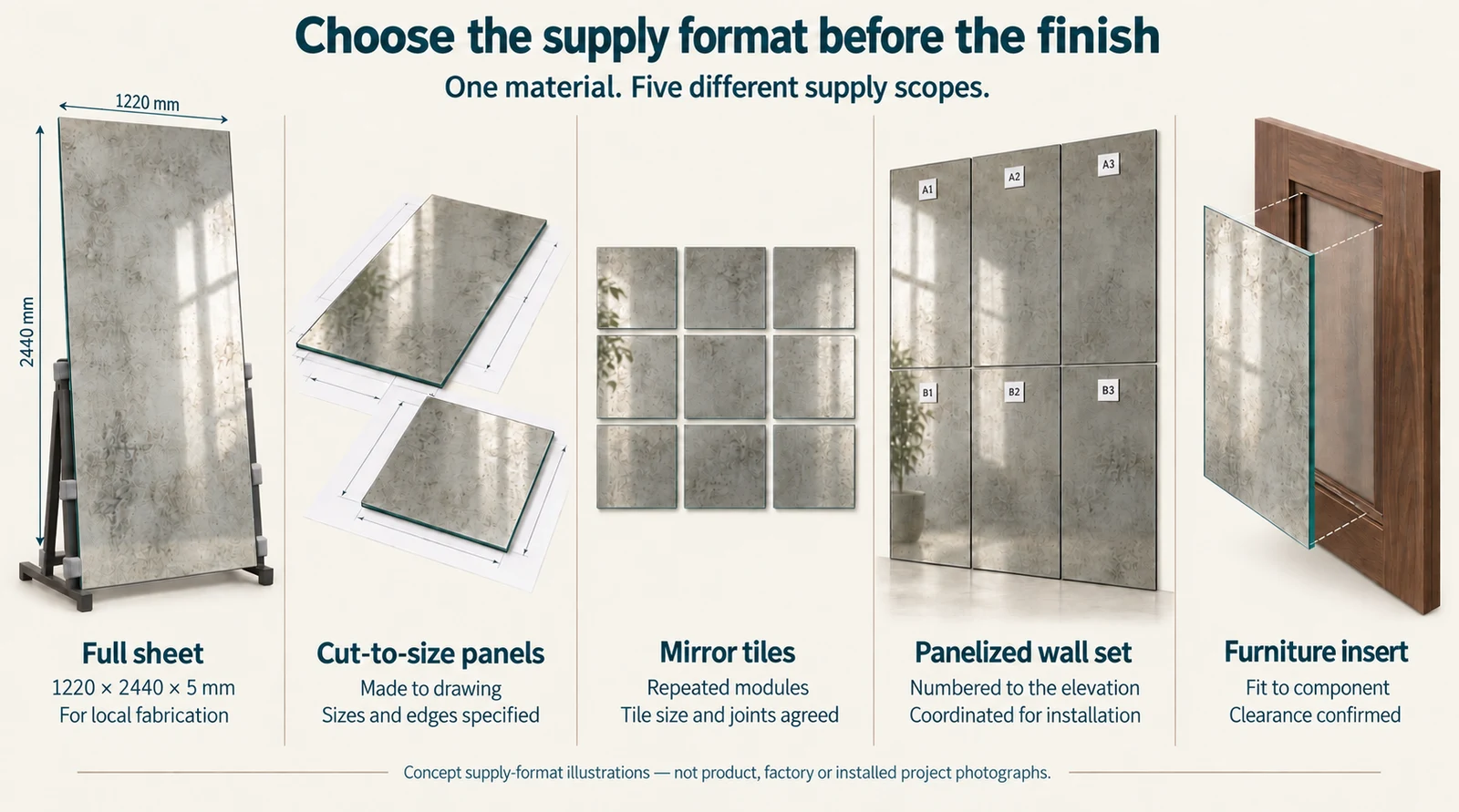
A finish reference answers only one part of the brief. Before comparing light, bronze, smoked, mottled, or heavily distressed effects, decide what the factory must actually supply. A full sheet for local fabrication creates a different production, packing, and responsibility boundary from a numbered set of finished wall panels.
| If the project needs… | Start with… | Send with the inquiry… |
|---|---|---|
| Local cutting and edgework | 1220 × 2440 mm full sheets | Quantity, finish code, and destination |
| Pieces ready for a defined opening | Cut-to-size panels | Panel schedule, edge details, and opening dimensions |
| A repeated grid or decorative module | Antique mirror tiles | Tile size, layout, joints, orientation, and substrate |
| A coordinated wall elevation | Panelized feature-wall set | Elevation, panel IDs, openings, joints, and packing sequence |
| Integration into furniture or doors | Inserts | Receiving-component drawing, visible face, clearances, and fixing method |
Full or Stock-Size Mirror Sheets
Full sheets may suit glass processors, distributors, or manufacturers that will complete the cutting and edgework locally. The standard sheet size is 1220 × 2440 mm, using 5 mm glass. The inquiry should state the finish code, quantity, destination, and whether the buyer expects the surface effect to continue consistently across multiple sheets.
Confirm tolerances, usable finished dimensions and packing limits for the selected finish before committing a cutting schedule.
Cut-to-Size Panels
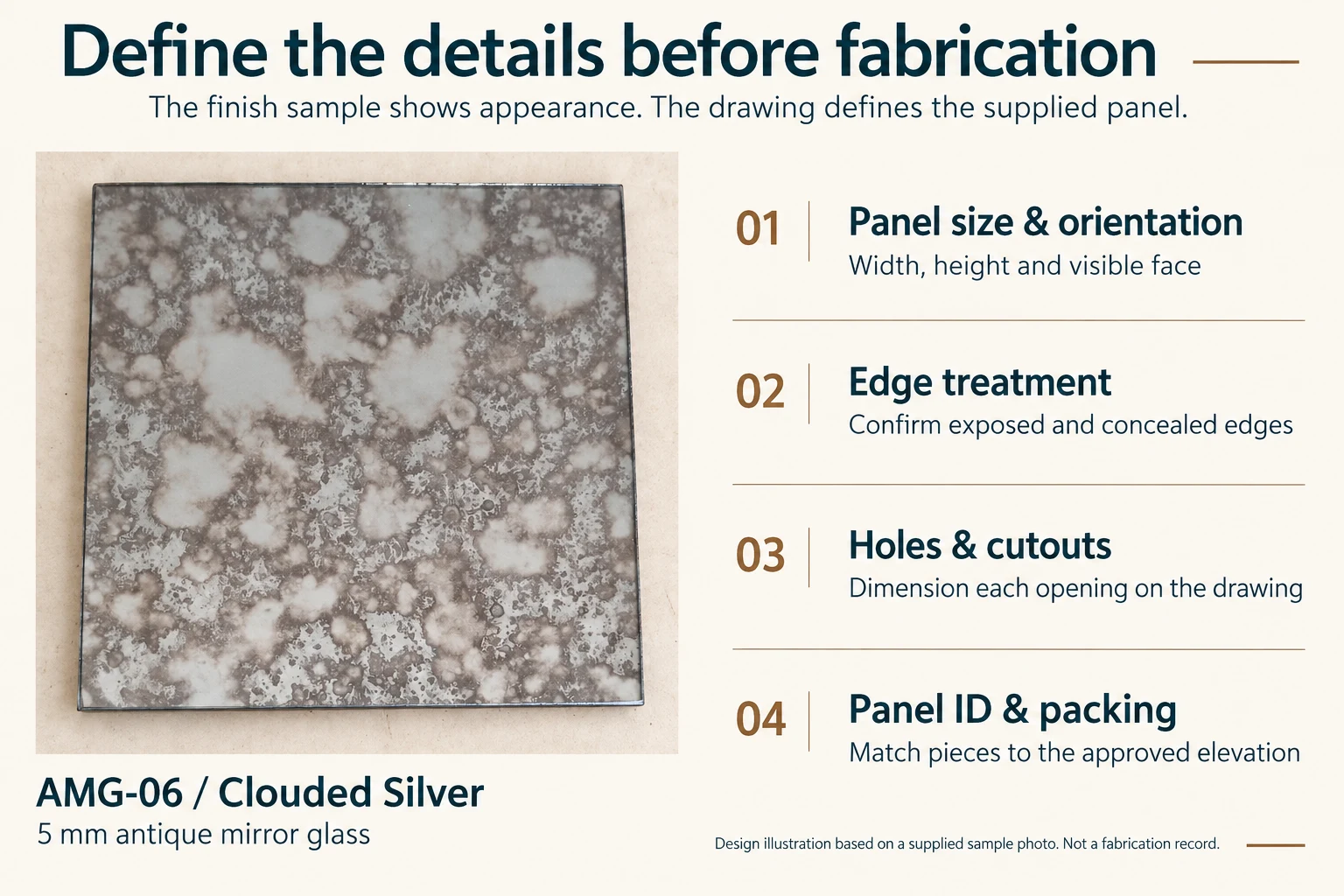
Cut-to-size panels reduce fabrication work at the destination, but they require a clearer drawing. Each piece should have a width, height, thickness, orientation, edge treatment, and panel reference. Holes, notches, socket openings, and shaped cuts need their own dimensions and centerlines.
Antique Mirror Tiles
Antique mirror tiles suit a repeated grid, border, or geometric wall layout. This section covers individual glass pieces specified for an agreed layout, with their own dimensions, finish, edgework, and backing. Complete framed or hanging mirrors belong to the Antique Mirrors collection; a tile inquiry should identify the glass components required for the installation.
For quotation, provide tile width and height, quantity, layout, joint positions, exposed edges, and any perimeter or corner pieces. State whether dimensions refer to each glass piece or the overall tiled area. Include the substrate and proposed installation method for review; the mirror specification alone does not determine the adhesive or fixing requirements. Identify which pieces need separate references on the drawing and packing list.
Review the finish across adjacent pieces, especially at borders and changes of direction. Confirm whether the design calls for deliberate variation or a coordinated appearance; distressed effects should not be expected to repeat identically. Record the approved finish code, orientation, acceptable variation, and any replacement-piece requirements in the tile schedule before production.
Panelized Feature Walls
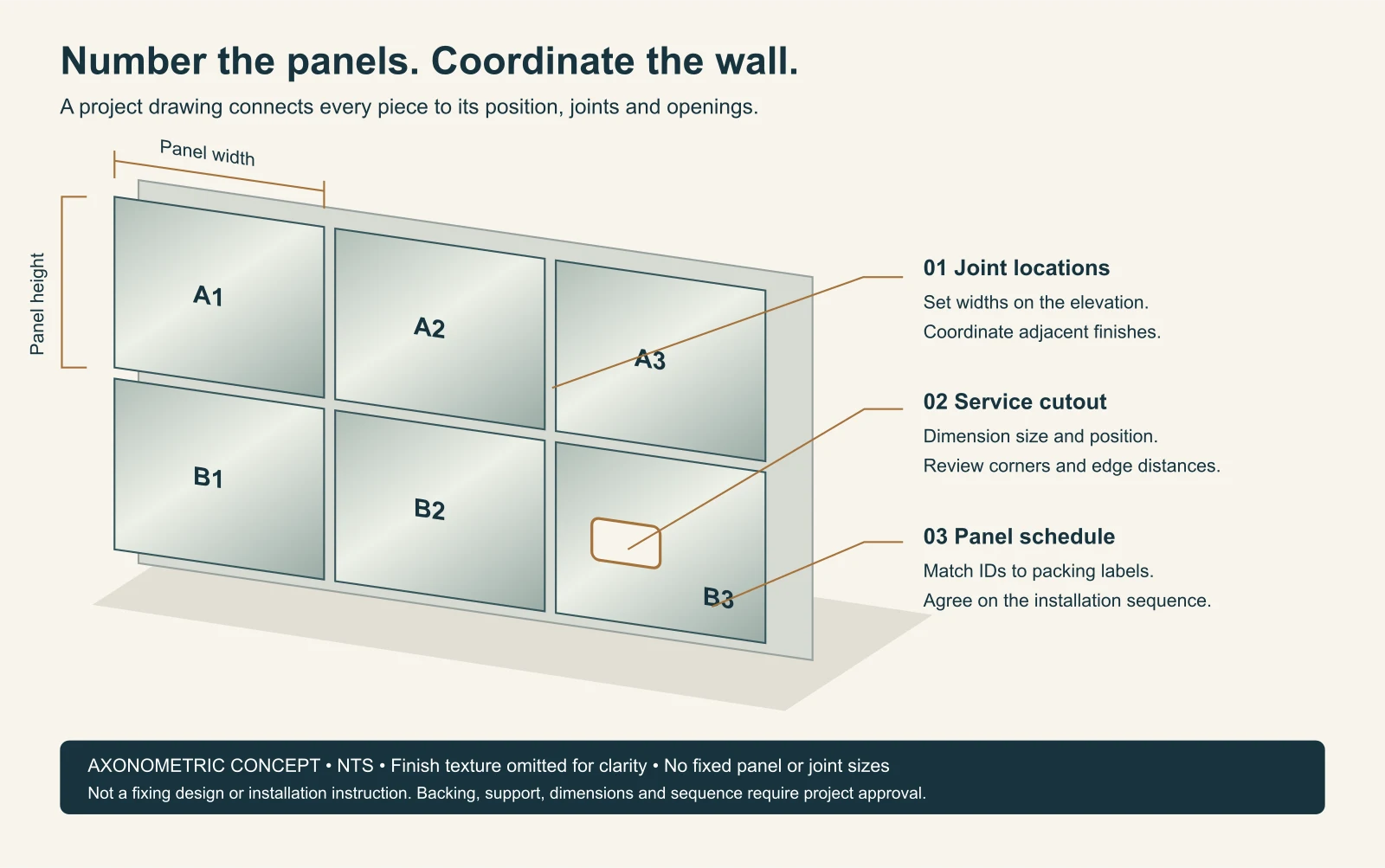
A feature wall should be treated as a panel system rather than one large mirror. The elevation needs to identify every piece, joint, opening, edge condition, and interface with nearby finishes. Numbered panels and matching packing marks can help the installation team place each component in the intended location.
Large areas also make variation more visible. Approve the acceptable relationship between panels before production instead of judging individual samples in isolation.
Furniture, Cabinet, and Door Inserts
Furniture inserts are controlled by the receiving component. Supply the clear opening, rebate or channel dimensions, visible face, edge clearance, fixing method, and any limits imposed by the door or panel structure. The mirror glass must be reviewed as one part of the finished assembly, not as a decorative surface detached from its support.
Antique Mirror Glass Applications & Project Inspiration
Antiqued mirror glass can support a wide range of decorative interiors, but the room name alone does not define the correct product. A bar wall, hotel lobby, retail display, cabinet door, and kitchen backsplash create different conditions and different responsibility boundaries.
Hotel and Restaurant Feature Walls
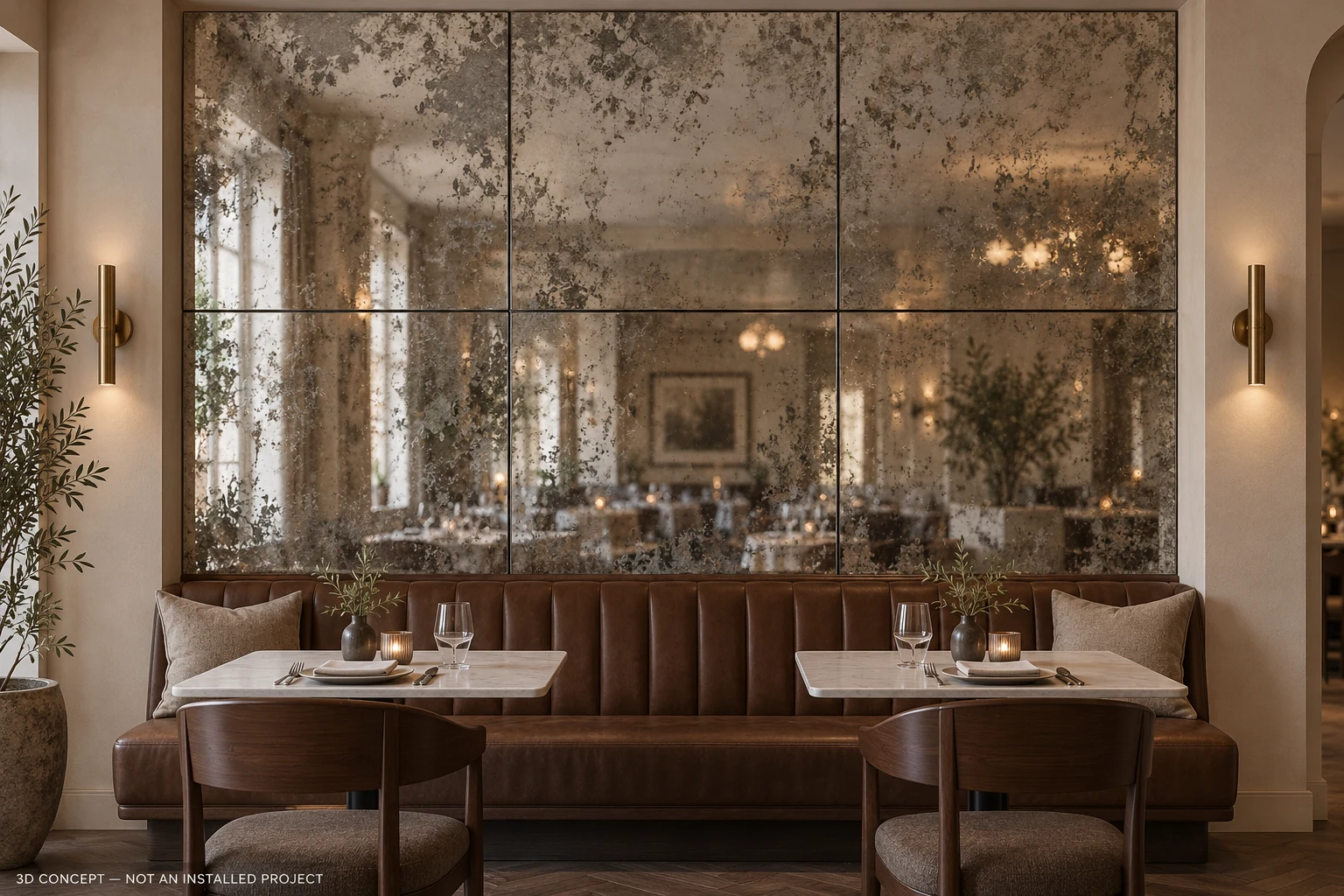
Start with the full elevation. Identify corners, changes in substrate, shelving, lighting, fixtures, service openings, and areas vulnerable to impact. Confirm how replacement pieces would be identified if the installation contains many custom panels.
Retail and Reception Interiors
Retail and reception projects often combine mirror glass with displays, signage, lighting, metalwork, and joinery. Coordinate panel edges and reflections with the surrounding modules. If the mirror is installed behind shelves or branding elements, include those locations on the elevation before openings are released.
Furniture and Cabinet Inserts
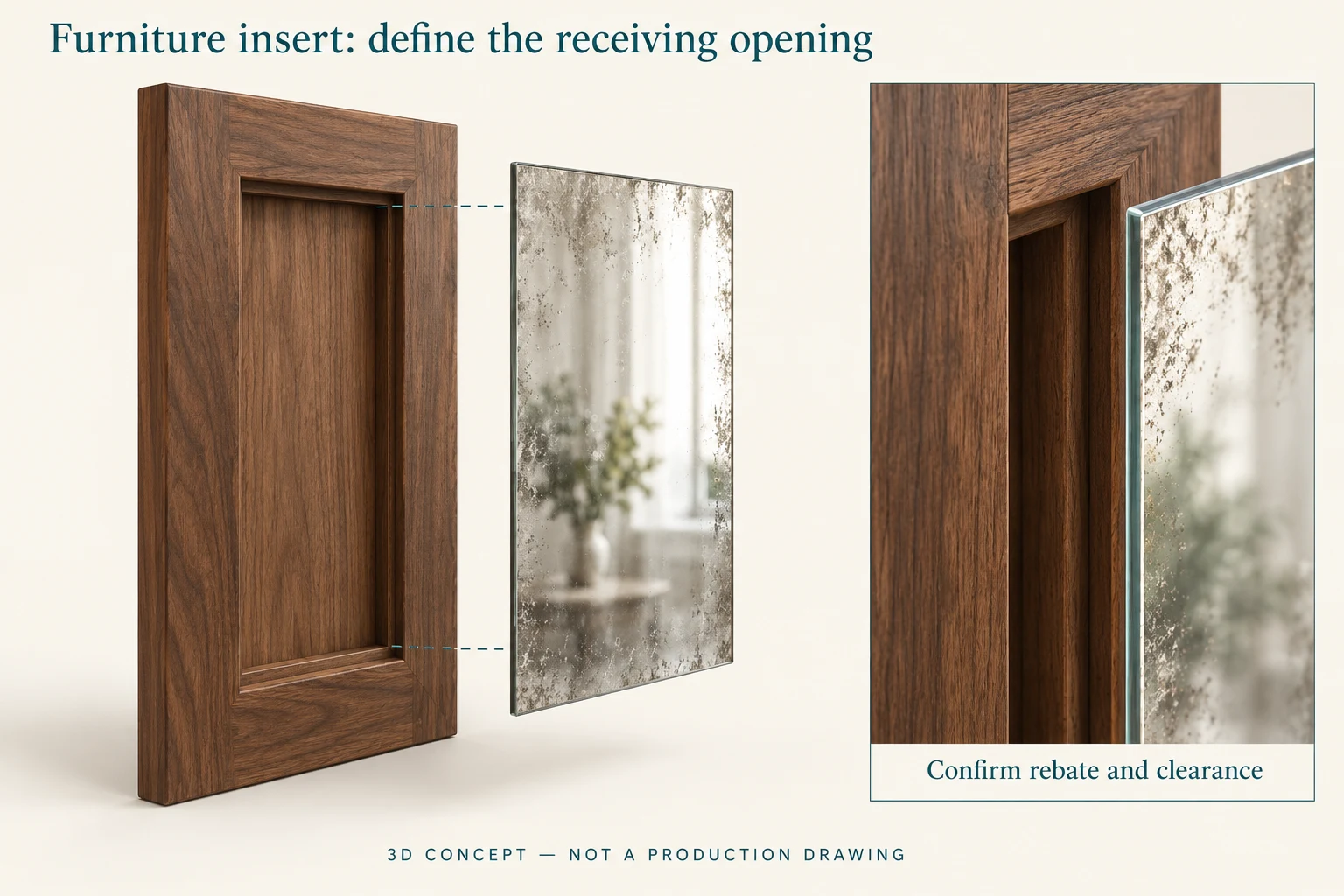
Provide the receiving component drawing as well as the mirror dimensions. Door movement, hardware, channels, adhesives, backing boards, and assembly tolerances may change the usable size and edge requirement. Samples should be viewed next to the intended timber, metal, lacquer, or upholstery finish.
Backsplashes and Wet-Area Design Review
An antique mirror backsplash should be reviewed as a set of glass panels within a kitchen, bar, or vanity design. The term antique mirror splashback describes the same broad application; use the project drawing to define the actual location and exposure. A decorative finish sample establishes appearance, while the panel specification and site conditions determine what can be supplied for that use.
Send the full elevation with finished panel dimensions, joint locations, exposed edges, fixture clearances, and any outlet or service openings. Include the substrate, proposed fixing method, cleaning expectations, and nearby sources of heat or moisture. Confirm each opening's geometry and position before releasing fabrication; a reference photograph cannot establish those details.
Use this review to separate the supplied glass from the work required to install it. The project team must confirm the applicable building, electrical, fire, and installation requirements. OJMirror should confirm the material, fabrication, backing, and packing scope supported by the approved specification. Suitability for a particular wet area or position near a heat source remains subject to that review.
Residential Interior Projects
For residential work, also check stair or elevator access and replacement-piece requirements before finalizing the panel schedule.
If the requirement is a complete framed or hanging mirror rather than loose glass or panels, visit Antique Mirrors instead.
Custom Antique Mirror Glass Cutting & Fabrication
For antique mirror glass cut to size, send the finished dimensions and quantity of every piece. A reference image can communicate appearance, but exposed edges, outlet positions and shaped interfaces need a dimensioned drawing.
Straight Cutting and Shaped Panels
Rectangles are usually the clearest starting point, but curved or irregular profiles may be reviewed from a dimensioned drawing or production-ready file. Provide radii, reference points, overall dimensions, and orientation. A hand sketch can begin the discussion; it should not be treated as the final fabrication drawing.
Edge Finishing Options
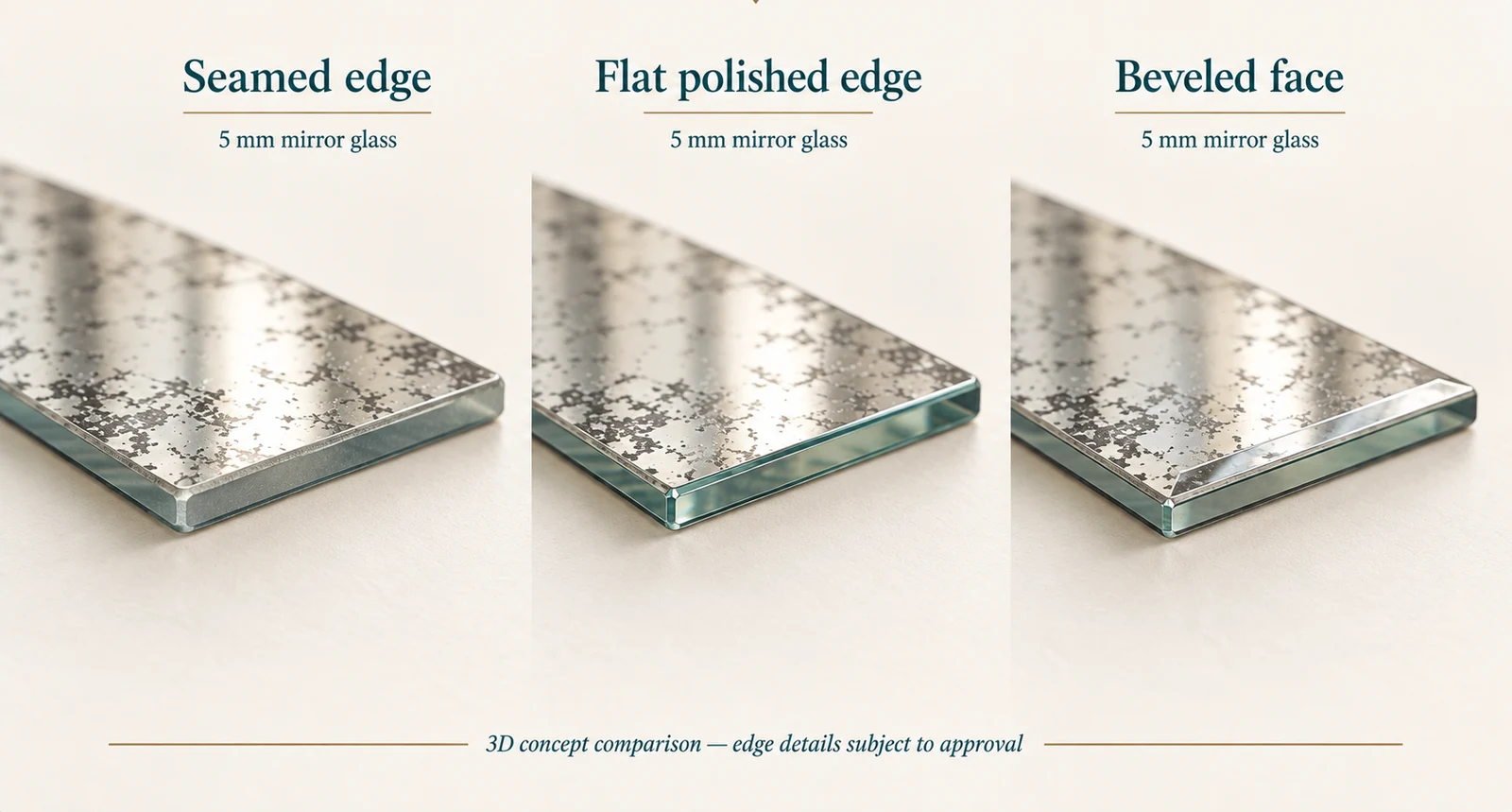
State which edges are visible and how each one should be finished. An edge concealed inside a frame or channel may have a different requirement from an exposed perimeter. If a bevel is requested, show its position and target width rather than relying on the word beveled alone.
Holes, Notches, and Socket Cutouts
Every opening needs dimensions and a fixed relationship to the panel edges. Include the hole diameter or cutout size, centerline, corner treatment, and distance from the nearest edge. The feasibility of a cutout depends on the glass construction, thickness, panel size, opening geometry, and fabrication sequence.
Do not release electrical or fixture openings from a rendered interior image. Use the coordinated wall elevation or shop drawing.
Panel Numbering and Elevation Matching
For multi-panel work, each piece should carry a unique reference that matches the approved elevation and packing list. Orientation marks matter when the finish has a direction or when adjacent panels have been coordinated visually. The same reference should appear in the drawing, production record, inspection record, packing identification, and installation plan.
Material, Backing and Installation Requirements
This range is decorative mirror glass with an intentionally aged appearance, not reclaimed historic glass. The confirmed thickness does not establish a complete safety construction. Tell OJMirror where the material will be used and identify any project requirements for backing, impact performance or other construction.
Before approving a wall or furniture assembly, resolve four interfaces:
- Support: substrate, flatness, receiving rebate or channel, and how the panel is carried.
- Compatibility: proposed adhesive or mechanical retention and compatibility with the mirror backing; obtain the relevant supplier instructions.
- Exposure: moisture, cleaning conditions, heat sources and likely impact.
- Coordination: joints, edge clearance, openings and replacement access.
No tempering, lamination, safety-backing performance, wet-area rating or certification is implied by the finish name. The project team must confirm applicable installation requirements; the quotation should identify the exact product scope being supplied.
Wholesale Orders, Samples & Project Supply
You do not need a complete shop drawing to start a sample inquiry. For a project quotation, however, the size schedule and fabrication scope determine what can be priced. There is no universal price or minimum quantity stated here.
| Your question | Send first | What needs confirmation |
|---|---|---|
| Can I order a finish sample? | AMG code, intended application and destination | Sample dimensions, charge, availability, courier cost and any credit policy |
| What is the minimum order? | Finish, supply format and quantity per size | MOQ for the proposed order; whether mixed finishes or sizes can be combined |
| What does custom cutting cost? | Finished sizes, quantities, edges and openings | Material yield, fabrication scope, tolerances and packing |
| How long will production take? | Required delivery window and approval schedule | When the lead-time clock starts; production, packing and transit stages |
| What is included in the quote? | Destination, supply boundary and delivery requirement | Samples, fabrication, backing, packing, freight and applicable exclusions |
For wholesale or repeat project purchasing, identify the expected release quantities and whether future orders need to reference a retained sample. A repeat finish name alone is not an agreed color-matching tolerance.
Request samples or send a project brief
Installation & Care Considerations
Before specifying a fixing system, have the project team review the mirror backing, substrate, supports, joint design and exposure conditions together. Obtain written compatibility guidance for the proposed adhesive or mechanical retention; a generic mirror description does not establish compatibility.
- Coordinate joints with the elevation, adjacent materials and service openings.
- Protect edges during handling; agree on pack orientation, unloading and site access before shipment.
- For kitchens, bars and wet areas, identify moisture and heat exposure and confirm the construction before ordering.
- Obtain the finish supplier's care instructions. Avoid unapproved chemicals or abrasive cleaning; inspect a small discreet area before adopting a cleaning method.
See antique mirror cleaning considerations for a related guide. This is a specification checklist, not a universal installation procedure.
Quality Review and Export Packing Requirements
Agree on inspection and packing criteria before production rather than relying on a general “export quality” description. The checklist below defines what to request for the order; it is not a claim that specific inspection reports or test results are already available.
| Review point | Record to agree or request |
|---|---|
| Finish appearance | Approved sample reference, viewing conditions and acceptable variation |
| Panel dimensions | Drawing revision, units and agreed tolerances |
| Edges and openings | Edge identification, opening geometry and inspection criteria |
| Surface protection | Compatible separation and protection during handling and shipment |
| Panel identification | Piece marks matching the elevation and packing list |
| Packing | Pack arrangement, panel separation, edge protection and handling requirements |
| Shipment planning | Pack dimensions and weights when available, access restrictions and unloading plan |
For a numbered antique mirror wall panel set, ask whether the packing sequence supports the planned installation sequence and whether spare pieces should be included. Crate construction, quantity per pack and shipment method must be agreed for the actual order, not inferred from a generic packing illustration.
Where evidence is required, request product-specific photographs or records and confirm what can be provided before approval. The application renderings on this page do not demonstrate factory capability, inspection performance or completed deliveries.
From Finish Sample to Approved Panel Schedule
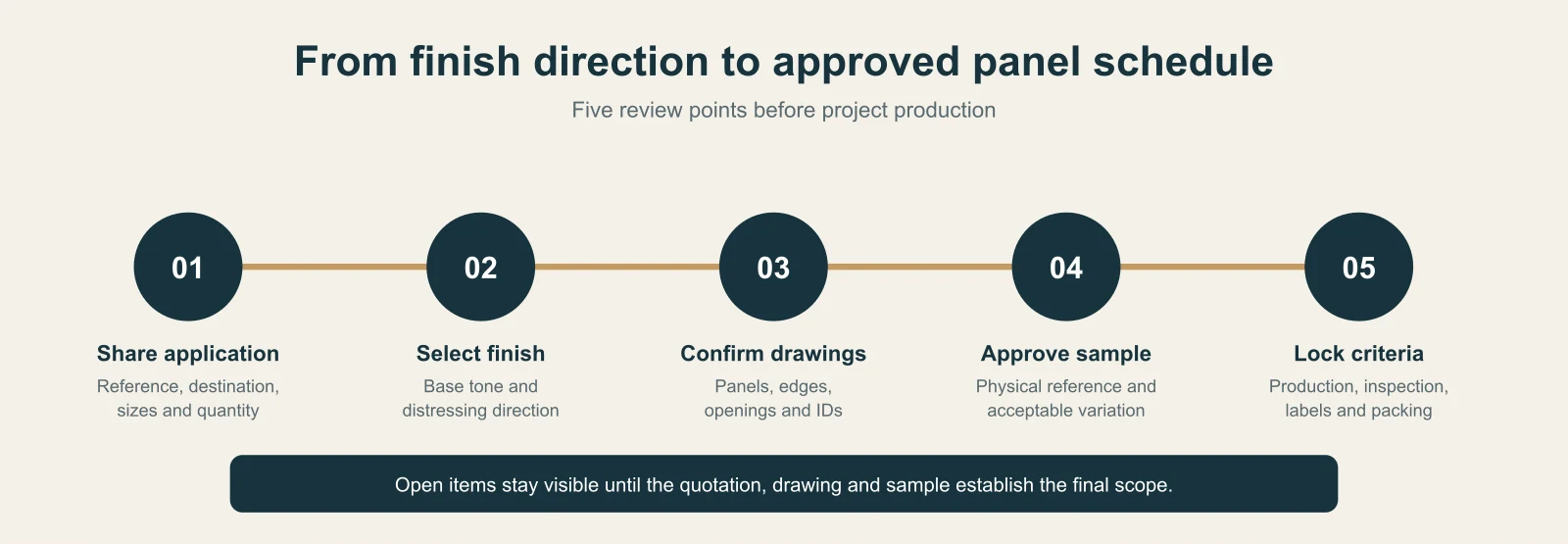
1. Share the Reference and Application
Send the intended application, destination, reference images, preliminary dimensions, quantity, and any available plans or elevations. Indicate whether the request is for sheets, tiles, fabricated panels, or a complete panelized wall.
2. Select or Develop the Finish Direction
Review the closest available OJMirror effects against the desired base tone and distressing level. If a new direction is requested, feasibility and development scope must be confirmed before it is presented as available.
3. Confirm Drawings and Fabrication Details
Resolve the piece schedule, 5 mm thickness, edgework, holes, notches, cutouts, orientation, panel IDs, backing, and packing references. Record unresolved fields instead of silently assuming them.
4. Approve the Physical Sample
The approval should identify the sample code or retained reference and the acceptable range of appearance. Screen images may support communication, but they should not replace the agreed physical reference when finish accuracy is material to the project.
5. Confirm Production and Packing Criteria
Before production, align the approved sample, drawing revision, inspection points, labeling, packing sequence, destination, and shipment requirements. MOQ, sample charge, production timing, and shipping terms are confirmed for the actual inquiry rather than stated as universal values on this page.
What to Include in an Antique Mirror Glass RFQ
A useful request for quotation does not need to be perfect, but it should distinguish known requirements from open decisions.
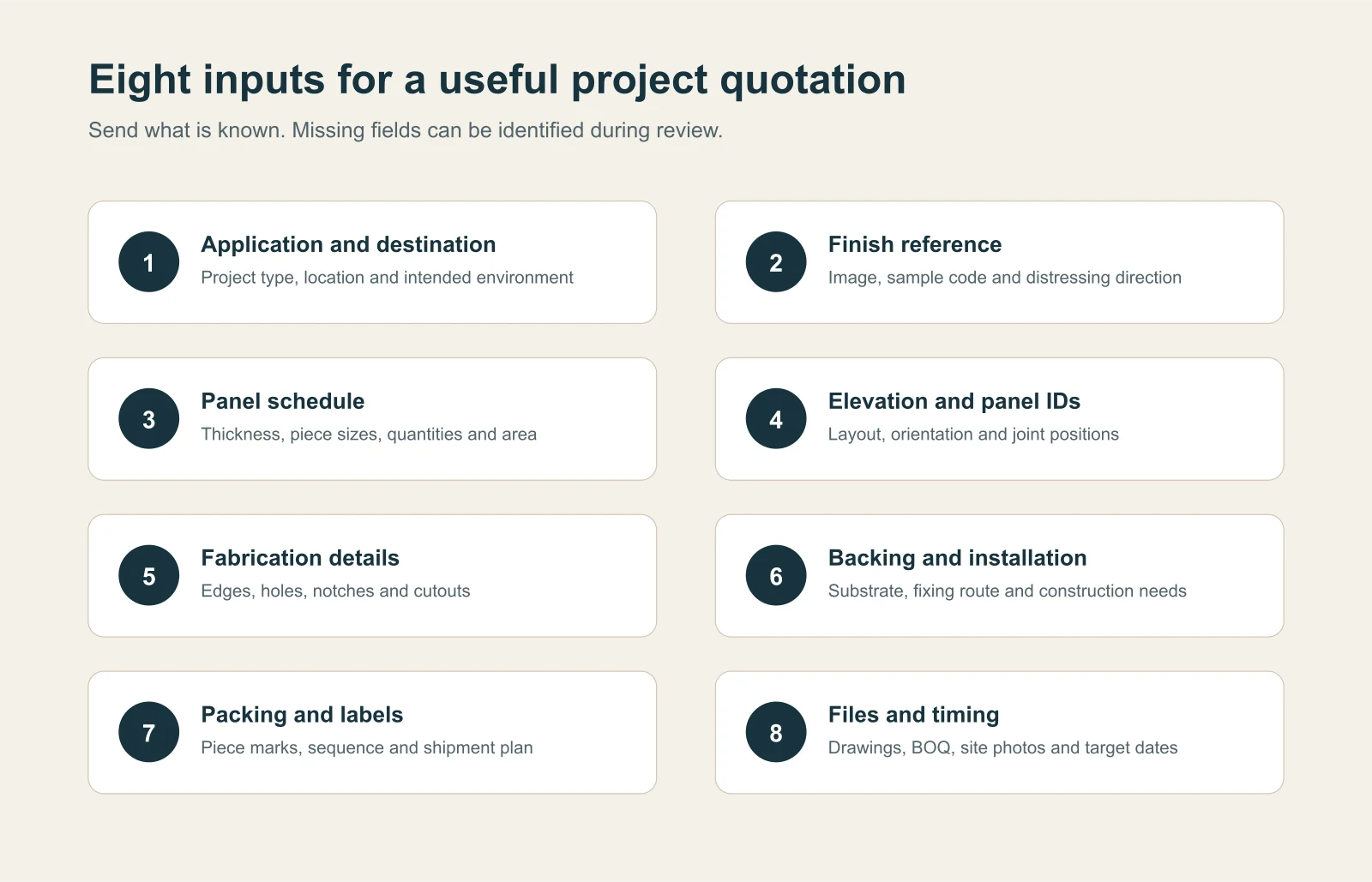
Include:
- Application and destination: where the glass will be used and the destination market.
- Finish reference: sample code, reference image, base tone, and desired distressing level.
- Panel schedule: 1220 × 2440 mm full sheets or individual cut-panel sizes, all in 5 mm thickness, with quantities and total area.
- Elevation and panel IDs: layout, orientation, joint positions, and piece references.
- Fabrication details: exposed edges, bevels, holes, notches, shaped cuts, and socket openings.
- Backing and installation: substrate, fixing concept, support, and any specified construction requirement.
- Packing and labels: piece marks, installation sequence, shipment stages, and handling constraints.
- Files and timing: drawings, BOQ, site photographs, approval schedule, and target delivery window.
Frequently Asked Questions
What is antique mirror glass?
Antique mirror glass is newly produced decorative mirror with an intentionally aged or distressed visual effect. It may use mottled, foxed, veined, speckled, smoked, bronze, or other approved directions. It should not be confused with a verified historic mirror.
Is antiqued mirror glass actually old?
Not necessarily. On this page, antiqued describes the decorative appearance of newly supplied mirror glass. A genuine antique requires separate evidence about its age, origin, and construction.
Can antique mirror glass be cut to custom sizes?
Yes. OJMirror can review 5 mm cut-to-size panels against the required dimensions, shape, edge treatment, openings, backing, and intended use. Final feasibility follows the approved drawing and selected construction.
What thickness is OJMirror antique mirror glass?
The current antique mirror glass range is 5 mm thick. Sheet and panel dimensions, fabrication details, backing, packing, and application suitability are confirmed for the individual project.
What is the standard antique mirror glass sheet size?
The standard full-sheet size is 1220 × 2440 mm in 5 mm thickness. For cut-to-size panels, send the individual dimensions, quantities, finish code, edge requirements, and any openings for review.
Can you supply antique mirror tiles and full wall panels?
Yes, tiles, cut panels, and panelized wall directions are within the confirmed supply scope. The final piece schedule, joints, panel IDs, fabrication, packing, and installation interface must be defined for the project.
Can antique mirror glass be used as a kitchen backsplash?
It can be considered for a specified project, but the finish name alone does not establish suitability. Send the elevation, substrate, openings, fixing proposal, and heat or moisture conditions for review. Confirm the supplied product scope and installation requirements before ordering.
Will every antique mirror panel have exactly the same pattern?
Do not assume exact repetition. The selected effect and production method determine the degree of variation. Approve a physical sample and an acceptable appearance range before production, especially when panels will be installed next to one another.
Can holes, notches, or outlet cutouts be added?
These features can be reviewed, but they are not unconditional options. Provide a dimensioned drawing showing the opening geometry and its position. Feasibility depends on the panel construction, thickness, size, edge distances, and fabrication route.
What information is needed for a project quotation?
Send the application, destination, finish reference, dimensions, quantities, panel layout, edgework, openings, backing or installation information, packing needs, drawings, and target timing. If some fields are unknown, identify them as open items for review.
Related Resources
For the distinction between DIY effects and specified supply, read how to antique a mirror. For complete framed or hanging products, explore Antique Mirrors. For a loose-glass or wall-panel inquiry, remain with this page and send your AMG reference and panel schedule.
Review our general manufacturing overview, then confirm the process applicable to your AMG order.
Discuss your glass specification with OJMirror.
Send the Finish, Dimensions, and Panel Schedule
Send a reference image, panel dimensions, quantity, application, and destination. OJMirror will review the closest finish direction, fabrication questions, and sample route before quotation.
Request Finish Samples
Compare the closest available finish directions before approving the project reference.Upload Drawings or BOQ
Send the panel schedule for an initial fabrication and scope review.Not sure which route fits the project? Discuss Your Project with OJMirror.
Tell us what you need
* RequiredHave a finish in mind? Add your AMG codes.
Drawings are optional for your first inquiry.
