
Written and reviewed by Kris Chou, Product Manager
Published by OJMirror · October 14, 2026
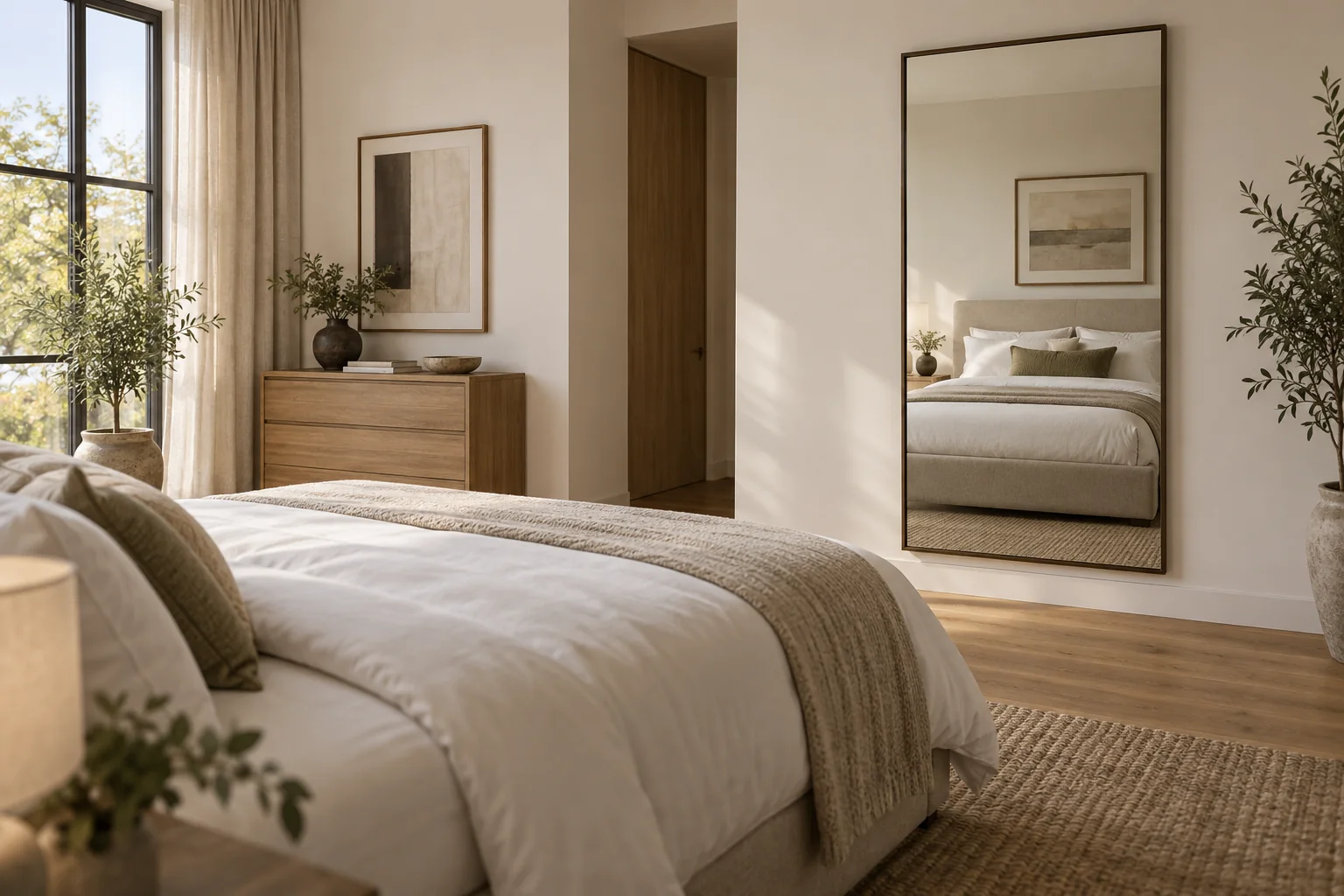
Table of Contents
How to Check Whether Your Mirror Reflects the Bed
Start where you actually sleep. A mirror that looks fine from the doorway can show a different view when you lie down. Even a mirror on a side wall may reflect part of the bed, so its position alone will not tell you whether you want to change it.
- Look from your usual resting position. Identify your face, part of the bed, a doorway, or a light source in the mirror.
- Sit up and check again. For a shared bed, repeat the check from both sides. A doorway photograph cannot establish these views.
- Use your normal evening lighting. Identify which light appears in the mirror, then check whether adjusting that source changes the unwanted view.
- Open the doors you normally use. Wardrobe and room-door positions can change both the reflection and the available space.
- Choose the one thing you want to change. Is it the lamp, your own reflection, or the view of the doorway? You may be able to solve that concern without rearranging the room.
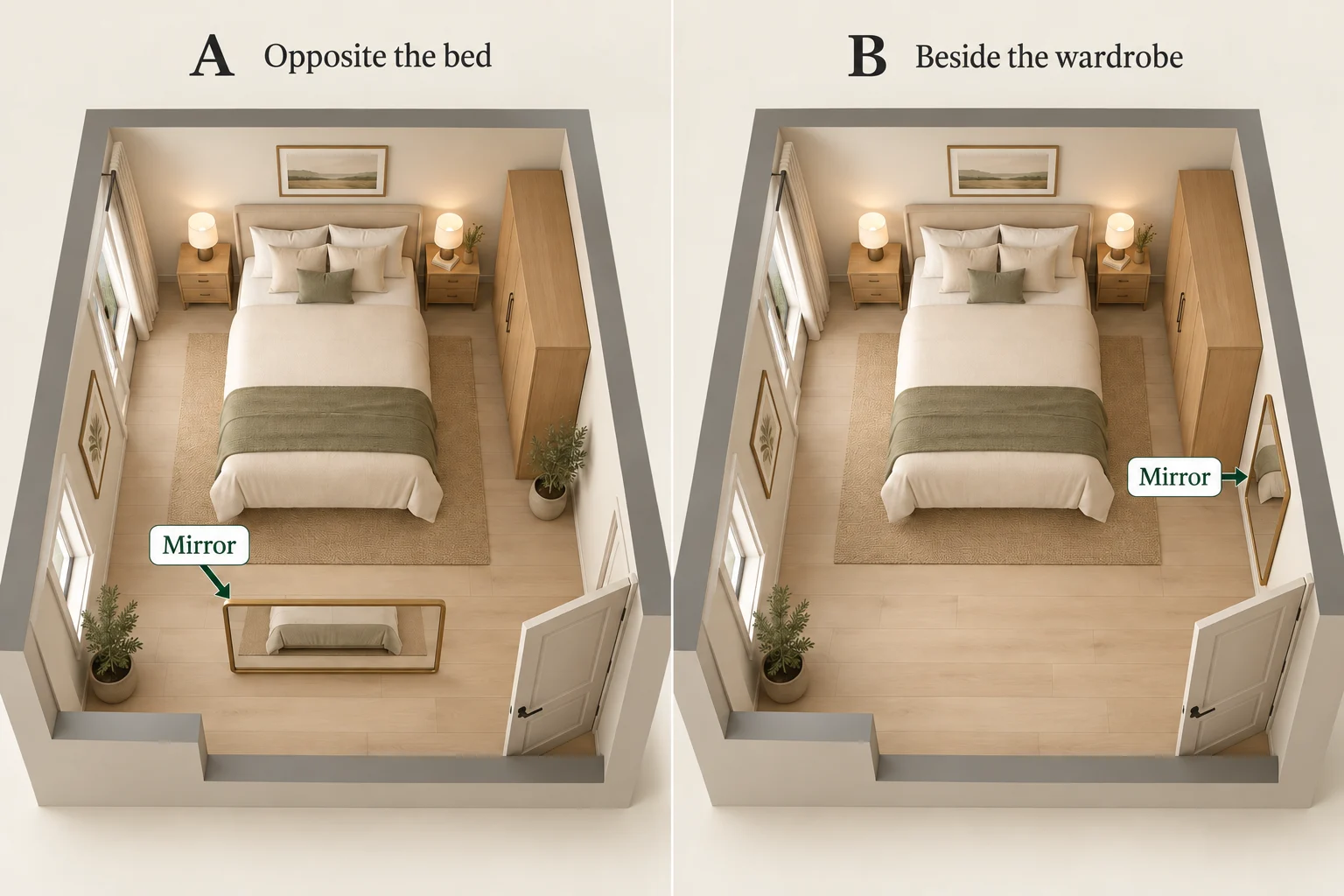
The linked sightline drawing uses the law of reflection to explain why a change of position can change the view. You do not need to calculate angles at home: check from the pillow, then sit up and look again. The mirror’s height matters too.
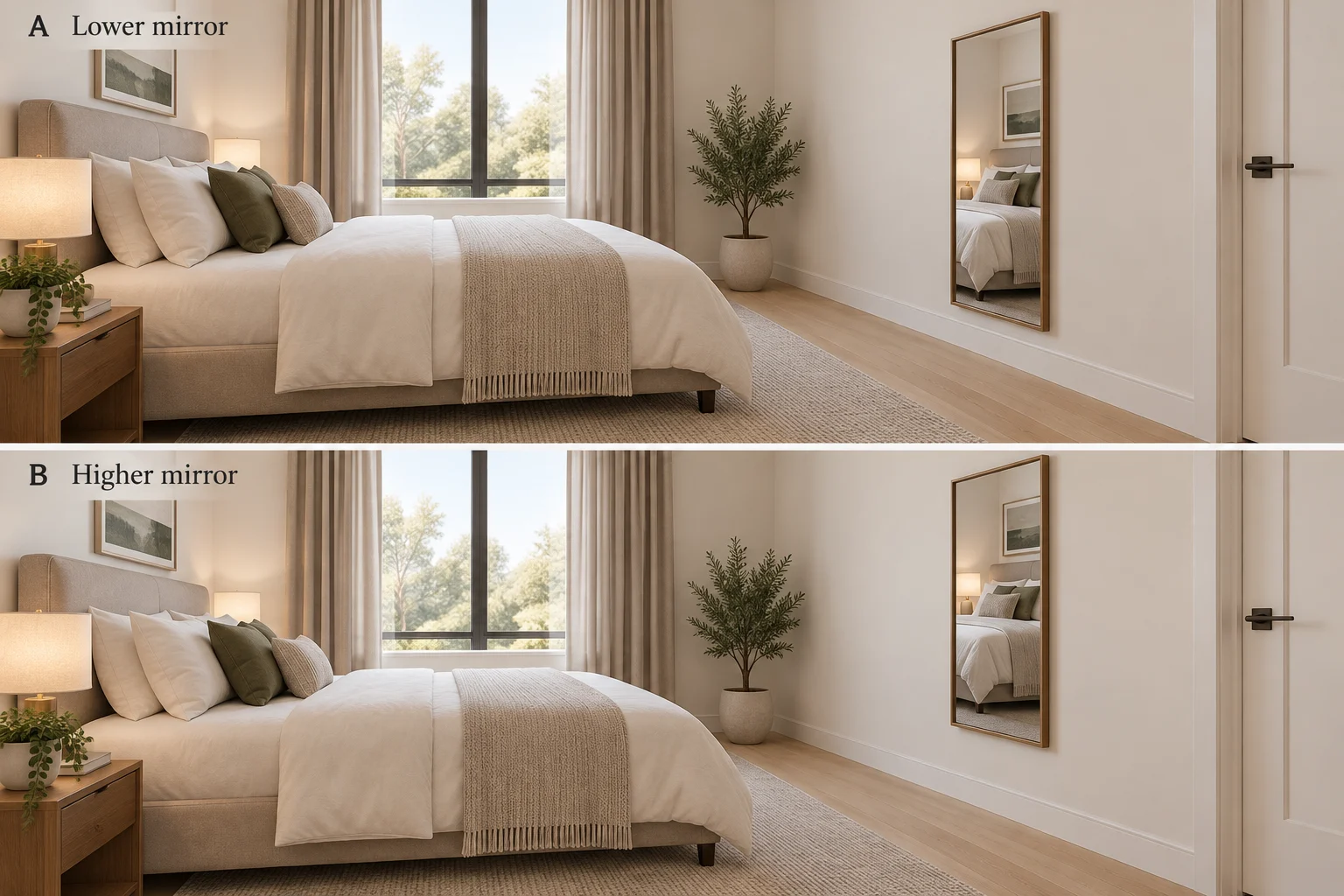
Before changing a mounting height, check sitting up as well as lying down—and make sure the mirror still works when you stand in front of it. The linked diagram explains the principle; it is not a recommended installation height.
Want to compare before and after? Use the bedroom mirror check record (CSV). Note what you see from each sleeping position, change one thing, and check again under the same lighting. Record comfort and usability separately; this is a layout check, not a sleep test.
How to Fix a Mirror Facing Your Bed
You do not need to buy a new mirror as your first step. Try the smallest change that deals with what bothers you, then see whether the room still works for getting dressed, opening doors, and moving around.
| Your situation | First option to consider | Before making the change |
|---|---|---|
| Freestanding mirror | Move it to a different usable position. | Check its stand footprint, stability and any required securing method. |
| Wall-mounted mirror | Address reflected light first; consider an installer-led relocation if needed. | Confirm wall and fixing requirements. Do not improvise a tilt. |
| Mirrored wardrobe doors | Consider a separate curtain or suitable screen arrangement. | Check full coverage, door travel, handles and access. |
| Small bedroom | Compare the wardrobe side, dressing area and available wall space. | Retain a standing position and a usable route through the room. |
| Rental apartment | Adjust lighting or movable furnishings before changing fixed elements. | Check permission before new fixings, adhesives or alterations. |
| LED mirror | Check reflection and emitted light separately. | Confirm the selected model’s lighting and control behavior. |
Move or reposition a freestanding mirror
If your mirror is designed to stand on the floor, try another position where you can still check your outfit comfortably. Leave room for the whole stand, including the support behind it, and follow its securing instructions. Do not turn a wall-mounted mirror into a leaning mirror unless its instructions allow that use.
Adjust the reflected light
If a lamp appears brightly in the mirror, try moving the lamp or adjusting its shade or settings. You should still have the light you need for reading and finding your way around. If the reflection comes from a window, try closing the existing blind or curtain first.
Cover a fixed mirror at night
If you like the mirror during the day but dislike seeing it at night, a suitable cover may let you keep both preferences. Choose an arrangement that is easy to open and close. Keep fabric clear of lamps and electrical components, and support it separately rather than loading a mirror or frame that was not designed for it.
Work within a small room or rental
In a rented room, start with what you can change easily: the lamp, movable furniture, or an existing curtain. A stable screen may help if there is enough space to walk past it. Check with the landlord before adding fixings or applying adhesive products; a “removable” label does not guarantee a mark-free finish.
In a small bedroom, keep the spot where you can comfortably get dressed. Moving a mirror away from the bed is not much help if you then have to squeeze behind furniture to use it. Compare a stand’s floor space with a suitable wall-mounted option, and check the reflection before committing.
What If Mirrored Wardrobe Doors Face Your Bed?
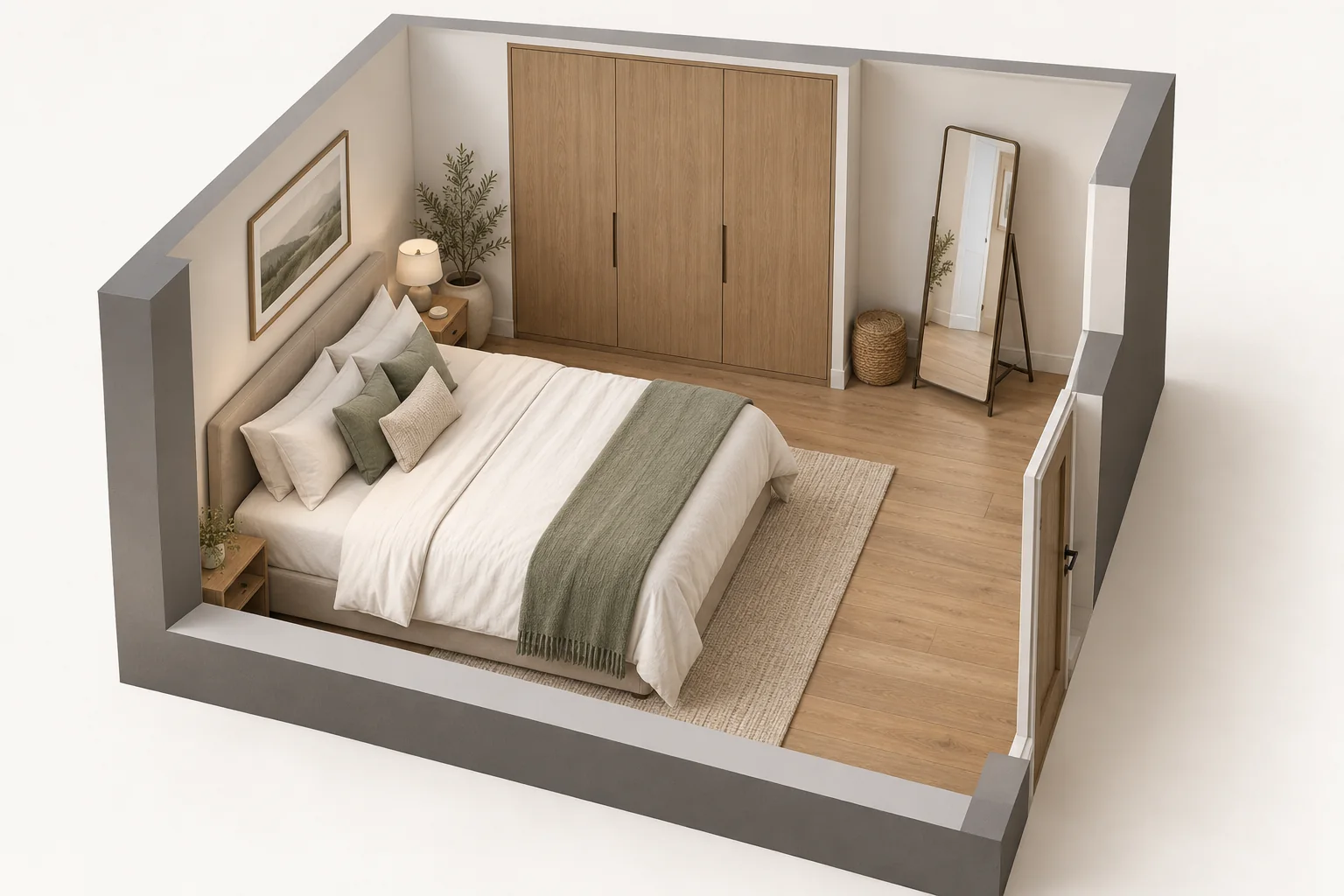
If an entire mirrored wardrobe faces your bed, moving it may not be realistic. You can explore ways to change the view without replacing the doors. From the pillow, look for the panel that shows the reflection you dislike; you may not need to conceal every panel.
Check a proposed cover while lying down and sitting up, and from both sides of a shared bed. A narrow cover may hide your face from one position but leave the same reflection visible from another. If you want to hide the whole bed reflection, check that specifically.
A curtain on a separate track can be worth considering if you have room for it. Picture the daily routine: can you draw it back, slide the wardrobe doors, reach the drawers, and walk past without catching the fabric? Check these points before fitting a track. Attaching fabric to a moving door needs a separate check of the door system.
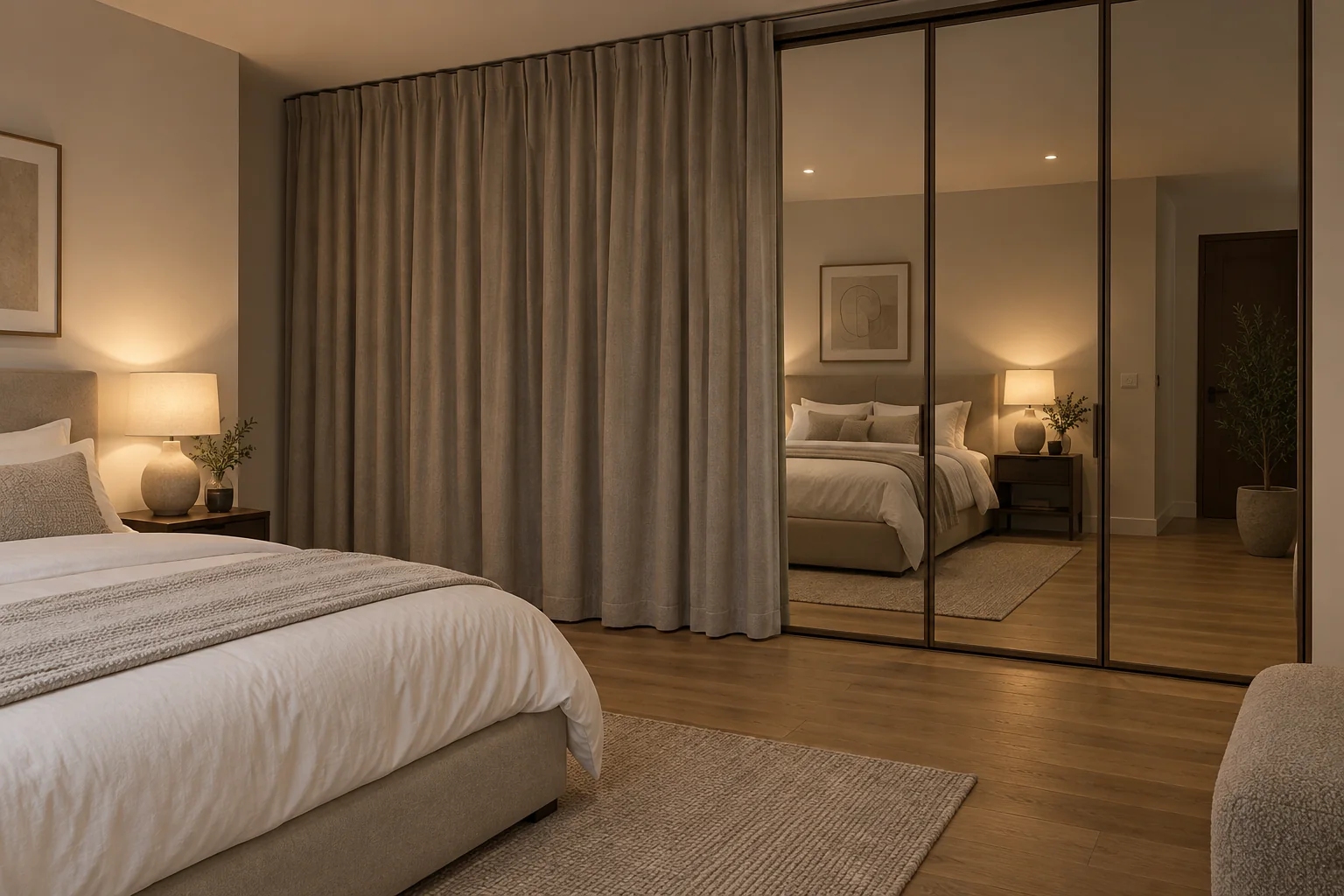
If a cover makes the wardrobe awkward to use, it may create more inconvenience than it solves. Keeping the doors as they are is still an option. Consider professional alterations only if the reflection remains a concern and a simpler change does not suit you.
Where Is the Best Place for a Mirror in a Bedroom?
Think about when you use the mirror. Do you check a full outfit before leaving, sit at a dresser, or need a quick look beside the wardrobe? Start with that routine, then check what the mirror shows from the bed.
| Location | Potential advantage | Check before choosing it |
|---|---|---|
| Opposite the bed | May provide a convenient dressing view. | Bed-level reflection and visible light sources. |
| Beside the wardrobe | Keeps outfit checking near clothes storage. | Wardrobe operation, standing space and circulation. |
| Side wall | Offers another reflection angle. | The bed may still appear from some viewpoints. |
| Above a dresser | Can support close-up grooming. | Visible area, mounting and whether a full-length view is needed. |
| Inside a wardrobe door | Can hide the mirror when the door closes. | Door construction, hinges, opening direction and approved attachment. |
A mirror behind or above the bed is a different decision
A mirror behind the headboard may be outside your normal view when lying down, but check it from the positions you actually use. A mirror directly above a sleeping area also raises a mounting question: its weight, wall construction and fixing system need an appropriate installation assessment. Do not move a mirror over the bed just to avoid a reflection elsewhere; another wall may be more practical.
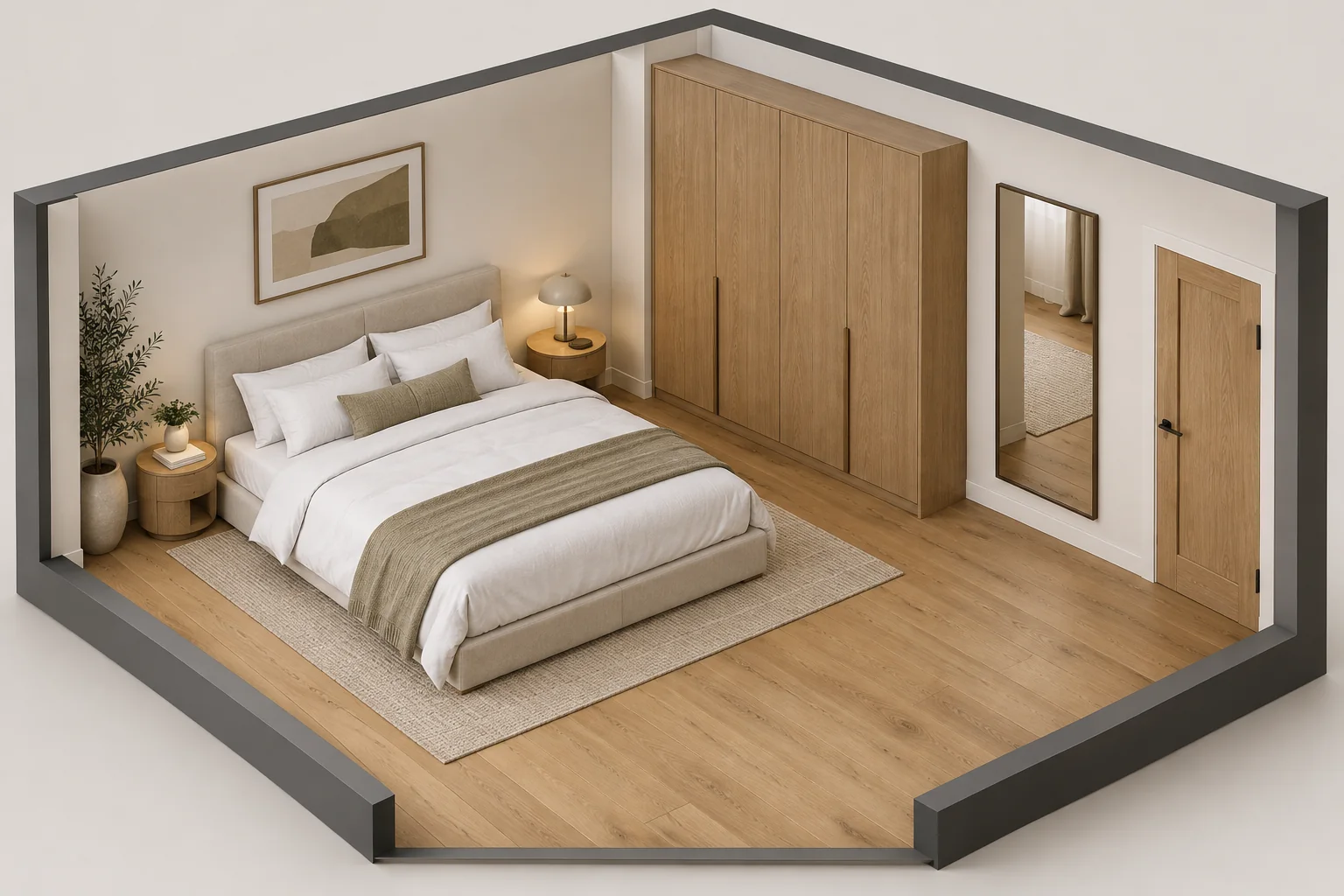
For dressing, make sure you can see the outfit you want to check. The visible glass and its height on the wall matter more than the frame’s outside dimensions alone. Use our full-length mirror dimensions guide to plan the size, then compare full-length mirrors for bedrooms and projects for the position you have in mind. Marking the outline on a wall helps you judge the size, but you will need a mirror in position—or a designer’s sightline study—to check what it reflects.
Why Does Feng Shui Discourage Mirrors Facing the Bed?
Why shouldn’t mirrors face your bed? In some feng shui traditions, a reflected sleeping area is considered too active for rest. In everyday use, the practical reason to change it is a reflection or light that bothers you. These are different considerations: a traditional belief does not establish that the arrangement causes harm.
If that tradition matters to you, choose a position or nighttime cover that feels comfortable. You can respect the preference without treating it as a prediction of harm.
There is not one explanation shared by every practitioner. Some interpretations allow a mirror to show the entrance when the door cannot otherwise be seen from the bed. Homes & Gardens’ interviews with feng shui practitioners illustrate these different views. These are traditional interpretations, rather than evidence that the mirror will bring bad luck or harm a relationship.
You do not have to settle the debate to make your room feel comfortable. If you share the room, ask what the other person prefers too. One of you may enjoy the sense of space a mirror creates while the other would rather not see a reflection from the pillow.
Does a Mirror Facing the Bed Affect Sleep?
If you notice a bright reflection when you settle into bed, it makes sense to change it. The NHLBI recommends a quiet, cool, dark bedroom, with a dim night light if needed. This is general advice about your sleep environment; it does not show that a mirror facing the bed causes insomnia or nightmares.
Try identifying the light you can see in the mirror. It might be a bedside lamp, light from the hallway, or a window. An ordinary mirror reflects that existing light; an LED mirror can also emit light of its own. Adjusting the source may be all you need to do.
What About LED Mirrors, TVs and Other Reflective Surfaces?
With an LED mirror, turn its lighting off and check the reflection first. Then try the settings you would use in the evening. Notice any glowing switch or indicator as well as the main light. Before choosing a model, ask whether those lights can be switched off or adjusted as you prefer.
A dark TV screen or window can also show reflections under some lighting conditions. Check the surface from the bed rather than assuming it behaves exactly like a mirror. When the TV is on, its emitted light is a separate issue. For a window, try the normal blind or curtain. Keep any covering away from powered equipment and ventilation openings.
Mirror Placement for Hotels and Apartment Projects
For a guest, the room needs to work without explanation. They should be able to check an outfit, open the wardrobe, and reach their luggage easily. In a sample room, try those everyday actions with the mirror, furniture and lighting in place before repeating the layout.
- Observe from both bed positions, lying down and sitting up.
- Check evening lighting, mirror lighting and illuminated controls.
- Open the entrance door and check whether the mirror reveals more of the bed area than intended.
- Try the dressing position with wardrobe doors, drawers and the luggage rack in use.
- Record room type, door handing, mirror position and fixing conditions.
Once the sample room works, record the mirror size, mounting height and lighting settings on the room drawing. Check again where the furniture or door arrangement changes. This suggested checklist helps the design team review the guest’s experience; the project’s installation requirements still apply.
For a wider property brief, see hotel guestroom mirror planning or the information to coordinate for apartment mirror specifications. Use them when you are coordinating mirror choices across several rooms.
Frequently Asked Questions
What if I cannot move or cover mirrored wardrobe doors?
Start with the light being reflected: try the existing window covering, move a portable lamp, or change its setting. Check the result from both sides of the bed without blocking wardrobe access. If nothing bothers you, the doors can stay as they are. If the reflection itself remains uncomfortable, discuss permitted changes with the landlord or a suitable installer rather than attaching an improvised cover to the doors.
Is it bad luck to have a mirror facing your bed?
Bad luck is a traditional belief, not an established consequence of this layout. If the reflection does not bother you, you do not need to move the mirror for that reason. If following the tradition matters to you, choose a different position or a suitable nighttime cover while keeping the room easy to use.
Does a mirror reflecting only the foot of the bed count?
It counts if your preference is to avoid any bed reflection. It may not show your face from the pillow. For practical comfort, judge the visible reflection rather than the wall’s name or direction.
How far should a mirror be from the bed?
There is no single distance that resolves every reflection. Size, position, angle and viewing height work together. Test the view and preserve the room’s usable space.
Can I cover just part of a mirror at night?
Yes, if the covered area removes the reflection you want to avoid from the relevant bed positions. Check lying down and sitting up; partial coverage is not automatically sufficient.
Is a smaller mirror better in a small bedroom?
Only if it still serves its purpose and fits the layout better. A smaller mirror can retain the same unwanted reflection. For a full-length view, compare the visible glass and installed height before reducing the size.
Does a TV facing the bed count as a mirror?
A dark screen may show reflections, but its reflectivity differs from a mirror. Inspect the actual view with the screen off; when it is on, consider its emitted light separately.
Can an LED mirror face the bed?
Yes, if its reflection and nighttime lighting suit you. Try the light and any glowing controls from the bed, and check that the model offers the settings you need.
Will moving the mirror guarantee better sleep?
No. Moving it may remove a view or reflected light you dislike, but sleep can be affected by many things. Treat the change as a way to make your room more comfortable, not as a treatment for a sleep problem.
About this guide: Published by OJMirror. The diagrams are original explanatory models; the bedroom images are 3D concepts. The sources below distinguish optical principles, general sleep-environment guidance and cultural interpretations. This article does not claim a clinical or feng shui expert review.
References and Further Reading
- OpenStax: The Law of Reflection — optical principles used in the design diagram.
- NHLBI: Healthy Sleep Habits — general sleep-environment guidance, not a mirror-specific study.
- Homes & Gardens: Bedroom Mirrors and Feng Shui — attributed cultural interpretations.
