
Table of ContentsOn this page
 View full-size image ↗
Is a Mirror Silver, White, or Green?
Each answer describes something different. Silver describes the familiar shiny appearance. Green describes a small tint in many ordinary glass mirrors. The colors you actually see usually come from the reflected scene.
Hold a red object in front of a mirror and its reflection looks red. Replace it with a blue object and the reflection looks blue. The mirror has not changed materials: it is returning light from a different object.
| What you notice | What it means |
|---|---|
| A silver-looking surface | The mirror has a bright, metallic appearance. |
| The colors of your room | The reflected scene supplies most of the visible color. |
| A faint green cast | The materials slightly favor some wavelengths over others. |
| A green exposed edge | You are seeing the glass along a different, often longer light path. |
So “mirrors are green” is a useful starting point, but it is too broad to describe every mirror—or every reflection.
Why Does a Mirror Look Silver Instead of White?
A typical household mirror has a thin reflective metal coating behind its glass. That construction gives it the familiar metallic appearance, but “silver-looking” alone does not identify which metal was used.
There is also an important difference between a mirror and white paper. Both can return light across the visible spectrum. A smooth mirror returns light in an orderly way, preserving an image; a matte white surface scatters light in many directions. These are called specular and diffuse reflection. Reflection explanation
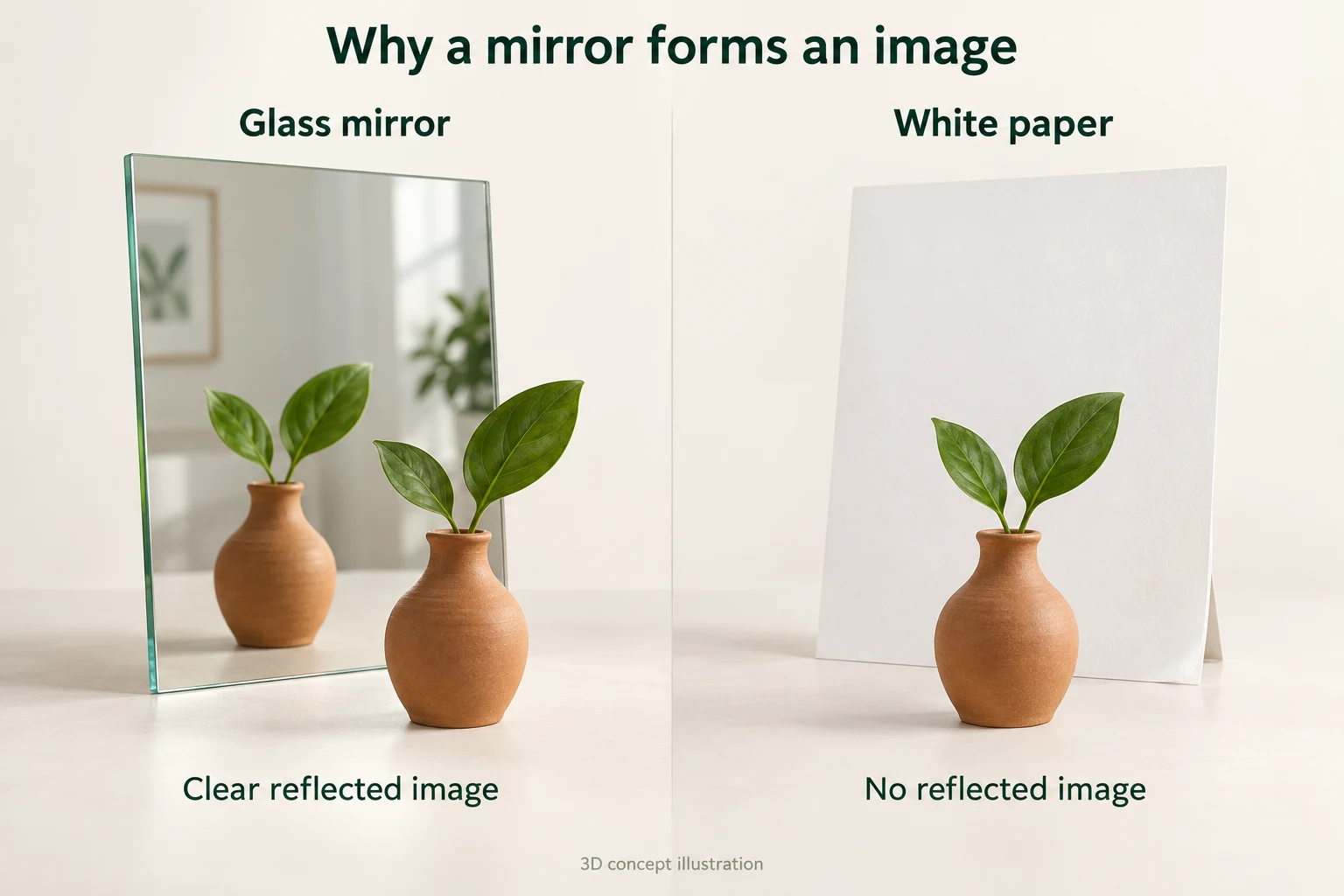
An ideal color-neutral mirror would reflect visible wavelengths without changing their relative balance. That does not mean it would look like white paint: it would still show an image of its surroundings.
What Makes Ordinary Mirror Glass Slightly Green?
Small amounts of iron compounds in ordinary glass contribute to its green tint. The effect becomes easier to see as the light path through the glass increases. Low-iron glass reduces this contribution. Pilkington glass explanation
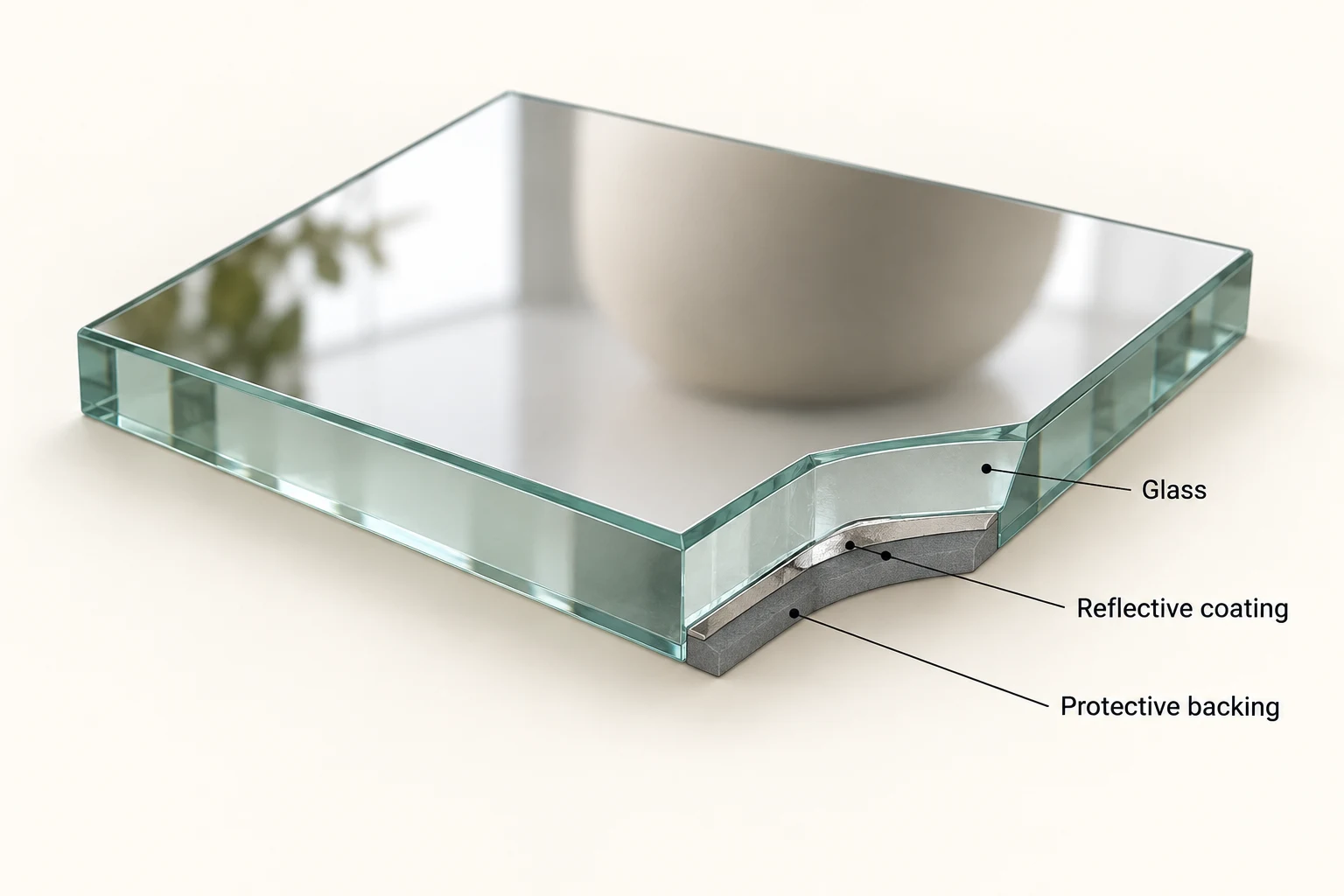
In a common second-surface mirror, the main reflective coating sits behind the glass. Light passes through the glass, reflects from that coating, and passes through the glass again on its way back to you. A smaller reflection also occurs at the front surface. Edmund Optics
 View full-size image ↗
The glass is only part of the explanation. The coating also reflects different wavelengths by different amounts. A published study of common silvered glass mirrors found that both components influenced the resulting color. That is why one universal “mirror green” value would be misleading. Lee and Hernández-Andrés, 2004
Why Is the Edge Greener Than the Reflection?
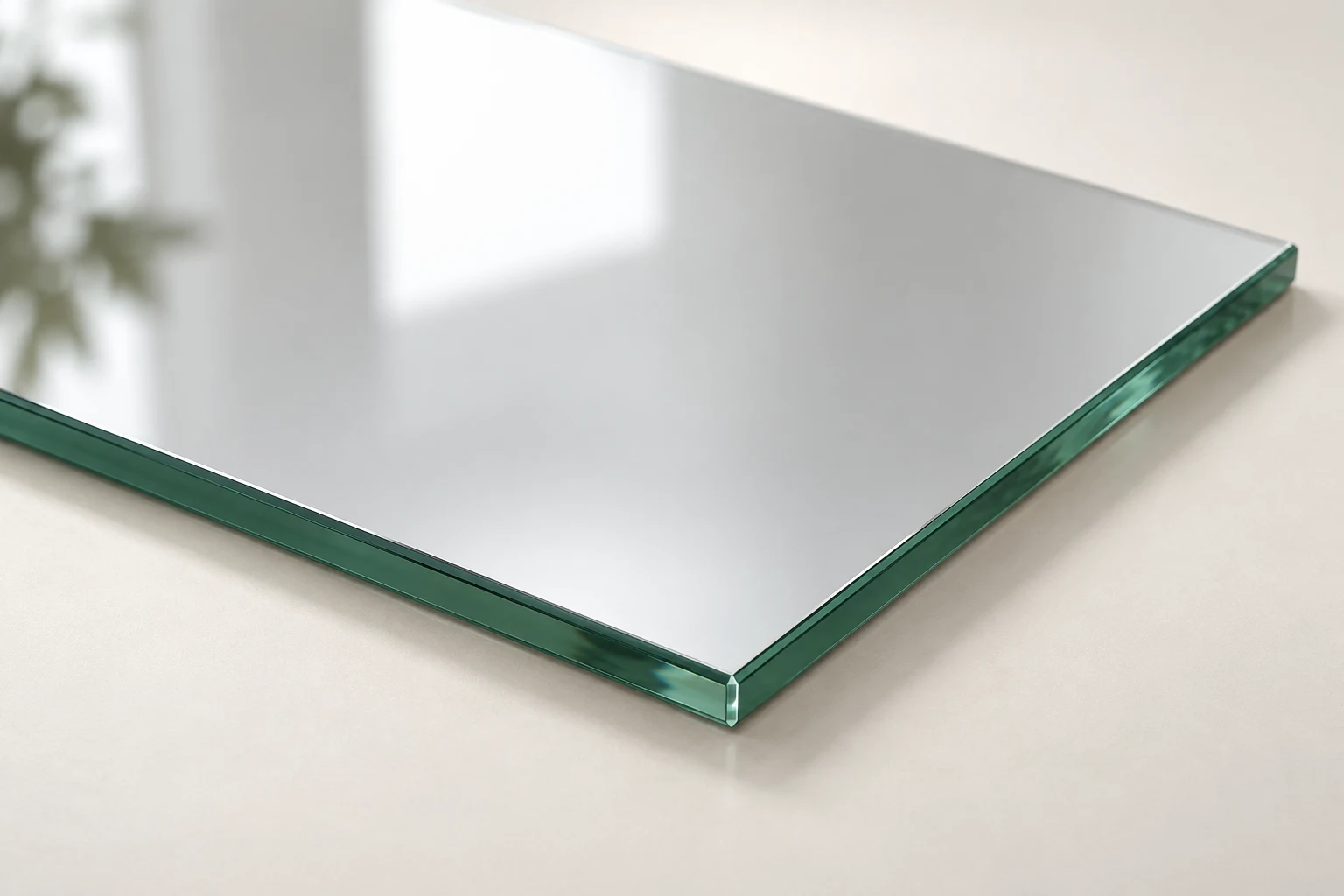
An exposed edge can make the glass tint much more noticeable than the front view. Looking along the glass can involve a longer path through it, so a weak tint becomes easier to see. Thickness, edge finish and viewing angle also affect what you notice.
 View full-size image ↗
A green edge by itself does not mean the mirror is defective. If you are choosing a frameless mirror, check whether that edge appearance suits the room. Then inspect the reflected image separately. An edge that looks distinctly green does not automatically mean your face or a white wall will look equally green in reflection.
Low-iron glass may be worth comparing when the edge is exposed or a more neutral appearance is important. It reduces the glass-related tint; it does not guarantee that every finished mirror will look identical. Pilkington Optiwhite
Why Do Two Facing Mirrors Look Greener?
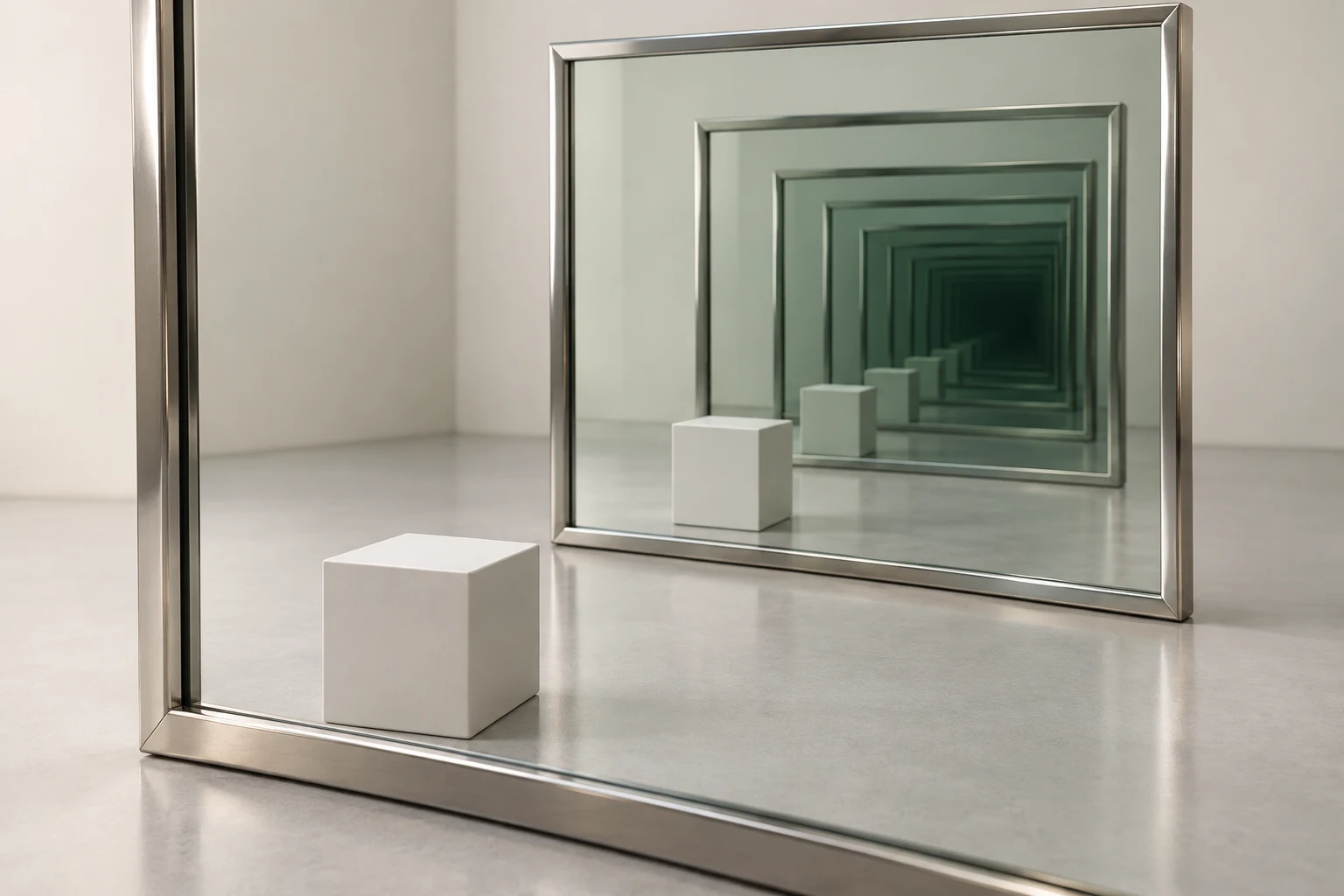
Two facing mirrors produce repeated reflections—a mirror tunnel. Each bounce introduces further wavelength-dependent losses. A small color bias can accumulate, while the returning light also becomes dimmer. The distant reflections may therefore look greener and darker than the first one. This behavior was investigated in the 2004 mirror-tunnel study. Original paper
If you have two securely mounted mirrors that face each other, compare the near and distant reflections of a white object. The effect depends on the mirrors and lighting; it is not a guaranteed shade or a test that ranks mirror quality. For a bathroom mirror, the normal viewing condition is still the more useful place to start.
Are All Mirrors Green?
No. The substrate, coating and intended use can differ.
| Type | What to expect |
|---|---|
| Ordinary clear-glass mirror | May introduce a subtle green tint, often more visible at the edge or in repeated reflections. |
| Low-iron glass mirror | Reduces the green contribution from the glass. Compare the finished sample if neutrality matters. |
| Bronze or gray decorative mirror | Has an intentional tint; choose it for the desired decorative effect. |
| First-surface optical mirror | Reflects light before it travels through the supporting glass. The coating still affects spectral performance. |
Suppliers offer mirrors on different glass substrates, including low-iron and tinted options. A decorative tint is a design choice, not the same thing as the weak green bias of ordinary clear glass. General Glass International
First-surface mirrors have a different optical construction and application. Their existence does not make them a general replacement recommendation for household mirrors. Edmund Optics coating guide
Choosing a Mirror: What Should You Actually Check?
For everyday use, start with a simple question: Do the reflection and exposed edge look right in the intended space? You do not need to choose low-iron glass solely because ordinary glass can look green.
When comparing options for a bathroom, salon or project:
- Put physical samples together. Use the same lighting and viewing angle. Compare the same white or neutral reference object and the finishes that will be nearby.
- Separate the front view from the edge. Check each one deliberately, especially for frameless designs. Swap the sample positions to see whether a difference follows the glass or its surroundings.
- Check the intended lighting. First compare the glass under one shared light source. Then review the complete mirror under the room and mirror lighting you plan to use.
- Keep a clear approval record. Record the sample ID, stated glass type and thickness, lighting conditions, and the selected physical sample.
For a useful side-by-side record, write down these details for each sample. This is a comparison worksheet, not a report of OJMirror test results.
| Record for each sample | What to note |
|---|---|
| Sample and construction | Sample ID, stated glass type and thickness; keep thickness the same when comparing substrates. |
| Viewing conditions | Light source, reflected reference object and viewing angle. |
| Front and edge | Describe each separately; avoid judging the whole mirror from its edge alone. |
| Decision | Preferred sample, intended use and anything still to confirm with the supplier. |
Photos help document that comparison, but camera white balance can change apparent color. Separate supplier photos are therefore a weak basis for judging a subtle tint. Nikon white balance guide
For a larger order, use the mirror sample approval checklist to record the decision alongside other checks. This keeps a small visual preference from becoming an unclear purchasing requirement.
Frequently Asked Questions
Is a Copper-Free Mirror Also Low-Iron?
Not necessarily. Copper-free refers to the mirror's backing construction; low-iron refers to the glass. Confirm them separately. Pilkington, for example, identifies a low-iron version within its mirror range rather than treating the terms as synonyms. Pilkington Optimirror
Can LED Lighting Change the Color I See?
Yes. The light illuminating a person or object affects its reflected appearance. If a reflection seems too warm or cool, compare the lighting before attributing the difference to the glass. See the LED mirror color temperature guide.
Can I Specify Mirror Color with a HEX Code?
A screen color code cannot fully describe a reflective material across different scenes and lighting. For a decorative mirror, use an identified material and approved physical sample. A screen swatch can help start a conversation, but it should not replace the sample.
Need Help Describing the Mirror You Want?
For an OJMirror project inquiry, include the dimensions, estimated quantity and intended use. Tell us whether you want a relatively neutral reflection or a decorative tint, and whether the edge will be exposed. Ask which glass and sample options are available for the proposed model.
The custom mirror RFQ checklist can help organize the details. When you are ready, send your project requirements.
