
Table of Contents
How did a medicine cabinet razor blade slot work?
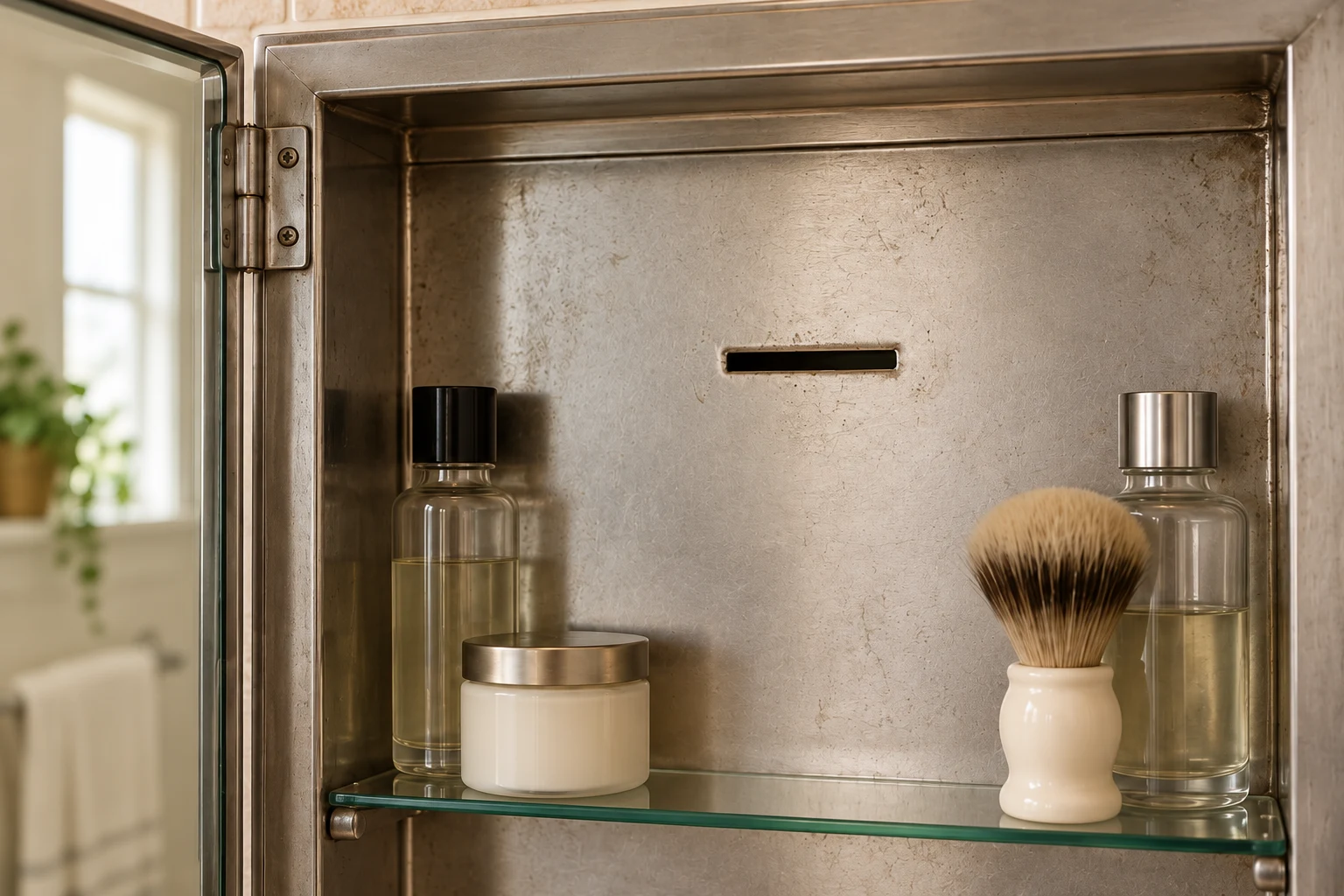
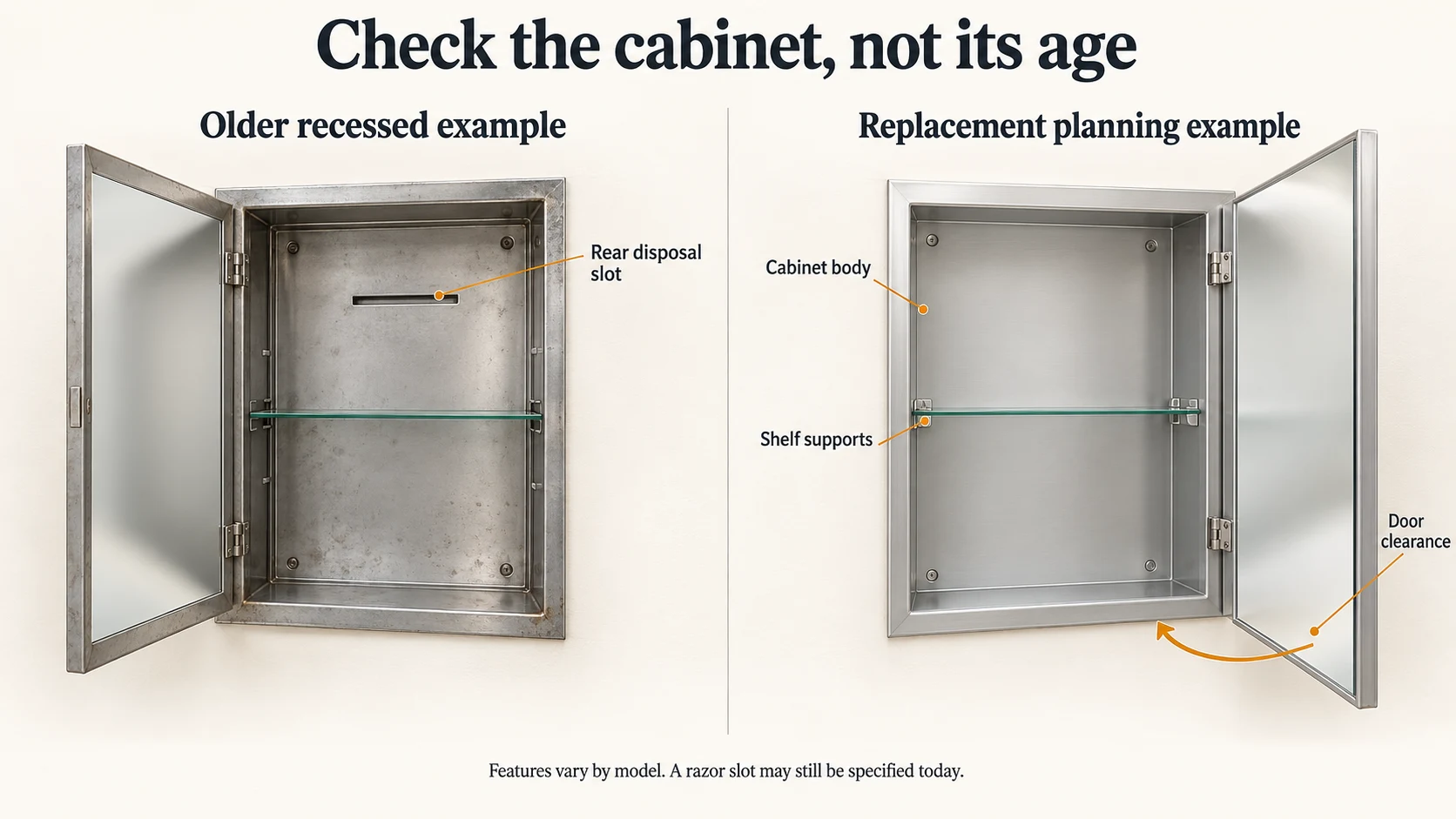
Replaceable-blade safety razors left users with a small, sharp piece of metal after shaving. A disposal slot provided somewhere to drop the used blade instead of leaving it loose in a bathroom wastebasket. Some cabinets had a narrow opening in the rear panel; others placed the feature lower down.
The opening itself does not tell you what is behind it. A model label, drawing or manual is more useful than judging the slit by appearance. Do not put a finger, blade or tool into an unidentified opening to test its purpose.
Where did the used razor blades go?
In one familiar historical arrangement, an older recessed cabinet opened into the wall cavity behind it. A blade passed through the cabinet back and dropped into that concealed space. The blades were outside the usable cabinet interior, so someone opening the mirror door would not necessarily see them.
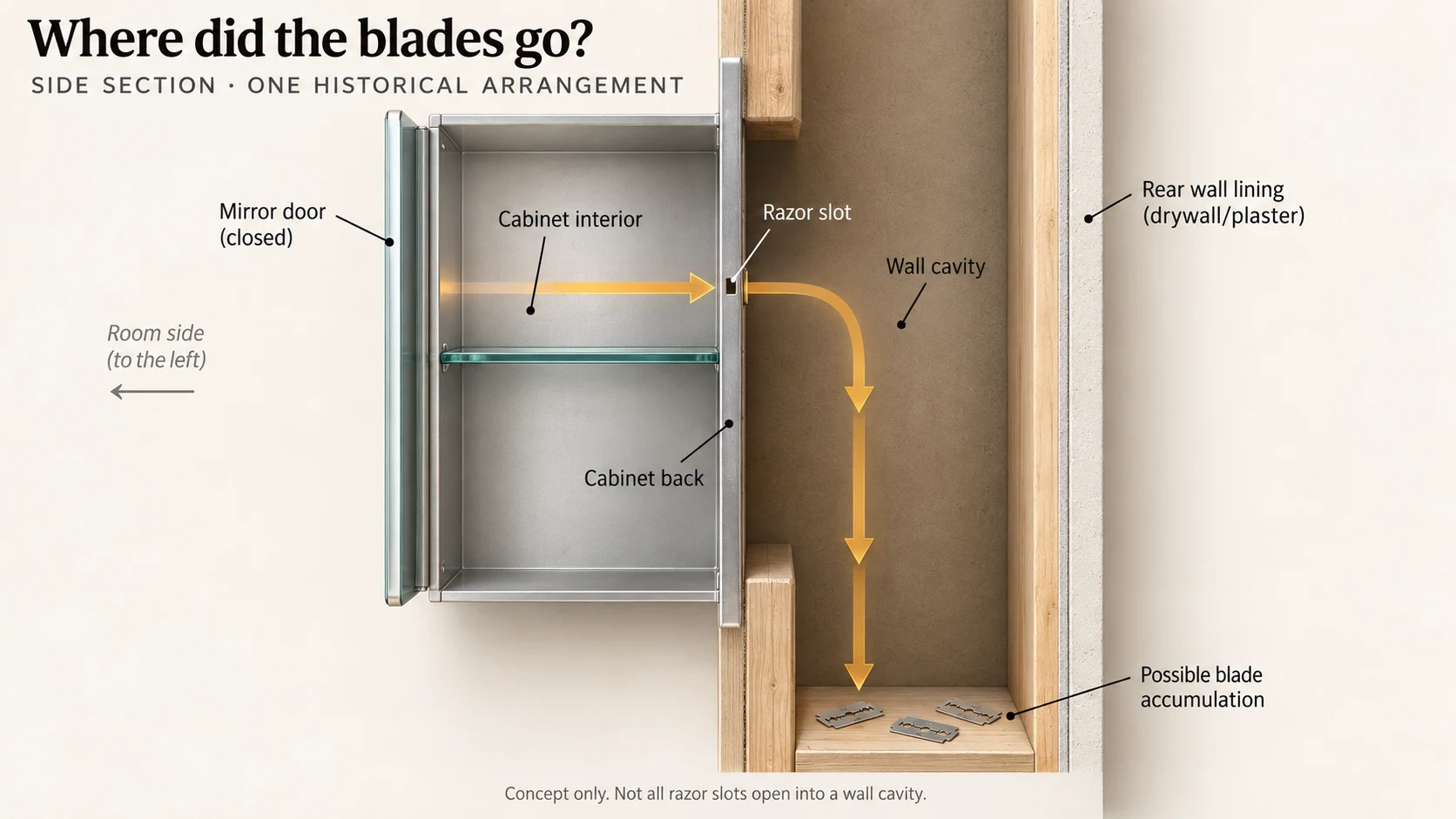
The amount accumulated, if any, depends on how the cabinet was used. Blades may remain hidden until renovation exposes the space. A slot is a reason to alert the installer, not proof that blades are present.
Do not apply this arrangement automatically to surface-mounted cabinets. Their bodies sit outside the wall, and their disposal route must be checked separately. Our recessed vs surface-mount medicine cabinet guide explains how the mounting methods change the space behind and around the cabinet.
What about a razor slot directly in the bathroom wall?
Some older bathrooms have a separate blade-disposal slot in the wall, sometimes formed in a decorative tile rather than the cabinet. It can serve the same historical purpose, but it is a separate feature: removing a nearby cabinet may not expose the space behind that slot. Record its location for the contractor, even if the replacement cabinet has no blade opening. Do not assume an unexplained crack or hole is a disposal slot.
When were razor blade slots used?
Replaceable safety razor blades entered household use in the early 1900s. By 1941, bathroom design guidance recommended a razor blade slot to keep discarded blades out of wastebaskets. The feature therefore predates the 1950s, even though it is often associated with mid-century bathrooms.
Those milestones do not identify the invention date of every slot design or establish when your cabinet was installed. An old house may have a later cabinet, and some current cabinet specifications still include this feature. Use a manufacturer label, catalog match or documented renovation history to investigate age; the slot alone cannot date a cabinet.
Razor blade slot or shelf slot: how can you tell?
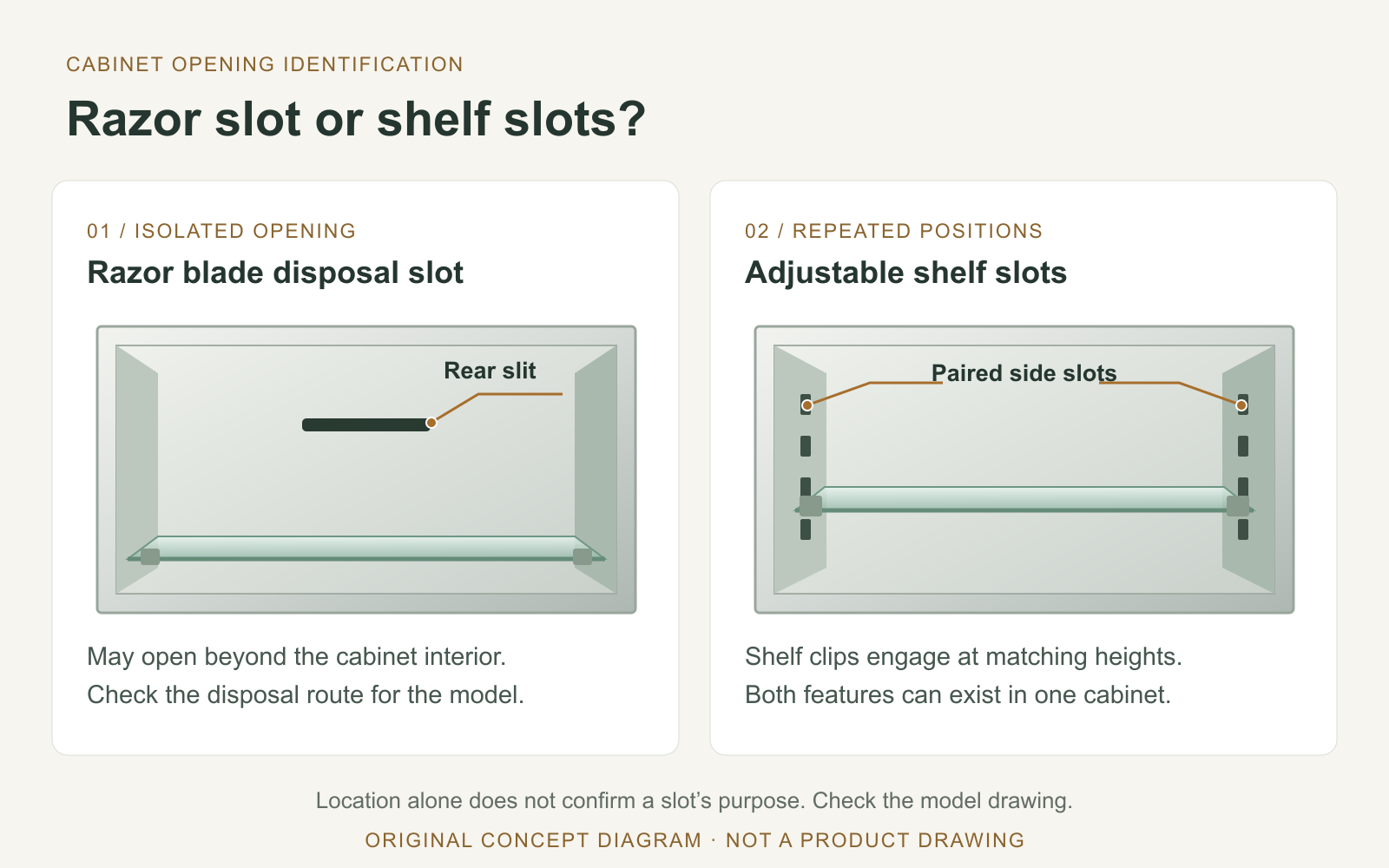
Start with the pattern of openings, then look at their relationship to shelves and supports. Both features can appear in the same cabinet.
| What you can see | What it may indicate | What to check |
|---|---|---|
| One isolated narrow slit on the rear or lower panel | A blade-disposal opening | Any label and the model's construction details |
| Repeated openings at matching heights on both side panels | Adjustable shelf positions | Shelf clips or supports that engage with them |
| An irregular opening, damaged edge or unexplained hole | An unidentified alteration or fitting | Manufacturer information or an installer's assessment |
Photograph the whole cabinet interior as well as the opening. A close-up without context can hide the repeated pattern that makes shelf slots recognizable. Treat a missing label as uncertainty, not permission to probe the hole.
What if you find razor blades behind an old cabinet?
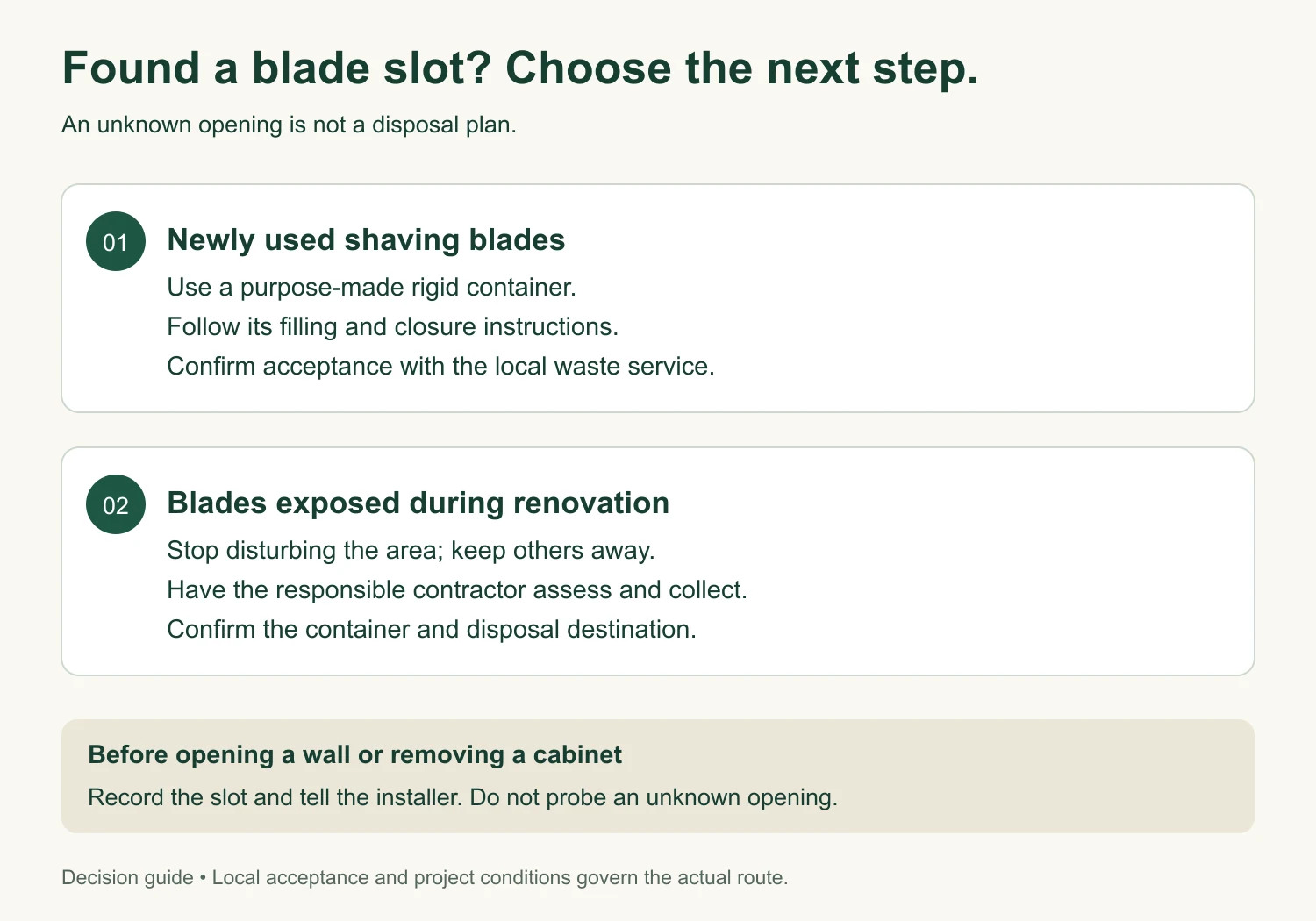
Before removal, point out the suspected slot to the installer. Photograph it from the accessible side and explain that blades may have collected behind the unit. Avoid pulling out the cabinet simply to investigate the cavity.
If removal exposes loose blades, stop disturbing the area and keep other people away, including children and pets. Do not reach blindly behind the cabinet or pick blades out of debris with bare hands. Rust, dust and poor visibility can make individual edges difficult to spot.
Have the responsible contractor arrange collection with suitable tools, protection and a secure container, following the project's waste-handling requirements. Agree on the disposal destination before cleanup. A contractor's renovation waste may be handled differently from a small quantity of household shaving blades.
The cavity also needs a separate assessment for wiring, pipes and the wall assembly. Finding a slot does not justify cutting farther into the wall. For the broader survey and replacement sequence, see replacing a recessed medicine cabinet.
Can you still use an old razor blade slot?
Do not keep using a slot whose construction and disposal route are unknown. Its presence does not establish a contained collection space or an approved disposal method. For a current model with a documented blade-disposal feature, check the manufacturer's instructions and local acceptance requirements before deciding how to use it.
An intact wall concealing possible blades is a different situation from exposed blades in renovation debris. The slot alone does not establish an immediate need to open the wall. If access or removal is planned, have the condition assessed beforehand; do not cut an inspection hole merely to look for blades.
How should used razor blades be disposed of today?
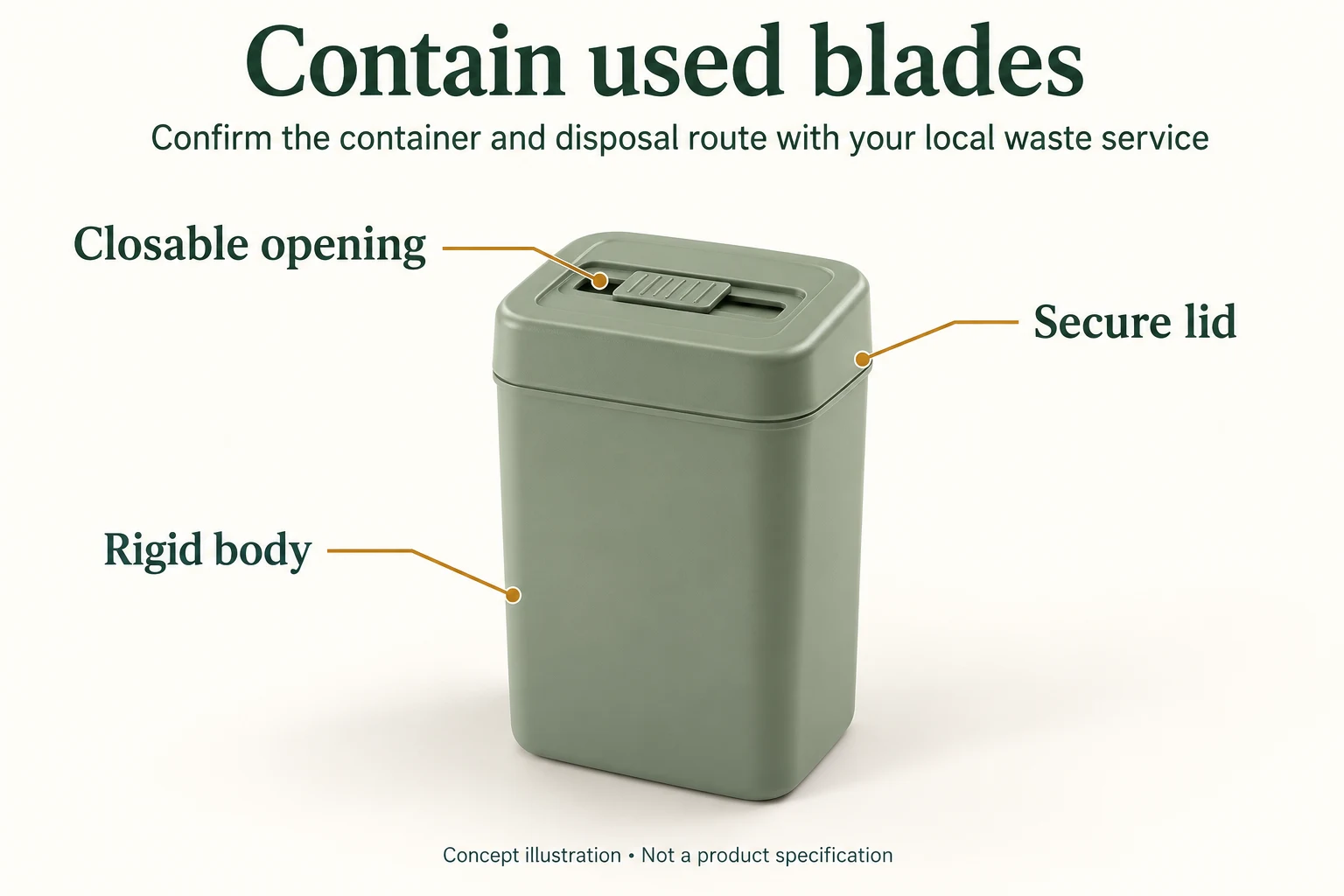
Do not use an old unidentified wall slot as a disposal route. For newly used shaving blades, use a purpose-made, puncture-resistant blade container with a secure closure, and keep it out of children's reach. Follow its filling and closure instructions; do not leave loose blades in a bin or recycling box.
Ask the local waste service how it accepts household razor blades, including the required container and collection destination. Do not assume that a metal blade belongs in curbside recycling, that every sharps drop-off accepts shaving blades, or that household guidance covers a contractor's cleanup. Acceptance rules vary by locality and collection service.
For blades already hidden in a wall, use the contractor-led approach above. A blade bank for everyday shaving does not solve access to an unknown or disturbed wall cavity.
Do modern medicine cabinets still have razor slots?
Some currently listed cabinet specifications still include a razor blade slot. It is therefore inaccurate to describe the feature as exclusive to antique cabinets. However, it is not a standard feature of every modern model, and a listing that mentions a slot does not necessarily explain its disposal route.
For any proposed cabinet, ask whether the slot is included, where it opens and what the manufacturer specifies for its use. Do not assume an OJMirror model includes a blade slot. Any requested interior feature must be confirmed in the selected drawing and quotation.
Before removal: a short project handoff checklist
- Record what is visible. Take an overall interior photo, a close-up of the suspected slot and a photo of any accessible model label. Note a separate wall slot as well.
- Flag the concealed condition. Tell the installer that discarded blades may be behind the cabinet or wall. A photo cannot confirm the amount or location.
- Agree on responsibility. Identify who will assess the wall, handle any exposed blades and confirm the waste service's accepted container and destination.
- Plan the replacement survey. Record visible cabinet dimensions now; confirm the actual opening and usable depth only when it can be accessed safely. Include wiring, pipes, fixings and door clearance in the survey.
Replacing an old medicine cabinet: what to check
A blade slot alone does not mean the cabinet must be replaced. Condition, usability and the planned bathroom work should drive that decision. If a vintage unit is being retained, have its door, supports, fixings and any uncertain openings assessed before deciding on repairs.
| Project decision | Check before committing |
|---|---|
| Keep or repair the existing cabinet | Door and mirror condition, shelf supports, secure mounting and any unknown openings |
| Replace it with another recessed cabinet | Actual opening width, height, usable depth, fixing support and trim coverage |
| Change to a surface-mounted cabinet | Treatment of the old opening, wall support, finished sides, projection and door clearance |
| Replace multiple hotel or apartment units | Room-by-room exceptions, photos and dimensions; do not treat one sample as every bathroom |
Once removal and cleanup are complete, record the usable wall opening and compare it with the exact replacement model's drawing. The old mirror's visible width and height do not establish the size of the recessed box. Use our guide on how to measure for a medicine cabinet to prepare the survey, then compare medicine cabinet sizes in the context of the vanity and room layout.
For an apartment, hotel or residential renovation program, send OJMirror the existing-cabinet photos, opening width × height × usable depth, desired door layout, any electrical requirements, quantity and project location. Start with our medicine cabinet overview and use the project inquiry form for a specification review. Resolve room-type differences before approving a repeated cabinet size.
Frequently asked questions
Are the slots along the sides for razor blades?
Repeated side slots usually support adjustable shelves. A cabinet may also have a separate blade-disposal opening. Look at the complete pattern and the model documentation.
Can the razor slot tell me how old my cabinet is?
No. The feature has a long history and still appears in some later specifications. Look for a model label and documented product or renovation information.
Is it safe to keep using an old razor blade slot?
Do not use an unidentified slot. Confirm the model's intended use and disposal arrangement first. A separate blade container accepted by your local waste service avoids adding blades to an unknown wall space.
Can I cover an unused razor blade slot?
Ask the manufacturer or installer to assess a suitable permanent closure for that cabinet. Do not push filler or objects through the opening. Covering a slot does not remove any blades already behind it.
Does every cabinet with a slot have blades inside the wall?
No. A slot may never have been used, and the disposal path varies with construction and installation. Treat possible hidden blades as a survey issue rather than assuming a pile is present.
Can I replace a recessed cabinet that has a blade slot?
Yes, subject to safe removal, cleanup if needed, and a fit check. Select the replacement from the exposed opening, support and door clearance—not the old mirror's visible dimensions alone.
Can a bathroom wall have a razor slot without a medicine cabinet?
Yes. Separate wall slots, including decorative slotted tiles, existed independently of cabinets. Treat one as a separate concealed condition and tell the contractor where it is before nearby work. Its appearance does not confirm the space or contents behind it.
