
3x vs. 5x vs. 10x Makeup Mirrors: How to Choose
For an overall makeup check, start with your regular mirror. If small details are hard to see, compare 3x and 5x at your usual makeup position. Keep 5x if it already does the job; try 10x when a particular small area still needs closer inspection. Choose the mirror that makes the task clearer without forcing an awkward posture or blocking your hand—not simply the highest magnification available.
On this page
3x vs. 5x vs. 10x: Quick Comparison
Use these directions to choose what to compare first. They describe practical selection steps, not measured results for a particular product.
| Magnification | Start here when… | If it does not work comfortably… |
|---|---|---|
| 3x makeup mirror | You want modest enlargement for a detail that is difficult to see in a regular mirror. | If the task is still unclear under suitable lighting, compare a 5x mirror of a similar usable size. |
| 5x makeup mirror | You need a closer view for everyday makeup or grooming. | Check the mirror position, size and access to a regular view before assuming a stronger mirror will help. |
| 10x makeup mirror | One small area needs extra close-up inspection. | If the clear position is awkward or the mirror obstructs your tools, compare lower magnification or a different structure. |
A higher number is worth considering when it solves a remaining viewing problem. It is not an automatic upgrade. If your present mirror lets you complete the task comfortably, there may be nothing to replace.
Which Magnification Should You Try?
What Magnification Is Best for Everyday Makeup?
For checking foundation, blush placement and the balance of the whole look, keep a regular mirror available. When you need extra help with details, start by comparing 3x and 5x. Choose the lower magnification if it gives you enough detail and a useful view of the working area.
If neither option feels easy to use, check the light and mirror position first. More magnification will not move a fixed mirror closer or remove a shadow cast by your hand.
3x vs. 5x: Compare One Familiar Task
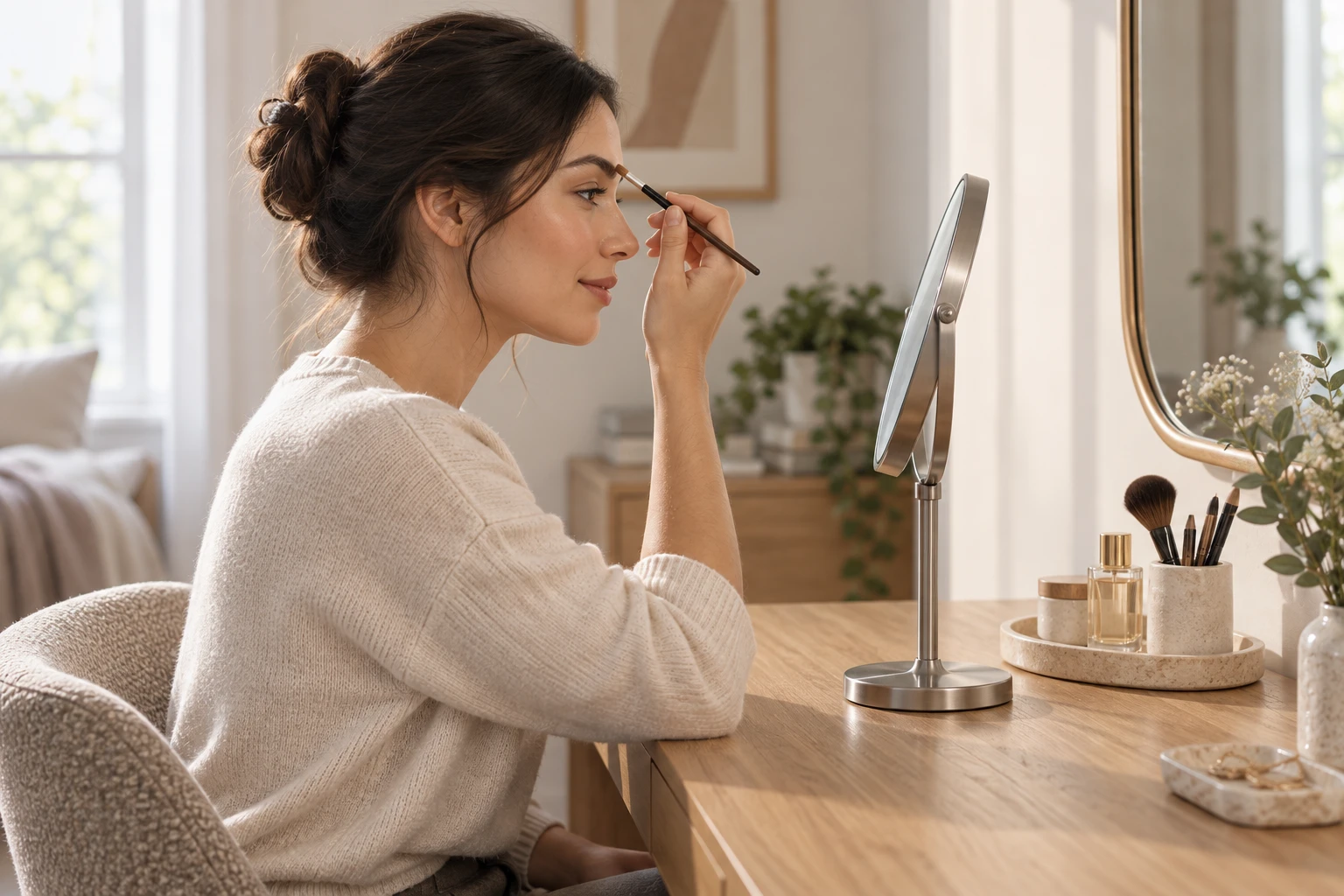
Try the same task on both mirrors—for example, checking the edge of a brow. Use similar lighting and, where possible, similar reflective dimensions. Follow the manufacturer’s viewing instructions when available, and find a clear, comfortable position for each mirror rather than forcing both to work at an identical distance.
If 3x makes the brow edge clear while leaving enough context to work comfortably, it may be sufficient. If the detail remains hard to see, try 5x and check whether the clearer view comes with a usable position and enough room for your brush.
5x vs. 10x: When Is More Magnification Useful?
Keep 5x when it already lets you complete your daily tasks. Try 10x when a specific small detail remains difficult to inspect under suitable lighting. Choose the 10x option only if the additional view helps and you can maintain the required position without crowding your hand or tools.
A regular mirror remains useful for checking the overall result after close work. This can be an existing wall mirror, a normal side on a reversible mirror, or another accessible regular view.
What Does Makeup Mirror Magnification Mean?
A 1x mirror provides a regular, non-magnifying view. Labels such as 3x, 5x and 10x describe the product's advertised level of enlargement. They do not tell you its working distance, how much of your face you can see, or how large the magnified area is. Actual viewing depends on the mirror's optical design and your position.
You may also see 7x, 15x or 20x options. Apply the same task and comfort checks instead of treating each higher number as the next step you need to buy.
Check Position, Mirror Size and Hand Clearance
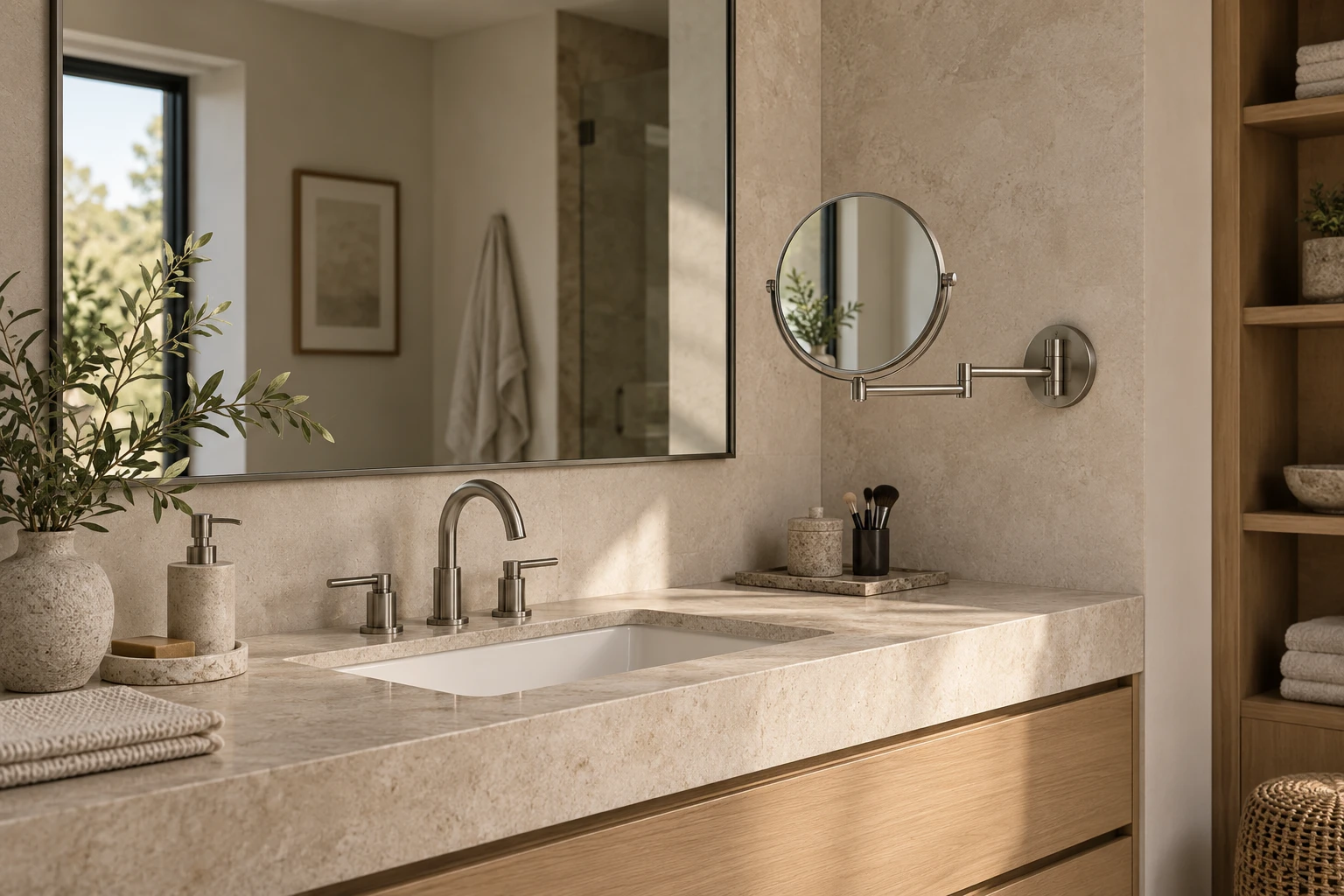
Before choosing, compare the mirror where you expect to use it. A suitable mirror head can still be awkward above a deep basin or on a low dressing table.
- Choose a familiar task. Use the same brow detail or makeup area for each candidate.
- Find the clear position. Follow the model's instructions and adjust the mirror and your position gradually. You should not have to maintain an uncomfortable lean.
- Check the useful view. Can you see the whole area needed for that task without constantly repositioning yourself?
- Try your usual tools. Hold your brush as you normally would. Check the handle and hand clearance, not just the reflection.
- Check the overall result. Make sure you can return easily to a regular view.
If a wall-mounted mirror cannot reach a usable position, review its arm and mounting location. For a tabletop model, consider height, base position and stability. A different structure may solve the problem more effectively than a stronger magnifying surface.
Compare the Magnified Area, Not Just the Outside Size
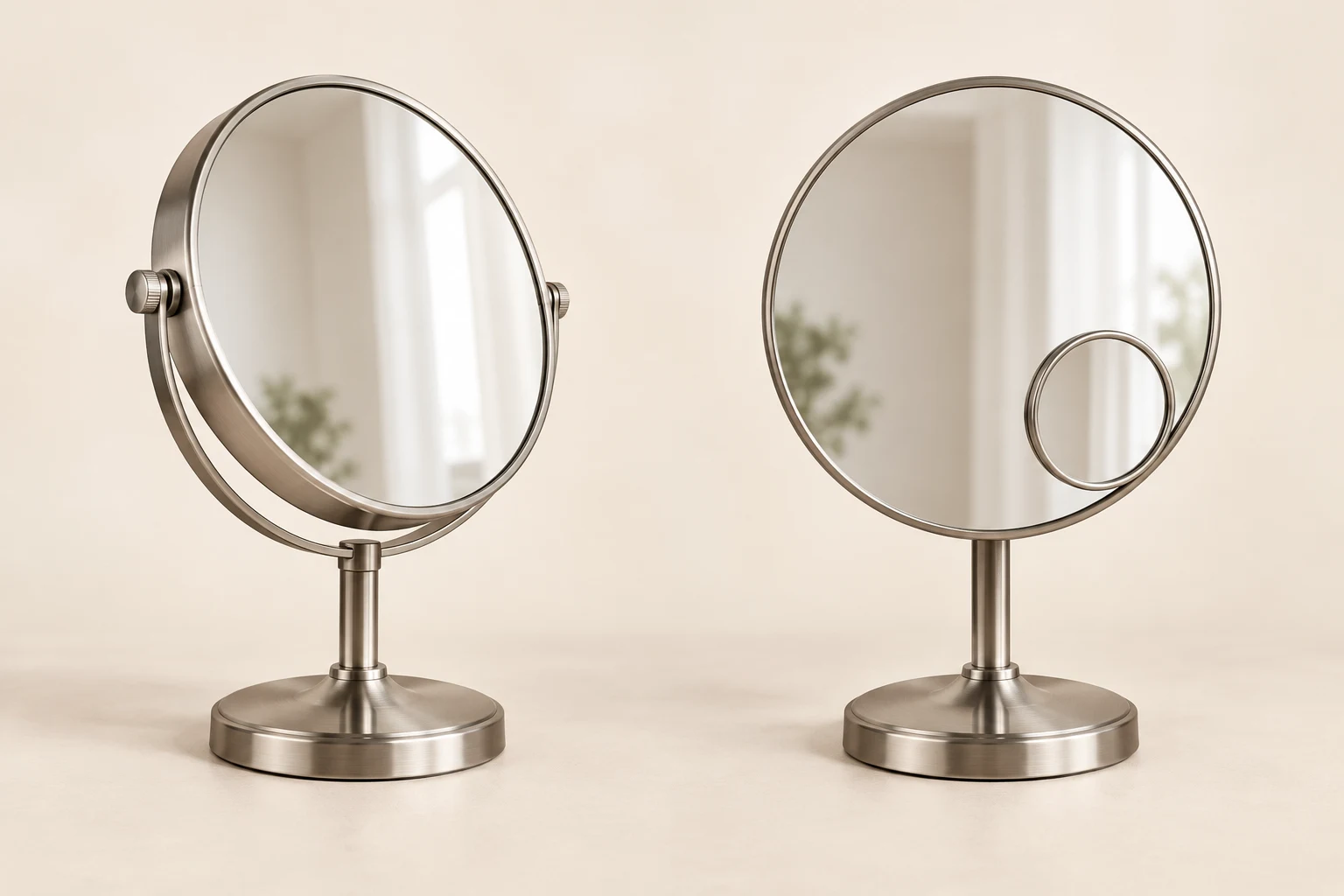
A reversible mirror can provide a magnifying surface across one side and a regular reflection on the other. Another design may put a small magnifying spot within a larger regular mirror. These layouts serve different needs even if their labels mention the same magnification.
Check the usable reflective dimensions of the magnified area. A large outside diameter does not establish the size of a small spot mirror. For a reversible head, also check the space needed to turn it.
Why Does a 10x Mirror Look Blurry?
Typical magnifying makeup mirrors use a concave reflecting surface. Your position relative to that surface affects the image. Stronger models often need closer, more careful positioning, but a single viewing-distance rule will not fit every 10x mirror.
Start with the manufacturer’s viewing instructions when available. Move gradually to find a clear, comfortable position without leaning awkwardly. Check for mist, marks or removable protective film, following the product’s care instructions. If the image remains unusable, contact the supplier or compare another model.
If the image is visible but the working area is in shadow, review the lighting. Test with your hand and brush in position. Built-in lighting can help, but it does not by itself prove even illumination or accurate color rendering. Color temperature and color rendering describe different properties.
Choosing Magnification for Hotel Bathrooms
Guests have different routines and may be unfamiliar with magnifying mirrors. Compare the complete configuration: magnification, usable mirror area, arm movement, mounting position and access to a regular view. Do not specify 10x solely as a premium feature.
Assess candidate samples in a representative vanity layout, including the basin, faucet and nearby fittings. If room layouts differ, review each arrangement before repeating a mounting detail.
| Record for each candidate | What makes the comparison useful |
|---|---|
| Model, sample ID and marked magnification | Keep observations tied to the actual sample, not just a product photo. |
| Usable reflective dimensions | Distinguish the full mirror head from a smaller magnifying area. |
| Task and lighting conditions | Compare the same task under comparable light. |
| Viewing position and distance | Record each sample's usable position and any uncomfortable posture. |
| Hand and tool clearance | Note obstruction during the intended action. |
| Arm movement and stored position | Check extension, rotation and nearby fixture conflicts. |
| Overall-view access and next action | Record whether to retain, adjust the setup or compare another candidate. |
Download the blank sample comparison record (CSV). If the mounting position, lighting or mirror structure changes, repeat the affected checks. Use one row per candidate to keep observations separate. The blank record contains no test results or acceptance limits.
If you photograph reflections, record the camera position, viewing distance and lighting so that changes in photography are not mistaken for differences between mirrors.
For product planning, see OJMirror's wall-mounted magnifying mirror directions. Model availability and compatible configurations need confirmation before an order. A concept image or general selection table does not establish those specifications.
Frequently Asked Questions
Will Two 5x Mirrors Feel the Same to Use?
Not necessarily. The useful reflective area, optical design, angle and mounting arrangement may differ. Compare the same task under similar lighting, allowing each mirror its appropriate viewing position.
Do I Need a Lighted Magnifying Mirror?
Not if your existing lighting already makes the working area clearly visible. Consider a lighted model when it improves illumination at your face, and check whether your hand creates shadows during use.
Can I Choose Magnification From My Glasses Prescription?
An eyeglass prescription alone is not a makeup-mirror specification. Compare actual mirrors in the way you normally apply makeup. Age-based or prescription-based charts should not replace a practical trial.
Product Design References
These images show shapes, mounting arrangements and mirror structures for discussion. These are appearance references, not dimensional drawings. Labels and symbols shown in the supplied images are not verified specifications. Confirm the model, magnification, dimensions and available configuration for any proposed sample.
Explore 11 wall-mounted and tabletop mirror design references
Compare Options for Your Project
Tell OJMirror which magnifications you want to compare—or say that you are not sure yet. Include the intended mirror size, mounting preference, lighting, quantity and destination market. Describe the available space and mention any layout photos or drawings you have so that the next discussion can focus on suitable candidates.
