
Touch Sensor
A finger touches a marked area on the glass. Familiar and precise, but not touchless.
Best routed to the Touch Control Mirrors range.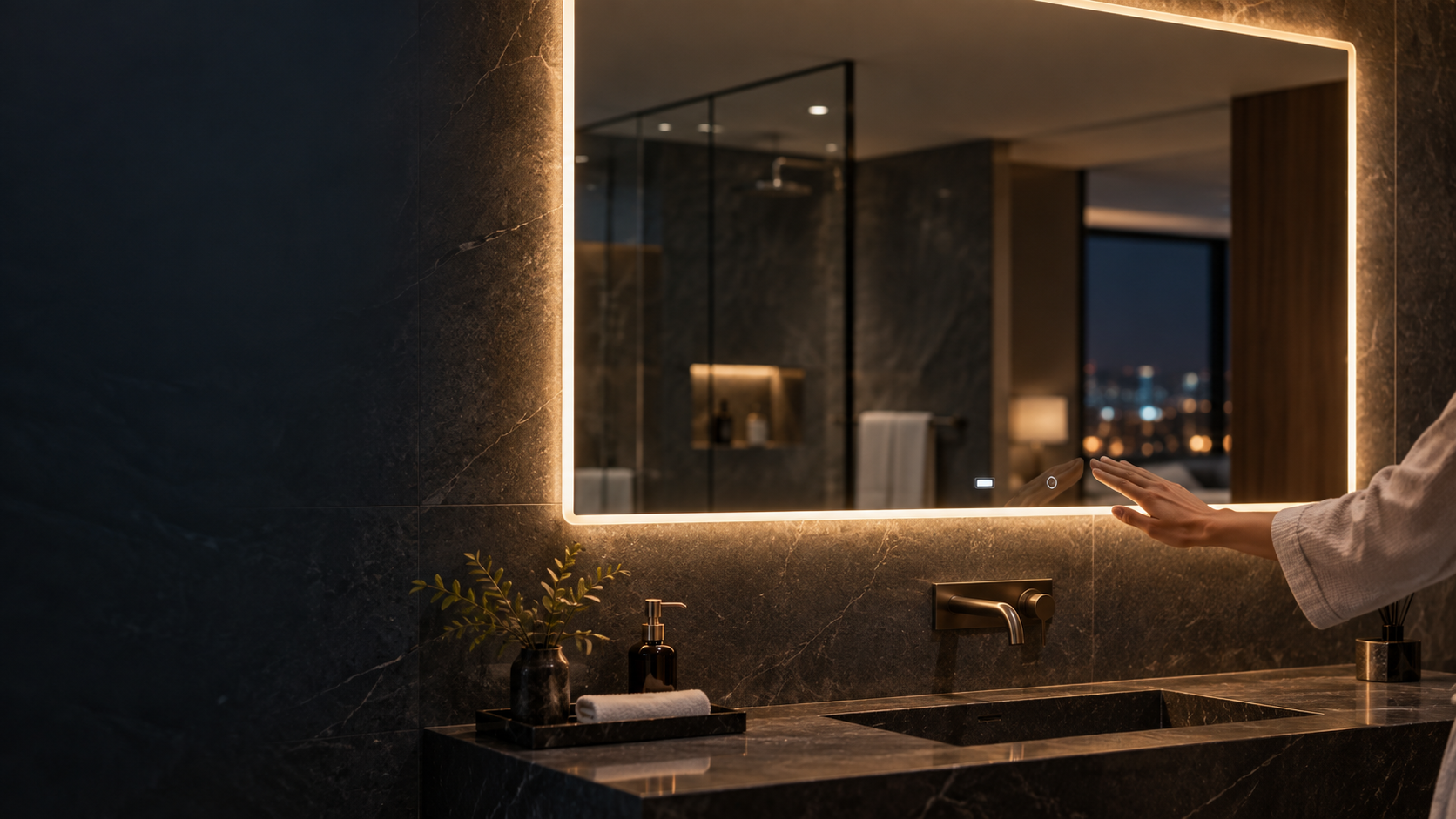
Develop touchless mirror ranges for distribution, private label, hotels and residential projects—with sensor behavior, lighting, component layout and electrical details reviewed before quotation.
The buyer should be able to describe the interaction in one sentence: “wave below the mirror to switch the light,” or “approach the vanity and activate a defined scene.” That sentence becomes the engineering brief.
The sensor, controller, lighting and installation are then reviewed as one system—not as separate catalogue options.
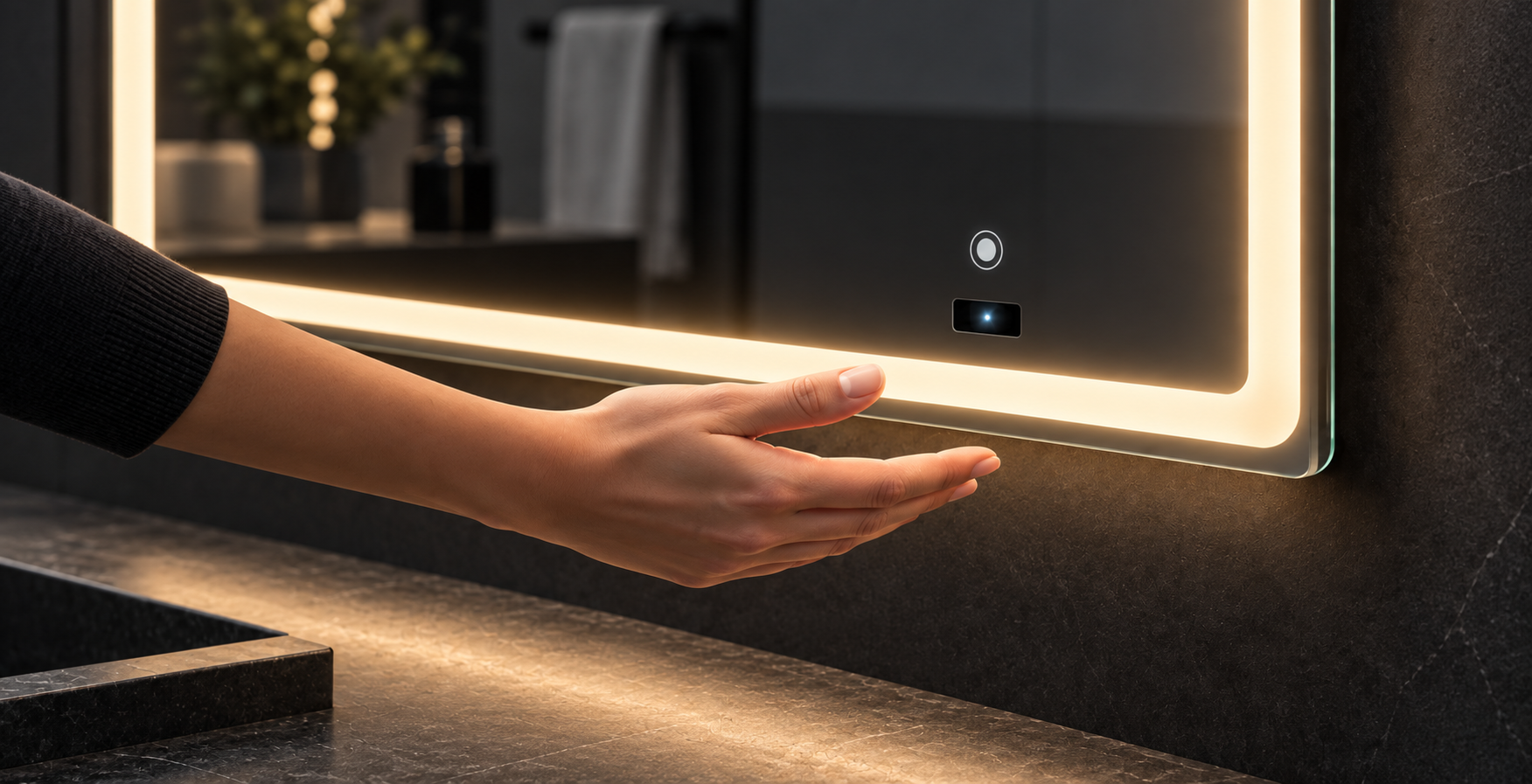 Light responseSensor below mirror
The word “sensor” is used loosely in the market. Define the user action before selecting a component.
A finger touches a marked area on the glass. Familiar and precise, but not touchless.
Best routed to the Touch Control Mirrors range.A deliberate hand movement near the bottom or side of the mirror switches the agreed function without touching the glass.
Confirm movement path, sensing face and nearby clearance.A person entering a defined zone triggers the response. Site layout and false-trigger conditions matter more here.
Do not assume this behavior from “motion sensor” alone.Sensor placement is not a cosmetic afterthought. The basin, backsplash, side wall, frame lip and mounting orientation can enter the detection path or block it.
Vanity clearanceKeep the intended hand-wave path usable after the basin and countertop are installed.
Nearby surfacesReview side walls, shelves and projecting frames that may sit inside the sensing direction.
Portrait or landscapeA sensor position approved for one orientation may not transfer automatically to another.
Cabinet integrationDoor swing, bottom lighting and internal components need a dedicated layout review.
Use the matrix as a conversation guide. Final combinations depend on the selected controller, circuit and destination-market requirements.
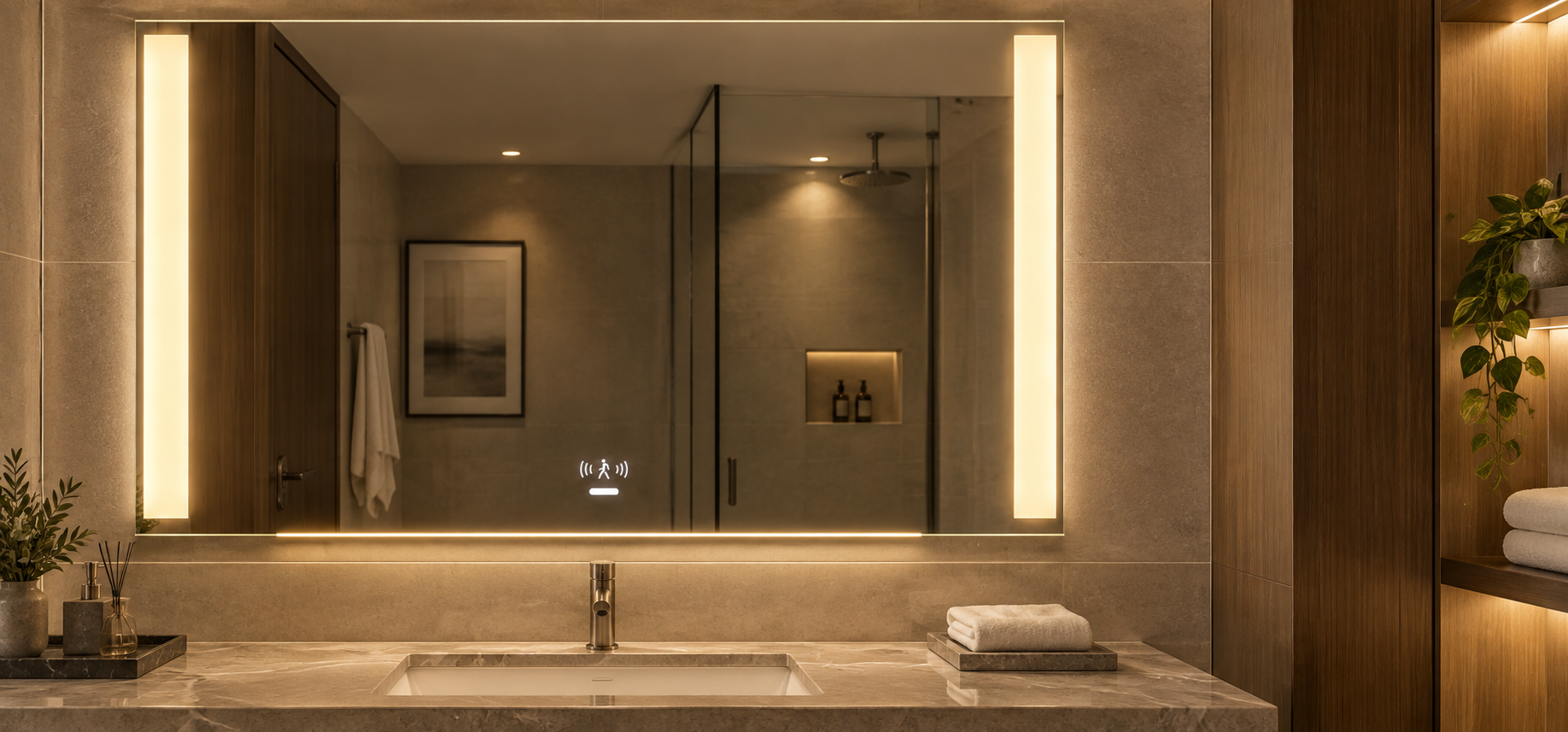
A lit mirror can pass a simple power-on check and still create a poor user experience. The approval path should cover the interaction itself.
Confirm the intended movement activates the mirror consistently.
Observe whether normal basin use causes unwanted activation.
Verify on/off, dimming, CCT or linked-function behavior.
Check the agreed state after wall-switch or power interruption.
Record the approved component, layout and acceptance criteria.
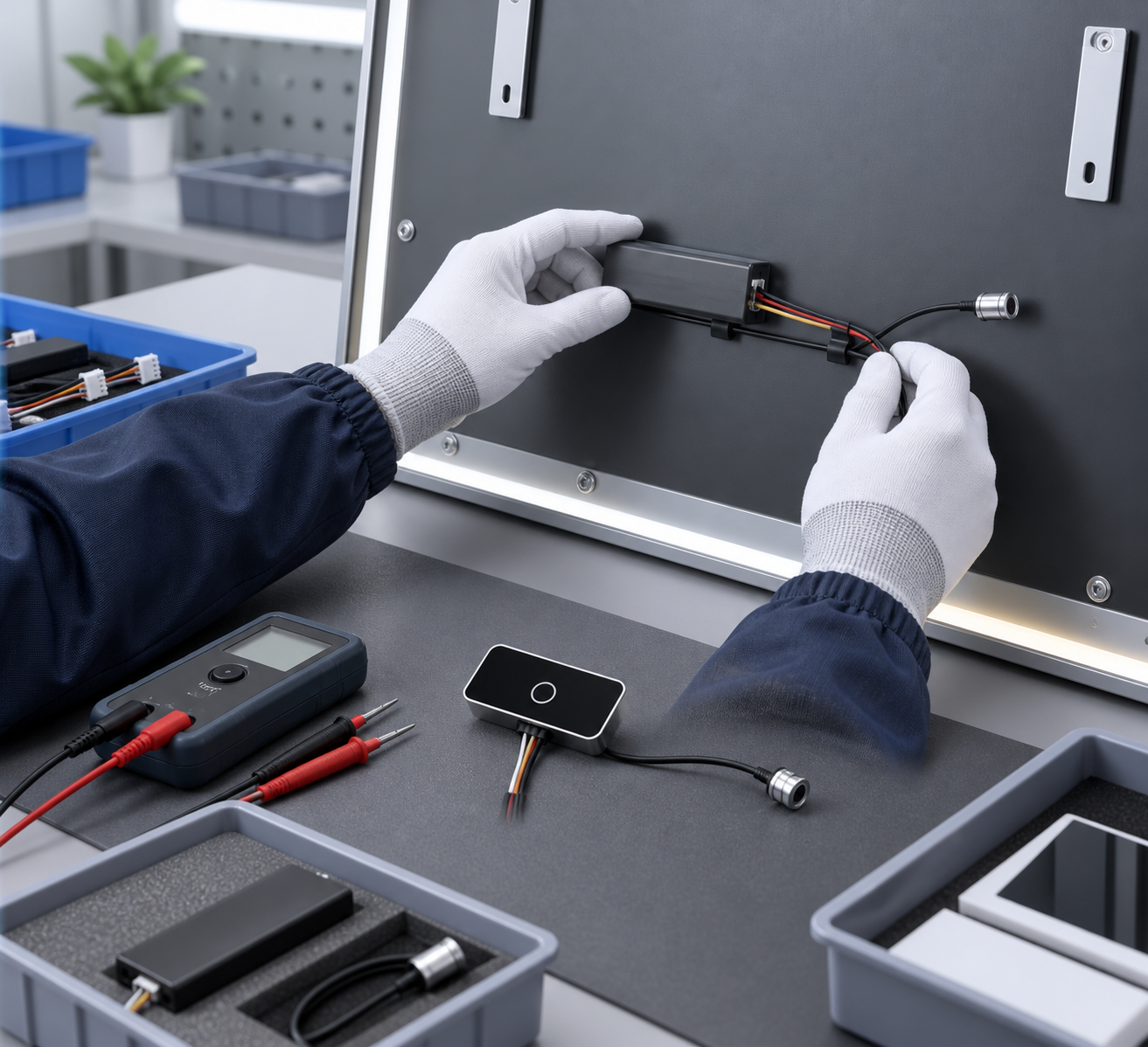

A sensor detects a defined hand movement or presence event and sends a signal to the configured mirror function, commonly the light. Exact behavior depends on the selected component and installation.
No. A touch sensor requires contact with a defined glass control area. A gesture or motion sensor can operate without touching the mirror.
No. Many bathroom mirrors described as motion sensor models use a short-range hand-wave action. Specify approach detection separately if that is the required behavior.
Available range and adjustment depend on the selected sensor. Define the target detection zone and confirm it on the approved sample.
Possible combinations depend on the electrical design. State whether lighting and anti-fog should be linked, separate or operated through a wall switch.
Review sensor position, direction, nearby surfaces and normal user movement together, then test the approved sample in a representative installation.
Send dimensions or drawings, quantity, destination, preferred trigger behavior, sensor position, lighting functions, installation details, documentation needs and delivery target.
Share the interaction you want to sell and the room it must work in. Unknown details can be reviewed during technical coordination.

Open WeChat and scan this QR code to contact our team.