
Décor Importers
Build a commercially balanced assortment across styles, colors and price positions.
Plan an assortment →Develop coordinated decorative mirror lines for retail, hospitality and commercial interiors—aligning shape, frame material, finish, mounting and export packaging in one production brief.
Visuals are design references for local page review. Final materials, finishes and specifications require order-level confirmation.The mirror has to suit the space, but a viable order also needs a repeatable frame system, an approved finish, clear mounting details and a packaging plan.
Build a commercially balanced assortment across styles, colors and price positions.
Plan an assortment →Translate brand language into coordinated profiles, finishes, labels and retail cartons.
Develop a collection →Coordinate guestroom and public-area mirrors with the project palette and room schedule.
Review a schedule →Standardize dimensions, mounting and delivery by unit type or project phase.
Discuss project supply →Round, arch and irregular are only geometries. A stronger collection also defines frame presence, surface character, application and how designs work together.

Slim profiles, restrained finishes and repeatable detailing for contemporary programs.

Wood and wood-look directions disclosed by actual substrate and finish system.

Layered color and aged character controlled through an approved physical sample.
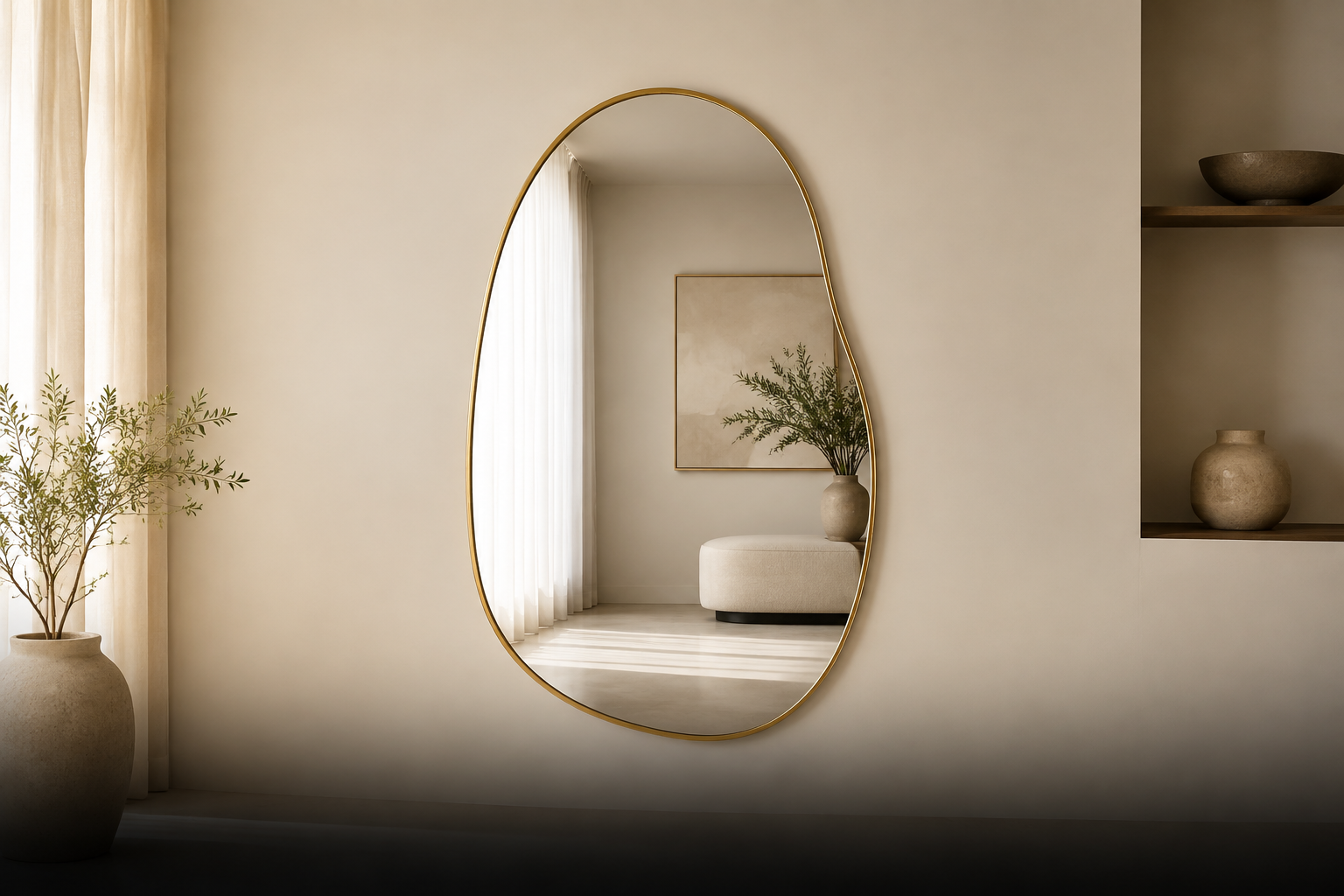
Distinctive outlines balanced with feasible forming, joints and hanging points.
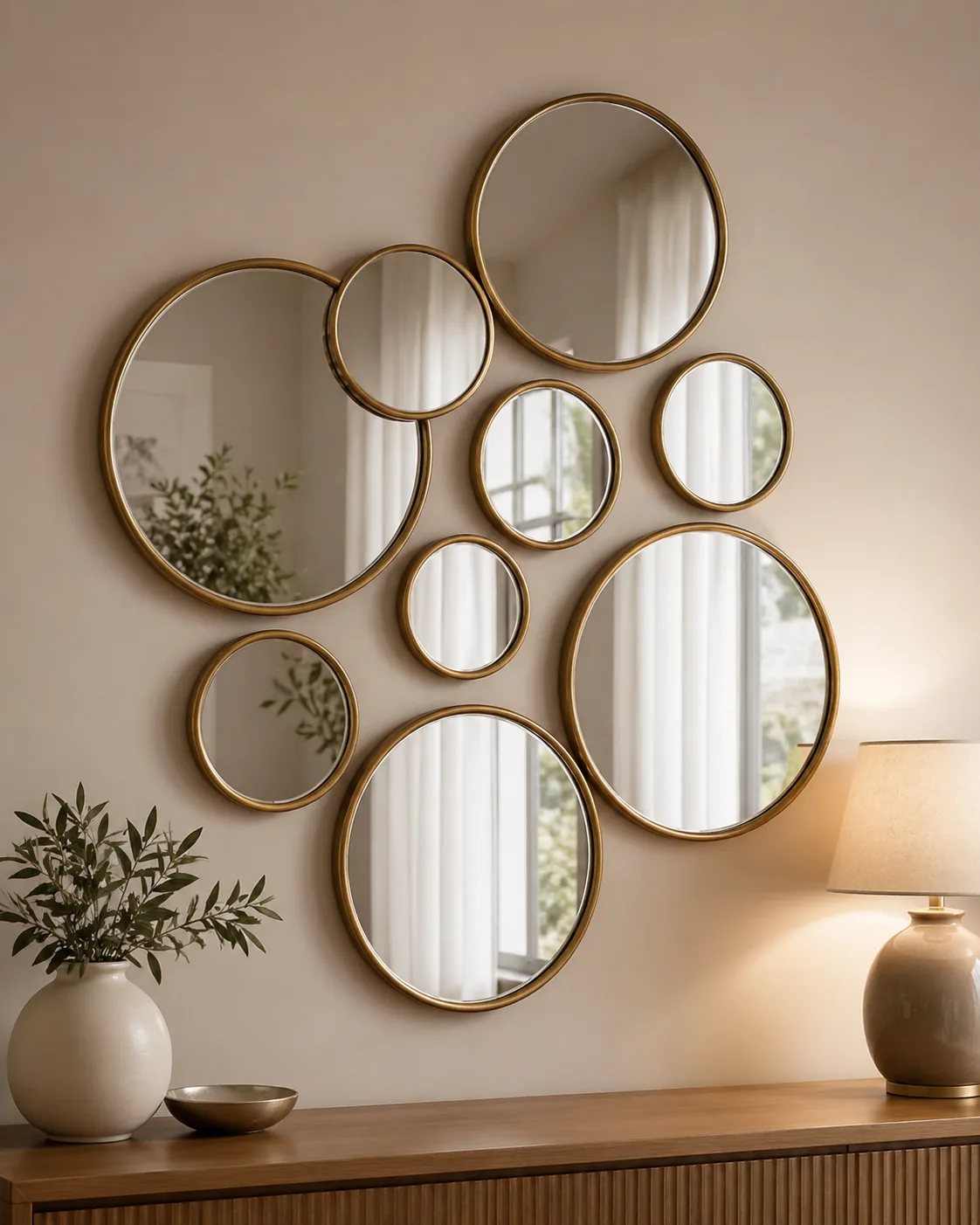
Related sizes and finishes developed to merchandise or install as one visual family.
“Gold,” “wood” or “antique” describes an appearance—not the substrate, coating system, texture, sheen or acceptable batch variation. Quote and approve them separately.
Specification boundary: metal, solid wood, veneer, MDF, PS, resin and PU are not interchangeable. Only materials supported by actual OJMirror samples and production capability should appear in the final published selector.
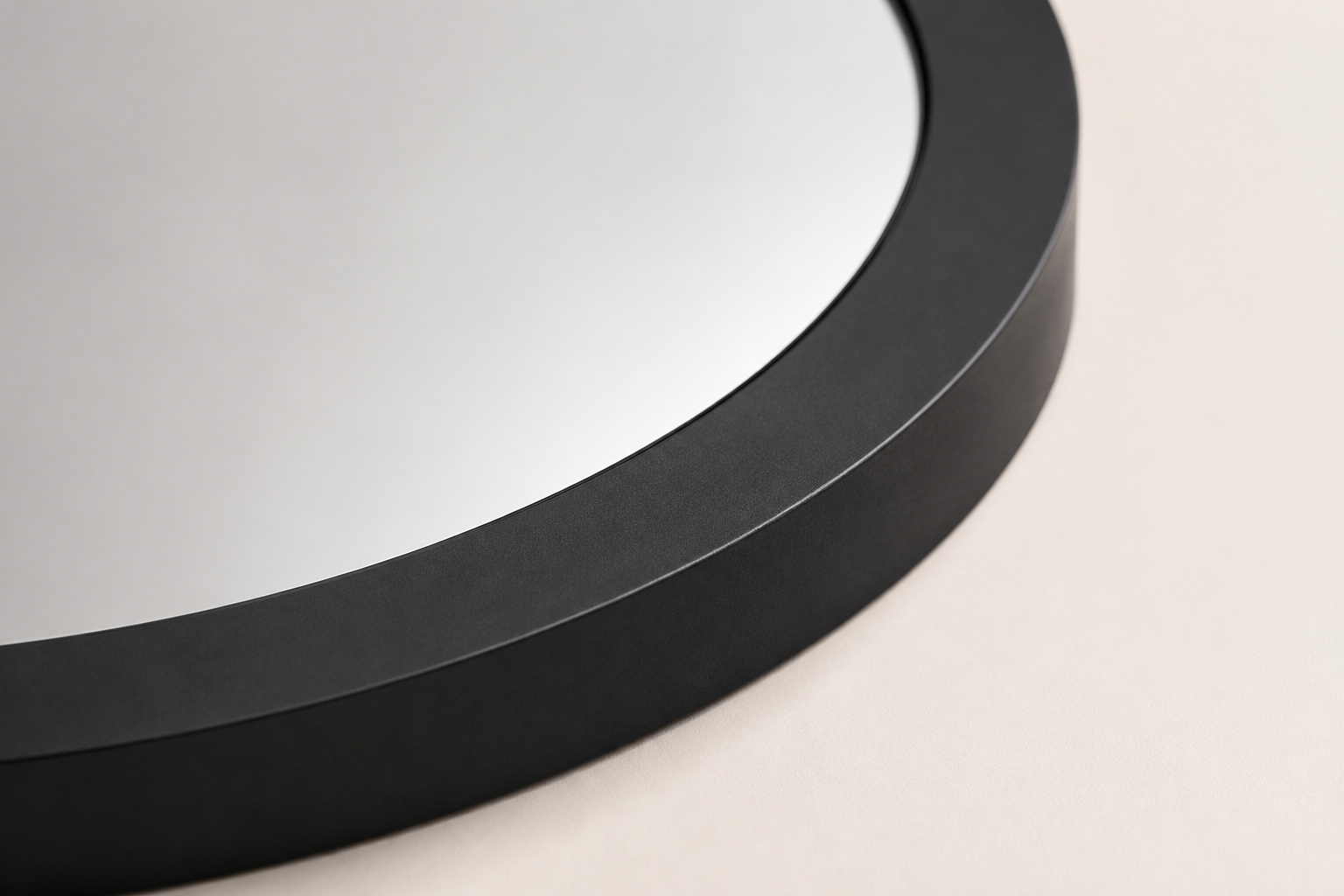
Record substrate, coating, texture and sheen.

Approve tone and surface under controlled light.

Define variation and hand-finish expectations.

Disclose solid wood, veneer or wood-look finish.
Use this checklist to separate the desired appearance from the construction, installation and commercial details needed for sampling and quotation.
| Specification | Buyer to provide | Production review |
|---|---|---|
| Shape & Overall Size | Drawing, W × H, orientation, radius or reference | Feasible geometry, tolerance and viewing area |
| Frame Construction | Material direction, profile, width and depth | Actual substrate, forming/joint method and backing interface |
| Finish Standard | Color code, chip, hardware sample or inspiration | Process route, texture, sheen, sample and acceptable variation |
| Mirror System | Thickness, edge, safety backing and lighting needs | Glass build, attachment and order-specific compatibility |
| Mounting | Wall type, orientation and installation preference | Hardware position, access, weight and installation conditions |
| Commercial Program | Quantity by design, branding, destination and target date | Sampling plan, packing route, MOQ and lead time confirmation |
MOQ, lead time, material suitability and performance remain “to be confirmed” until the actual design, quantity and destination requirements are reviewed.
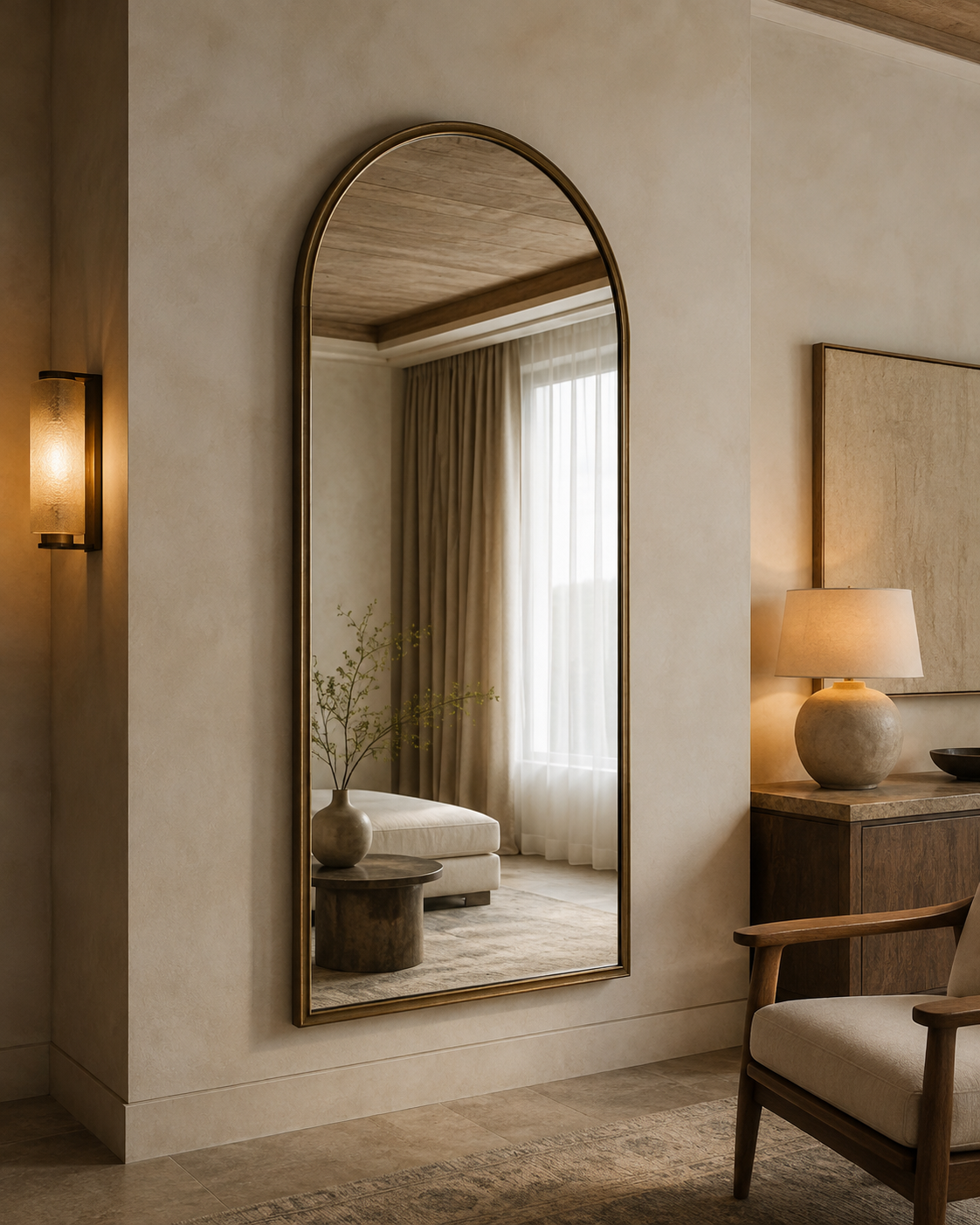 Application concept — final construction subject to approved specification
An inspiration image explains the desired character. The fields below define what must be priced, sampled and repeated.
A clear checkpoint sequence helps designers, sourcing teams and production work from the same definition of the product.
Share target buyer, price position, visual direction, sizes, quantities and market.
Align frame construction, mirror, finish, mounting and packing direction.
Confirm what is included, optional and still open before sampling.
Approve drawing, profile, material, finish, appearance and functional details.
Inspect production against recorded acceptance points before export packing.
Decorative frames add vulnerable corners, surfaces and finishes. Inspection and packaging should be based on the selected construction and shipment—not generic promises.
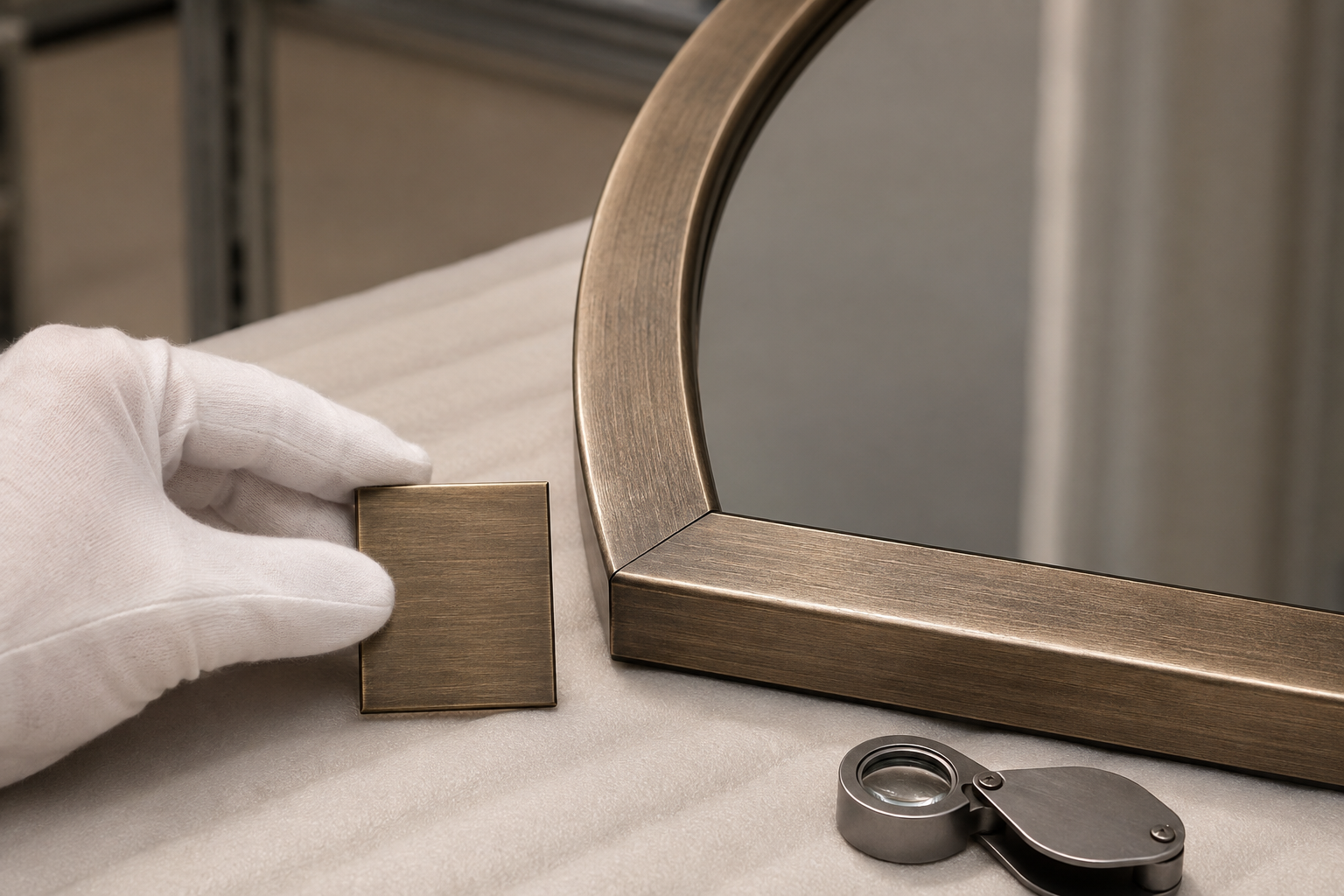
Check dimensions, joints, alignment, visible defects and consistency against the approved sample.
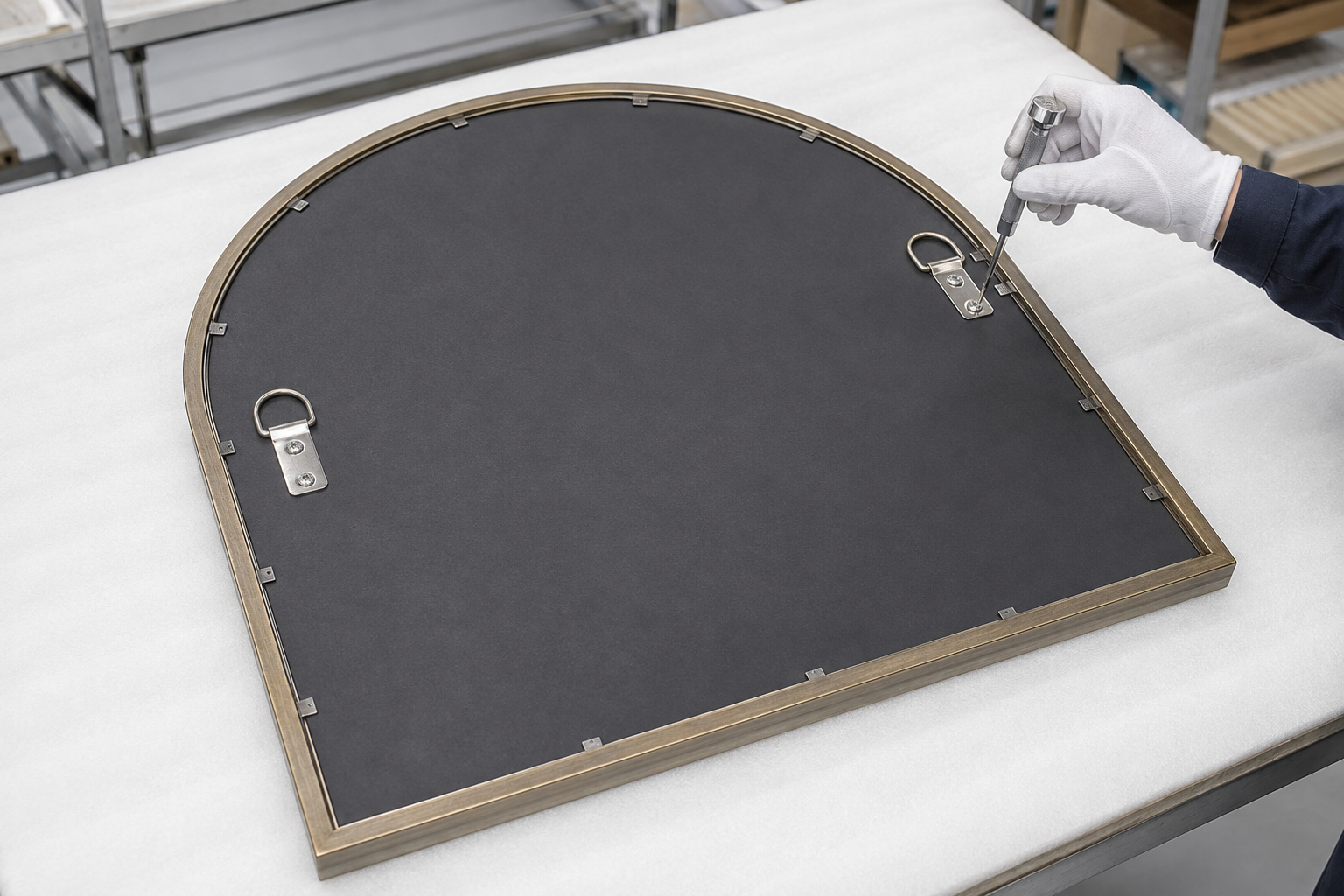
Review reflection, edges, backing, attachment and hardware position for the agreed build.
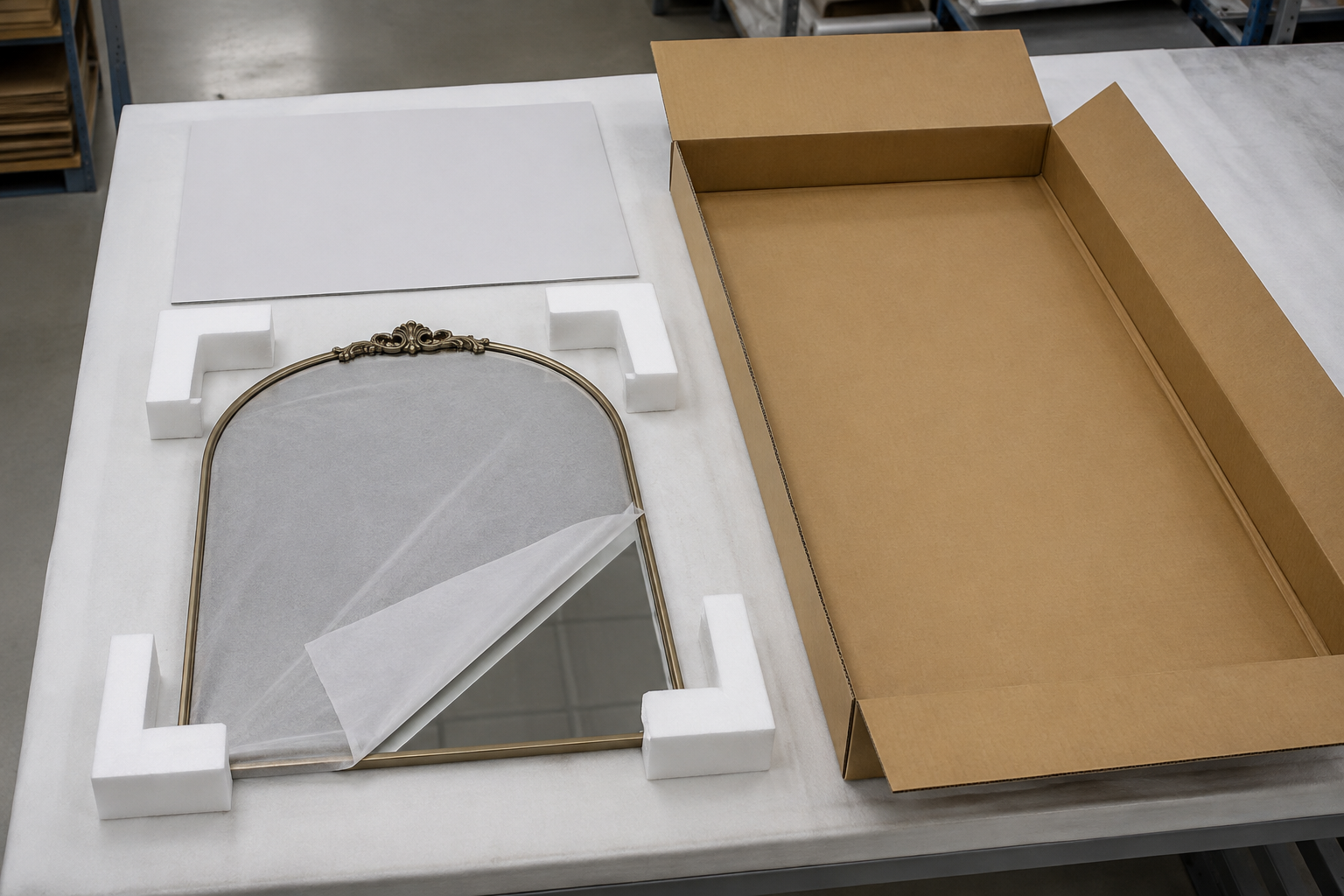
Define surface film, corner protection, inner restraint, carton and shipment configuration.
Evidence boundary: moisture, corrosion, loading, fire, safety and packaging performance should only be claimed when the relevant material, test method and order-specific record are available.
Typical variables include size, shape, frame material and profile, finish, mirror construction, mounting, branding and packaging. Availability is confirmed against the design and quantity.
Yes, a reference can establish visual direction. A production quotation still requires dimensions, intended material, finish standard, mounting, quantity, destination and other order details.
A coordinated finish direction can be evaluated across several designs. Substrate, process and geometry may affect appearance, so the sample plan and acceptable variation should be agreed.
No. Suitability depends on substrate, sealing or coating, mirror backing, installation zone and exposure. The intended environment must be stated before material selection.
They depend on construction, finish development, size mix, sampling, packaging and quantity. They should be confirmed for the actual collection rather than stated as a universal number.
Send reference images or drawings, dimensions, quantity per design, frame and finish direction, mirror requirements, mounting, branding, packaging, destination and target timing.
Upload the visual direction, then add the commercial and technical details that make it quoteable.

Open WeChat and scan this QR code to contact our team.